Maryland’s People’s Law Library Seeks Contributors

This spring, the People’s Law Library (PLL) will begin its annual review of site content. PLL needs editors and writers to assist with maintaining our award-winning website. Contributing to PLL is an excellent opportunity for librarians to assist pro se litigants throughout the state. With over 1.3 million hits per month, PLL is one of the most effective ways to reach out to those in need. Volunteers are welcome to edit existing content or to submit new articles.

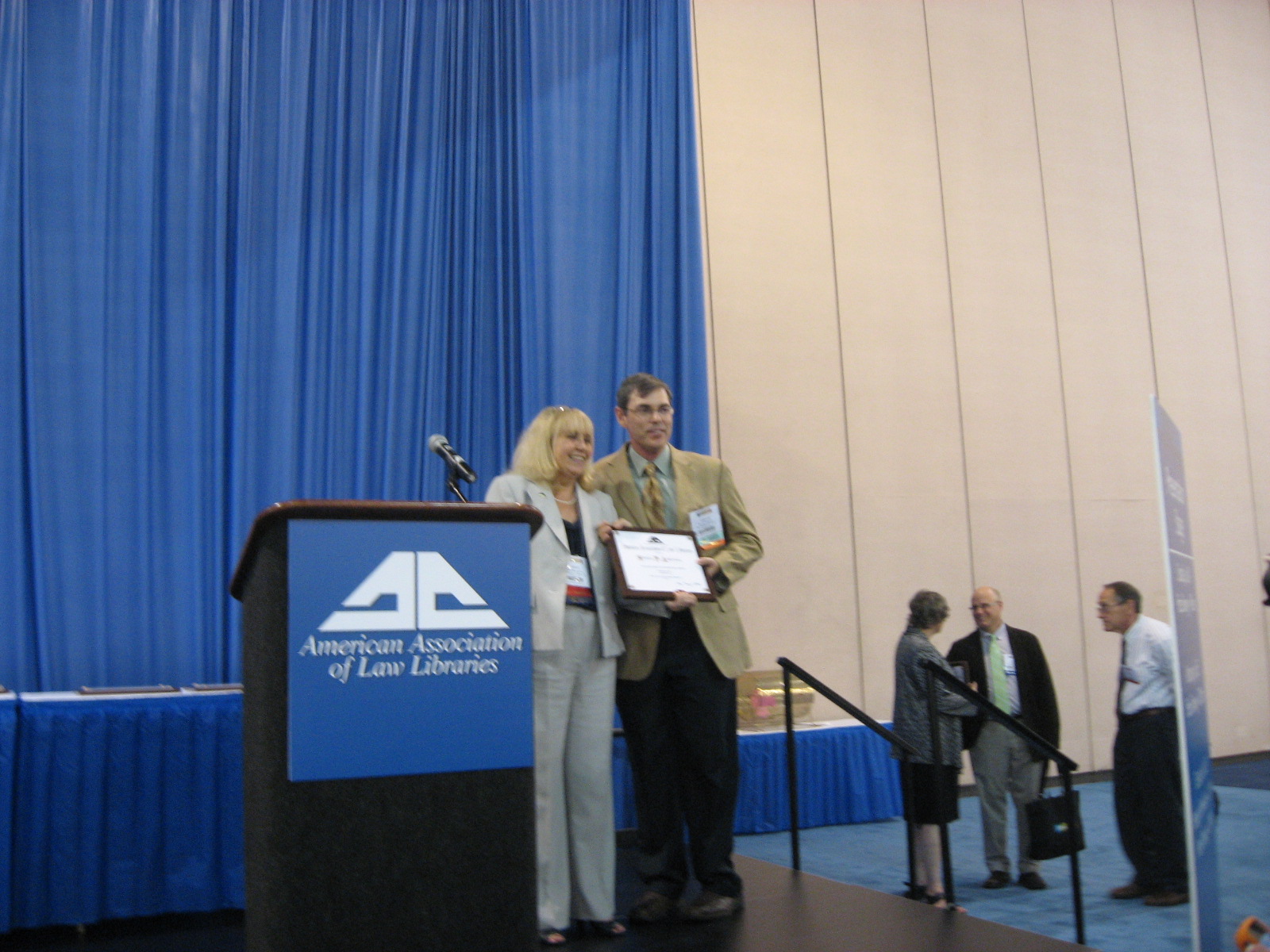
For over a decade, PLL has provided easy-to-understand legal information to Marylanders in need. Containing hundreds of pages covering a broad array of legal topics and a legal services directory, PLL is a vital resource promoting access to justice in Maryland.  Since receiving the site in 2007, the Maryland State Law Library has continuously expanded PLL’s content and has significantly redesigned its layout and navigation. In 2011, PLL was honored with the American Association of Law Libraries’ Innovation in Technology Award and the Herbert S. Garten Public Citizen Award from the Maryland Legal Services Corporation.

PLL has over 900 pages of content on a variety of legal topics including: Consumer Law, Criminal Law, Education, Elder Law, Employment, Family Law, Government Benefits, Health Law, Housing & Landlord/Tenant Law, Wills/Estates/Probate, and Youth Law. In addition, PLL maintains a calendar of workshops and clinics for self represented litigants. LLAM members are welcome to promote events at their libraries through the calendar.

If you have materials to share on PLL, if you would like to write an original article, or if you wish to edit existing content, please contact Michael Craven, People’s Law Library Web Content Coordinator at 410. 260.3708 or Michael.Craven@mdcourts.gov. Also, Michael can send PLL brochures or posters for your library.

President’s Message — March 2012

Sara Jane WitmanBy Sara Witman
Research Librarian
Gordon Feinblatt, LLC

Recharged.

If I had to put how I felt after the LLAM conference on March 20 into one word, it would be “recharged.”

The Full Disclosure conference was successful, not just because there were more than 100 attendees, but because of that invigorating feeling at the end of the day. “Five hour energy” has got nothing on the recent LLAM program.

You would think seeing ten or more presentations in one day might be exhausting, but it was just the opposite.  Apparently, fifteen or twenty minutes is just the right amount of time to learn something new without feeling overwhelmed.

If you didn’t have a chance to attend the conference, or if you’d like to read about presentations you missed, this issue of e-News contains short reviews of most of them.  You’ll see that the presenters (who took a real chance on this one) hit it out of the park.  The keynote speakers – ALA president-elect Maureen Sullivan, AALL president-elect Steve Anderson, and MLA president Lucy Holman – also deftly tackled some pretty heavy topics (eBooks and publishers, anyone?).

The conference committee should be very proud of themselves!  Conference chair Mary Jo Lazun and the rest of the gang — Katherine Baer, Pat Behles, Joanne Colvin, Susan Herrick, Kate Martin, Kirstin Nelson, Jenny Rensler, and Bijal Shah – are all conference planning pros!

It’s a good thing we’re charged up, because the year is certainly not over.  There are two programs in April alone.  On April 11, Scott Meiser will talk about how they are tackling eBooks at Lexis. Scott has promised some exciting news from Lexis on the eBook front, so I’m looking forward to seeing what’s next there.  That program will be held at the University of Maryland Law Library.

Also at the University of Maryland Law Library, Kathy Bayer and Ashley Dahlen from GPO will give an in-depth training session on FDSys on April 19.  If the reaction from the class Kathy and Ashley gave in Annapolis at the Maryland State Law Library in February is any indication, you won’t want to miss this one. And given that GPOAccess is gone for good now, the timing couldn’t be any better!

On the afternoon of May 10, Jane McWilliams, the author of Annapolis, City on the Severn: A History will speak about the research that went into her book and about Annapolis history at the Maryland State Law Library.  Jane is a captivating speaker, so this one should be a lot of fun.

And – yes there’s more – you’ll want to save the date for the Spring Fling, of course!  My personal favorite LLAM event of the year will be held on Friday May 4 at Nick’s Fish House in Baltimore.

I’d also like to thank Joan Bellistri for spearheading LLAM’s testimony in opposition to HB998, a bill that would allow counties to publish their codes online and just notify institutions of the update rather than send a print copy of the code.  The bill had many problems with respect to authentication and permanent public access, and, thanks at least in part to our efforts (we hope!), it was withdrawn earlier this month after an unfavorable report from the House Environmental Committee.

AALL Announcements – December 2011

  1. 2012 Call for Papers
  2. AALL2go Pick of the Month
  3. AALL Launches New Legislative Action Center

_______________________________________________________________

The 2012 “Call for Papers” has begun!

Have you been thinking of writing an article of interest to law librarians?  The AALL/LexisNexis Call for Papers Committee is soliciting articles in four divisions:

Open Division:  for active and retired AALL members and law librarians with five or more years of professional experience;
New Members Division
:  for recent graduates and AALL members who have become law librarians since July 1, 2007;
Student Division
:  Participants in this division need not be members of AALL. To be eligible in this category, you must have been enrolled in law school, or in a library school, information management, or an equivalent program, either in the Fall 2011 or Spring 2012 semester.

The winner in the Open, New Member, and Student Divisions will receive $650 generously donated by LexisNexis, plus the opportunity to present the winning paper at a program during the 2012 AALL Annual Meeting in Boston!  Winning papers are also considered for publication in the Association’s prestigious Law Library Journal.

Short Form Division (NEW FOR 2012)!  Articles in this category will be shorter than a traditional scholarly article, and appropriate for publication in AALL Spectrum, a bar journal, or a chapter or SIS newsletter.  Participants must be AALL members. The winner will be awarded $300 from LexisNexis.

Articles in the Open, New Members, and Short Form Divisions must be submitted by March 1, 2012.  Articles in the Student Division must be received by May 15, 2012.

APPLICATION:  Application form and details, including word limits, can be found at the Call for Papers website http://www.aallnet.org/main-menu/Leadership-Governance/committee/activecmtes/call-for-papers.html.  If you have any questions, please contact a member of the AALL/LexisNexis Call for Papers Committee: Jennifer Lentz, lentz@law.ucla.edu, Chair; Mark Podvia, mwp3@psu.edu, Vice Chair; Benjamin Keele, bjkeele@wm.edu; James P. Kelly, jim.kelly@vanderbilt.edu; Shawn Nevers, neverss@law.byu.edu
_______________________________________________________________

AALL2go Pick of the Month

AALL’s Continuing Professional Education Committee presents the AALL2go pick of the month: Reinventing the Law School Library.

What do we, as law librarians, envision for the law library of 2020? Will it be a mere shadow of what we know today, or will it not have changed as drastically as we might think?

This presentation is a panel discussion that addresses the idea of the law library in the year 2020. Each panelist speaks regarding different facets of what makes the library and how things may change over time. The idea of the library as a physical space is mentioned, as well as the notion that law libraries may eventually be defined by the librarians rather than the physical space the law libraries occupy. Library collections are discussed, bringing up such topics as the change in formats to digital collections, as well as the access and ownership issues that follow. The final panelist proposes the idea that there may not be as much change as we anticipate due to budgets and the current disconnect that is common between services provided by law libraries and the profiles they carry. With this comes the idea of switching the focus of librarians as service providers to becoming more proactive partners with faculty members and the resulting benefits of doing so. All these notions combine to provide a thought-provoking session about the future and direction of our law libraries.

Find this and other free continuing education programs for AALL members on AALL2go.
_______________________________________________________________

AALL Launches New Legislative Action Center

From Emily Feltren, AALL Advocacy Communications Assistant:

I am very excited to announce the launch of AALL’s new Legislative Action Center. The new Action Center gives AALL and chapter members the tools to easily send targeted messages to your Members of Congress, look up information about your elected representatives, and share our alerts with friends and colleagues through email or social media. This new resource will make it easier than ever before to speak out on the critical information policy issues that affect law libraries.

Please use our Action Center to respond to our current alert on GPO funding. The alert allows you to use our template to send detailed messages to your Senators and House Representative and personalize your emails with stories and experiences related to FDsys and the Federal Depository Library Program. Your personal experiences and reasons why funding cuts would hurt your lawmakers’ constituents are extremely persuasive and will catch the attention of your lawmakers and their staff.

Letters to all Senators, and House Representatives on the Legislative Branch Appropriations Subcommittee, are urgently needed. Thank you to all of you who have already taken action.

President’s Message — December 2011

Sara Jane WitmanBy Sara Witman
Research Librarian
Gordon, Feinblatt, Rothman, Hoffberger & Hollander

One of the nicest benefits of law librarianship here in Maryland is how much our fellow professionals support each other. Just take a quick look at the LLAM listserv and you’ll see librarians asking and receiving help with finding resources, borrowing materials, and researching issues. I’m sure we can all remember a time when we learned something from each other. Librarianship is clearly not a field where you’re “in it alone.”

This collegiality was part of the inspiration for the upcoming Legal Research Institute, Full Disclosure: Librarians Sharing Best Practices that will take place on March 20, 2012. I’m genuinely excited about this one. The basic idea is that presenters will have at most 15 minutes to share their expertise in a “micro-presentation.” Several tracks in which attendees can participate will take place simultaneously, and we’re opening up the conference to all types of librarians.

For more information, check out the great web page that Mary Jo Lazun and Jenny Rensler put together for the program at http://llamonline.org.

And start thinking about what you’d like to present. Maybe you’ve started to do chat-based reference, or maybe you would like to describe your experience implementing a new cataloging system.  Have you recently finished weeding your collection and want to show off how you made it work? Want to explain how you put out your library newsletter? If you need ideas, there is a list of suggested themes at https://llamonline.org/presenters. The presenter application form should be available early next year.

We’ve already had two great programs this year – one on administrative law and another on appellate practice. Both were packed with attendees! If you missed either of them, reports from these are available in this issue of eNews.

There are a number of other great programs coming up, as well. On January 10, Claire Twose and Blair Alton from the Welsh Medical Library will talk about their experience as “embedded librarians” there. Losing physical collections is something many of us may have to think about, and it will be interesting to hear from them about that.  Then, on February 7, Scott Meiser from Lexis will talk about eBooks and their possible future in the world of law libraries.

Also, consider attending the Maryland Library Legislative Day in Annapolis, which is being held on February 23. The Anne Arundel County Law Library, thanks to the wonderful efforts of Joanie Bellistri, will offer breakfast for the attendees. This annual event allows LLAM members to join with other library associations in the state to promote awareness of the benefits of libraries to our delegates and senators.

Annapolis was also the location of this year’s Holiday Party, and you can see from the pictures in this eNews issue that it was well-attended and in a delightfully cute location. We could not have asked for better food, drink, and atmosphere than what we got at bb bistro. So much fun! We raised more than $500 through our Silent Auction, half of which will be donated to the Maryland Food Bank.  It was another smashing success.  Special thanks to Mary Jo Lazun for all of her work in organizing such a fantastic party.

I would also like to send my congratulations to Steve Anderson Director of the Maryland State Law Library, who will be the next AALL Vice President/President-Elect.  This feat is a first for a LLAM member, and is certainly well-deserved.

James G. Durham: New Deputy Director at Maryland State Law Library

The Maryland State Law Library is pleased to welcome James G. Durham as the Library’s first Deputy Director.  Before recently moving to Baltimore, James was Head of Public Services for the Gould Law Library of Touro Law Center in Central Islip, NY.  In that capacity, he had overall responsibility for the supervision and management  of the staff and services of both the reference and circulation departments.  He provided additional assistance to the Touro Law Center community by serving on various faculty and administrative committees and as the program administrator for the school’s summer study abroad programs in India and Israel.

From 1998 to 2005, James served as Publications and Reference Librarian at the Fred Parks Law Library of South Texas College of Law in Houston, where he developed significant expertise in web publishing.  During the course of his career, he has become an accomplished educator, possessing experience in library-based research instruction and as an adjunct professor of graduate and law school courses, including legal bibliography, various aspects of foreign and international law, and sexual orientation law.

He also has a noteworthy record of professional involvement in the law community.  James received his J.D. in 1997, from Ohio State University’s Moritz College of Law.  While in law school, he interned one memorable summer at DNA – People’s Legal Services in Window Rock, AZ, assisting with the legal needs of members of the Navajo and Hopi Nations.

Prior to entering the legal profession, James worked for the Columbus (OH) Metropolitan Library system, where he was the assistant manager of two branch libraries. He holds Bachelor of Arts and Master of Library and Information Science degrees from the University of Illinois in Urbana-Champaign.  He began his new position on October 5th.

People’s Law Library Wins Herbert S. Garten Public Citizen Award

On December 5, 2011, the Maryland Legal Services Corporation awarded the Herbert S. Garten Public Citizen Award to the State Law Library for the People’s Law Library website.

From the MLSC website:  “The Herbert S. Garten Public Citizen Award is presented to an entity or organization (not regularly engaged in the delivery of legal services to low-income persons) that has demonstrated an extraordinary commitment to increase access to justice for the poor in Maryland.”

Congratulations to all the people who put their time and effort into the useful site.

2011 Holiday Party

LLAM raised over $500 in the Holiday Party Silent Auction with half the proceeding going to the Maryland Food Bank.

This slideshow requires JavaScript.

bb Bistro in West Annapolis, December 1, 2011

LLAM November Program – Administrative Law

by Susan Herrick
Research Librarian
University of Maryland School of Law

Twenty-five LLAM members gathered to hear Arnold Rochvarg, Professor of Law at University of Baltimore, address the topic “Getting More Admin Law Questions? Get Answers”, on Wednesday, November 9, at the U. of B. Student Center. Prof. Rochvarg is the author of the recently released Principles and Practice of Maryland Administrative Law and MICPEL’s Maryland Administrative Law, as well as many articles on the topic.

Previously a litigator with an administrative law practice in a large D.C. firm, Prof. Rochvarg began teaching administrative law in 1979. He posited that 98 percent of the material generally covered in law school administrative law courses at that time was federal – and that not much has changed since then. His interest in state administrative law dates back to at least 1990, when Maryland pioneered the concept of a centralized court with independent administrative law judges (ALJs) to conduct hearings for many state agencies, and established the Office of Administrative Hearings (OAH).

Prof. Rochvarg recalled the influence of Maryland’s first Chief ALJ, John W. Hardwicke Sr. As chair of an ABA Committee and executive director of the National Association of Administrative Law Judges, Chief Judge Hardwicke encouraged other states to adopt the Maryland model of a centralized ALJ court as opposed to use of agency-based ALJs, and about half the states eventually did so. It was also with Chief Judge Hardwicke’s encouragement, based on his belief that lawyers needed specialized training to effectively represent clients before OAH, that Prof. Rochvarg developed his course on Maryland Administrative Law at University of Baltimore – one of the first law school courses in the country to focus on state administrative law. After teaching the course for eight or nine years, Prof. Rochvarg decided to write his first book on Maryland administrative law, which was published in two editions by MICPEL. The adoption of new rules by OAH, effective in 2010, along with the demise of MICPEL, inspired Prof. Rochvarg to write the new and greatly expanded version of his book, which contains extensive information about practice and procedure before OAH.

Prof. Rochvarg stressed that Principles and Practice of Maryland Administrative Law contains not only analysis of the formal procedural and evidentiary rules but also the informal “folklore” of customary practice before OAH – for example, the fact that a request for postponement or stay because a party will be out of town requires a showing of proof such as travel tickets or receipts, and that a pending settlement is not considered good cause for a postponement. The book also addresses practice before state agencies which were permitted to opt out of adoption of the OAH system and retain agency-based hearings, including the Office of the Comptroller, the Maryland Workers’ Compensation Commission, and the Public Service Commission. Also provided is information about COMAR and how to research regulations, and about the Maryland Administrative Procedure Act (APA), including agency formal and informal rulemaking, contested cases, and the process of seeking judicial review of ALJ or agency decisions.

Prof. Rochvarg also posited that people – and by this he means attorneys and librarians in addition to self-represented litigants and even judges – often don’t recognize that the problem or issue they are dealing with involves a question of administrative law. He provided several fascinating illustrations – elaborated in detail in Principles and Practice of Maryland Administrative Law – of how administrative law questions are implicated in many and varied areas of legal practice including family law, employment law, and even criminal law. One example involved whether it violates the Double Jeopardy Clause’s prohibition against multiple punishments for the same offense for a driver to have his license suspended by an ALJ for driving while intoxicated and to subsequently be prosecuted in district court for that offense. (See Rochvarg at § 8.7.) The larger question here is the relationship between APA contested cases and issues of res judicata, collateral estoppel, and double jeopardy. In perhaps the ultimate example, he also described the infiltration of administrative law into the death penalty; currently executions have been suspended in Maryland solely due to administrative law issues. The Department of Corrections follows the protocol set forth in the Execution Operations Manual (EOM) to carry out lethal injections. The Court of Appeals halted executions in Maryland when it held, in Evans v. Maryland, 914 A.2d 25 (Md. 2006) that the EOM lethal injection protocol was invalid because it was not adopted according to the state APA rulemaking procedures for regulations. (See Rochvarg at §2.17) The broader question here is the issue of what constitutes a regulation and when an agency practice or activity can be challenged on APA rulemaking procedure grounds.

The presentation closed with a number of questions from the attendees, who clearly appreciated Prof. Rochvarg’s knowledgability of and enthusiasm for his topic. All who attended came away with a deeper understanding of the complexities of administrative law, and with the ability to better appreciate and address questions that come our way that may involve this area. Many thanks to Prof. Rochvarg for his energetic and informative presentation, and to Program Chair Mary Jo Lazun for arranging it.

Photos from the Program

This slideshow requires JavaScript.

New! Maryland Law Firm Publications Search

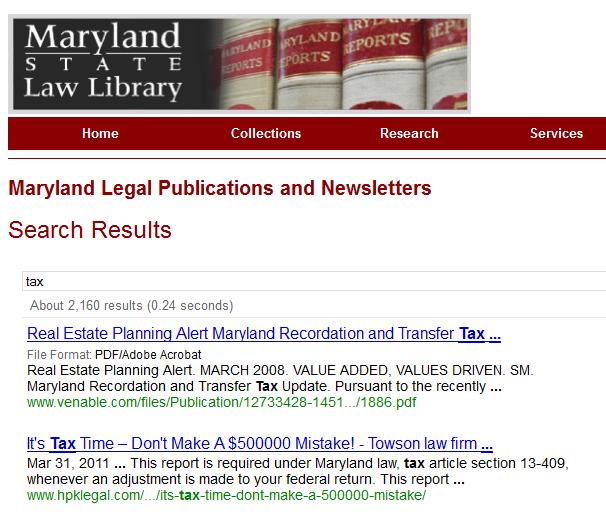
The Maryland State Law Library is pleased to announce a new tool for local legal research, Maryland Law Firm Publications Search.  This new feature, simple in design and functionality, is comprised of a specialized Google search utility, which indexes the publications pages of the websites of the largest Maryland law firms. It is available from the “Maryland”  link  on the Library’s Databases page.

According to its collection development policy, the Library strives to collect as many Maryland legal publications as possible. In recent years, of course, the advent of the web has enabled corporate and individual authors the ability to publish their own law-related content. This seems to be especially true of area law firms, which have generated a copious number of articles, client alerts, and newsletters that contribute to an improved understanding of Maryland law. When one considers that the focus of many of these communications is the client, it is easy to see that these resources’ greatest value may be in the straightforward explanations and language the authors use.  The difficulty for a library in collecting this useful material; however, is that its quantity makes cataloging and acquisition challenging. Because the Library presumes that these materials are copyrighted, digital archiving also is not feasible. Therefore, the Library chose to implement this search tool in an effort to better highlight these beneficial resources.

The search utility points to one or more pages of a website that contains links to individual documents. In some cases, a firm may include resources about the law in other jurisdictions, so while there is significant local content, Maryland materials are not included exclusively. The Library does not make any selections based on the firms’ online information offerings. Rather, the Library will update the lists of law firms and links frequently.

The Library appreciates any feedback or suggestions that the local law library community might have about this new feature. Please send your comments to lawlibrary@mdcourts.gov

Ideas in Client Service: Customer Satisfaction is Worthless, Customer Loyalty is Priceless*

By Monique LaForce
Steptoe & Johnson LLP


The final month of Q4 is often a time for old chestnuts – like stories about hair combs and pocket watches, and memories of Official Red Ryder Carbine-Action Two-Hundred-Shot Range Model Air Rifles.  The time seemed ripe to review ideas from the pages of the very popular Customer Satisfaction is Worthless, Customer Loyalty is Priceless, written by Jeffrey Gitomer in 1998 to guide sales representatives in retaining customers.  In the book, Gitomer takes a practical approach to customer retention  – noting that even though customers (or, for librarians, patrons) may appear to be at times overbearing and demanding (among other attributes), they are the source of our paychecks, and thus are always deserving of superlative customer service.

Gitomer argues that clients want five things from those that serve them:

1. Know Me.  As the library ceases to be a physical space, librarians can leverage our (primarily) electronic interactions (e.g., e-mail, social media) with our clients to know who they are (literally their names, but also what types of research they require, what their practices focus on, and what their expectations are for deliverables).

2. Understand Me.  For librarians, understanding our clients requires determining the needs of our particular client populations (e.g., law students, lawyers, law professors, the general public).  Are we focused on providing research and analysis that our clients actually value, or do we provide service and access to materials that we think they might value?

3. Lead Me.  With the disintermediation of access to information, clients perform more primary research in far more databases and sources than ever before.  With the increasing cacophony in the marketplace, are librarians taking the lead in vetting and recommending sources?  Do we understand the intricacies of these databases — their limits and benefits?  Are we sorting through irrelevancies and noise to lead our clients to accurate information that is appropriate to their needs?

4. Help Me.  Are our libraries appropriately staffed to provide the correct level of service to clients?  Do we have a standard protocol for how we respond to requests?  Do we treat our patrons, as Gitomer suggests, as though they were our favorite celebrity, hero, friend, neighbor, or grandmother every time they seek our expertise?

5. Serve Me the Way I Expect to be Served — Now.  Technology, the media, and the immediacy of communications have contributed to increased expectations as to the speed with which patrons will receive answers to their questions.  As librarians, are we attuned to these expectations?  Do we, as part of our reference interview, ask probing questions to determine what the particular client’s definition of “now” is?  For an attorney faced with filing a response to a motion for a TRO, “now” might mean something different than it does for a faculty member drafting a law review article.  As librarians, are we managing our clients’ expectations on the realities of obtaining information?  We might be able to provide a federal trial court docket sheet immediately, but may not be able to provide English language copies of the laws of a particular province in China on the same timetable.

In summary, during the hustle and bustle of end-of-the-year budgeting, exams, and business development, it may be useful to take stock of some classic customer service ideas.  New Year’s resolutions are just around the corner, after all.

*Ideas and quotations for this article are drawn from 1998’s Customer Satisfaction is Worthless, Customer Loyalty is Priceless by Jeffrey Gitomer.

Embedded Librarians – January 10 at Noon

Claire Twose and Blair Alton from Welsh Medical Library, Johns Hopkins
Tuesday, January 10th Noon
Gordon, Feinblatt, Rothman, Hoffberger & Hollander, LLC
233 East Redwood Street Baltimore, Maryland 21202
Third floor

Many librarians are moving out of their libraries and actually working on-site with their users. Claire Twose and Blair Alton from the Welsh Medical Library at Johns Hopkins will discuss their experience as embedded librarians including setting up an embedded librarians program and the advantages and disadvantages of this kind of service delivery model.

Directions:
 http://www.gfrlaw.com/aboutus/xprGeneralContent2.aspx?xpST=AboutUsDirections

For validated parking please park at:
Arrow Garage – Located at 204 E. Lombard Street (preferred)
Renaissance Hotel Gallery Garage – Entrances are located on Calvert Street or South Street between Pratt and Lombard Streets.

LLAM Conference — Librarians Sharing Best Practices March 20, 2011

Mark your calendar for March 20th 2012 for Full Disclosure:  Librarians Sharing Best Practices at the University of Baltimore

Every other year the Law Library Association (LLAM) sponsors a day long conference. In the past, LLAM’s Legal Research Institute has focused on the finer points of legal research. For 2012, LLAM has decided to do something different. This year’s conference will highlight best practices of librarians, not just law librarians, but all types of librarians.

Full Disclosure: Sharing Best Practices will not be an ordinary library conference—by the end of the day participants will have heard at least a dozen librarians share their best practices in librarianship. The conference is modeled after the Best Practices Exchange, an annual national conference attended by librarians and archivists who manage digital collections. At Best Practices all participants are encouraged to be presenters. The conference format revolves around tracks and themes. Presentations are short—limited to 10 to 15 minutes.

Full Disclosure will follow a very similar format. What LLAM foresees is that on March 20th, 2012 librarians and library students from throughout the region will gather and share their expertise, best practices, research, tips, successes and failures. The conference agenda is up to us, the librarians and library students who submit presentations. This micro-presentation format will enable all of us to hear and learn from many people in a single day. It will be an exceptional networking opportunity.  To kick off the event, Maureen Sullivan, a Maryland resident and incoming president of ALA will share her vision of ALA and librarianship in Maryland.  She will be joined by incoming AALL Vice President/President- elect Steve Anderson.

The call for presentations will go out in early 2012. We will provide a long list of topics and themes to help you come up with ideas.  This will include everything from cataloging to collection development. You, or a group, will be asked to provide a title, list of objectives, and a paragraph summary of what you, or your group, wish to present and discuss. Once all the presentations have been received, LLAM will sort them and group them into tracks. We expect, but cannot promise, that all submissions will be accepted. We will notify you of your track and theme and the time and location of your presentation. The only requirement is that you  attend the entire conference.

LLAM’s goal is to keep this conference highly affordable with substantial discounts for attendees who are also presenters and for library students and those currently unemployed.

For details on Full Disclosure see http://llamonline.org

Information on the conference will posted on the new LLAM web site at https://llamonline.org/

LLAM’s Own Steve Anderson Elected AALL President

Long-time LLAM member and former LLAM president Steve Anderson was elected Vice-President/President Elect of the American Association of Law Libraries and will be sworn-in at the AALL Conference in July 2012.  This is the first time a Marylander and LLAM member has been elected to this position.  Steve is currently Director of the Maryland State Law Library where he has made his mark as a talented manager and thoughtful leader.

Chief Judge Bell of the Maryland Court of Appeals was delighted when he heard the news of Steve’s election.  So was his staff of eighteen, who sent a big bunch of balloons to Steve to celebrate his election.  Predictably, Steve said that his election would not be possible without the hard work and support of his staff.

One of Steve’s first outings as our incoming Vice-President/President Elect will be to share the stage with fellow Marylander and incoming ALA Vice-President/President Elect Maureen Sullivan at the LLAM’s Full Disclosure conference this coming March.

One thing we know for sure, AALL could not be in better hands.

EasyBib: More than just citation management

By Mark Desierto
Systems Librarian
Venable LLP
 

Looking for an inexpensive holiday gift to give to that college student that doesn’t enjoy citing sources as much as you do?

EasyBib (www.easybib.com) is an online bibliography generator that helps users search for websites, books, or other materials and create citations for those sources, formatted to MLA standards (for free) or to APA or Chicago styles (for a fee). Once the bibliography is complete, EasyBib offers a nice range of output options, including export to Word or Google Docs.

Based on some thoroughly unscientific testing, EasyBib performs at its best on website sources. It pulls in article title, author, and date information at the push of a button. For journals (print or online) or other more traditional research formats, however, EasyBib is a little less intuitive. It is hard to say what bibliographic indices EasyBib is searching, and the ranking is a bit confusing; a search for a recent Law Library Journal article yielded a hodgepodge of results.

Nonetheless, when EasyBib cannot find a source and generate its citation automatically, it offers a handy guided form for entering the necessary bibliographic details, then outputs the citation to one of the major citation styles. So a user is no worse off than had she or he used Microsoft Word’s native citation tools or any other online bibliography guide (e.g., Son of Citation Machine).

EasyBib, which has been available for about five years, now also offers to institutional/school partners a suite of research and information literacy tools, including virtual notecards, footnote, and parenthetical formatting output options, and even guidelines for website evaluation. (These premium features were not reviewed.)

Don’t put the Bluebook or ALWD away just yet, though: EasyBib does not offer legal citation formats in the free or premium version. But for wading through the rest of the citation universe, EasyBib is a fast, friendly tool.

EasyBib
www.easybib.com
MLA style only: Free
APA, Chicago style and additional tools: $4.99/month, $14.99/6 months, $19.99/year; institutional rates also available
iPhone app: Free

LLAM October Program – Libraries and the Appellate Process

By Sara Witman
Research Librarian
Gordon, Feinblatt, Rothman, Hoffberger & Hollander

Three Court of Special Appeals insiders offered a peak into Maryland appeals at the LLAM program, “Libraries and the Appellate Process” on October 12. The Clerk of the Court of Special Appeals, Leslie Gradet, as well as Deputy Clerk Greg Hilton and Staff Attorney Jeffrey Ross, spoke to over 20 LLAM members at the Maryland State Law Library on a beautiful autumn morning.

After an introduction from LLAM Vice President Mary Jo Lazun, Leslie Gradet started the program by offering a background on the Court of Special Appeals (COSA). She described how the COSA and the Court of Appeals (COA) differed. Specifically, the COSA is an intermediate appellate court and only a fraction of the decided COSA cases are reported, as opposed to the Court of Appeals decisions, all of which are reported.

Leslie then explained how parties make a notice of appeal. Interestingly, it is the responsibility of the appellant to order and pay for the transcript from the lower court. Greg Hilton described how the transcripts are part of “the record” for the case, which also consists of the docket entries, pleadings, and papers filed in the Circuit Court, as well as evidence.

One surprising detail was that about a third of civil cases are referred for a pre-hearing conference, which now includes the possibility of recommendation for mediation. Most of these mediated cases are heard by a retired judge and someone from the Office of Mediation. Apparently, it’s not too late to work things out even at the appellate level.

Greg Hilton and Jeffrey Ross then delved more deeply into relevant substantive legal issues. The big ones that the speakers discussed in detail were finality (for example, is the lower court’s judgment final for all claims against all parties?) and the standard of review (e.g., were the issues preserved, that is were they raised at the lower court?). Hearing how people who deal with these issues every day and how they approach them was particularly informative.

The speakers also described how they tackle legal research, using statutes, COMAR, law reviews, Lexis, and free tools such as the People’s Law Library.

Finally, Greg Hilton gave us a sneak peak into the future of digital records at the court, which will include electronic case and document management. The idea is to create a single system that will connect courts at all levels within the Judiciary and allow for electronic filing, document access, electronic fee collection, and more. Currently, the Judiciary has established an Advisory Committee and they have posted some information on their website at http://www.courts.state.md.us/mdec

eBooks with Lexis- February 7th at Noon

eBooks with Lexis

Scott Meiser, Director, Product Planning at Lexis
Tuesday, February 7th at Noon
Marshall Law Library at the University of Maryland School of Law
Room 4409 the Level 4 Study Lounge

eBooks present challenges to both publishers and librarians. We both need to contend with multiple file formats and multiple readers. There appears to be almost a direct ratio between the number of readers and the number of issues libraries need to address. These include: How do libraries lend eBooks? Do we let people download a title or just lend them a reader with titles pre-loaded? Does the library own the title or is it licensed? What is a fair price? How do we measure “circulation?”

Scott Meiser, Director, Product Planning at LexisNexis will discuss these issues and what Lexis is doing to meet the needs of individuals and of libraries in this dynamic marketplace.

Directions and parking information
http://www.law.umaryland.edu/marshall/aboutlibrary/location.html

150th Anniversaries for both GPO and Foreign Relations of the United States

By Pat Behles
Gov. Docs. & Reference Librarian
University of Baltimore Law Library
 

Government Printing Office

If you happen to be in Washington over the holidays, stop into the Government Printing Office  (732 North Capitol Street, NW).  A GPO history exhibit now showcases work produced by employees since the agency opened for business, 150 years ago.

GPO opened its doors for business on March 4, 1861, the same day as President Lincoln’s inauguration. Since then, GPO has produced countless historic publications for the Government, including the Emancipation Proclamation, as well as the vast range of documents that Americans have used for generations, such as passports, social security cards, census forms, and tax forms. The exhibit also depicts the technological transformation that has always been a part of GPO’s past and has paved the way for future direction.

As part of the exhibit, GPO is displaying an original printed copy of the preliminary version of the Emancipation Proclamation. In 1862, GPO printed the preliminary version of the Emancipation Proclamation in general orders format issued as an order from President Lincoln in his role as Commander-in-Chief of the armed forces. GPO printed 15,000 copies for the War Department, which were distributed to military commanders and their troops, as well as diplomats in foreign countries. The displayed copy at GPO, on loan from the Library of Congress, contains a printer’s proofing marks; those corrections were made in the final version of the Emancipation Proclamation issued in 1863.

For those not able to make the trek to the nation’s capital, there are two links that provide a snapshot of history.

The first has a slideshow of the exhibit: http://www.fdlp.gov/component/content/article/19-general/977-150years

From GPO’s homepage,  you can also access a short video that shows the exhibit and highlights history.

From the GPO’s website: “Keeping America Informed: The U.S. Government Printing Office: 150 Years of Service to the Nation tells the story of GPO’s history through text and photographs, many never published before. Its authoritative text and unique images depict the enormous contribution of its employees, past and present, to the well-being of the American people and nation.”

One of the latest offerings from the GPO is available on GPO’s Federal Digital System (FDsys).  The electronic version of President Richard Nixon’s 1975 grand jury testimony related to the Watergate investigation is available at http://www.gpo.gov/fdsys/pkg/GPO-NARA-WSPF-NIXON-GRAND-JURY-RECORDS/content-detail.html

Foreign Relations of the United States (FRUS)

In addition to the 150th anniversary of the Government Printing Office, it is also the 150th anniversary of the series Foreign Relations of the United States (FRUS). The series presents the official documentary historical record of major U.S. foreign policy decisions. The series began in 1861 and now comprises more than 400 individual volumes. The FRUS series provides an indispensable resource for American citizens and others around the world who seek to understand U.S. foreign policy and strategic planning, international relations, economic affairs, and transnational social and cultural developments.  The series has become a leading example of governmental openness and embodies the U.S. Government’s commitment to responsible transparency.

Over the past 150 years, FRUS evolved to become the official documentary history of U.S. foreign policy decision-making and major diplomatic activity. The series is prepared according to scholarly best practices under a 1991 Congressional mandate for “thorough, accurate, and reliable” coverage and timely release. The Office of the Historian at the Department of State is exploring the story behind FRUS to uncover how it became both an invaluable information resource and a leading example of the U.S. Government’s commitment to openness.

Titles include national security, individual countries like Vietnam (and the conflict), Japan and Korea to name just a few.

Who would have thought that a government document would make headline news?  But the 1955 release of the official records of the Yalta conference was headline news around the world. Also, leading U.S. historians accused the State Department of manipulating history as the Cold War ended.

Recent publications are distributed to federal depository libraries in paper and electronic format.  For a list of recent and planned publications see http://history.state.gov/historicaldocuments/status-of-the-series.

Two Cats, a Guy, and a Law Library: Learning a New Law Library in a New State

By Kurt Meyer
Research Librarian

Chastek Library, Gonzaga University School of Law

As many of you know, I left the University of Maryland for a job in the Northwest last June.   I loved working at Maryland, my first job out of library school, but it was time to move on.  So my two cats and I trekked across the country in my little Mazda and eventually landed in Spokane, Washington, the home of Gonzaga’s Chastek Law Library.  During the journey, the cats primarily seemed to be concerned with escaping from their carrier, crying, and smelling every single thing in each of our five hotel rooms.  But along the way, when I wasn’t distracted by tortured meows from my pets, I started to think about the challenges I would face when starting my new job.  Since learning the Thurgood Marshall Law Library was a memorable challenge, I thought about how I could use my experience there to more efficiently learn a new library in a new state.

1.        Every Library Has Its Quirks

In my first week, my new boss Pat Charles gave me tour of my new library and, as a result, I had a lot of questions.  This is because the Chastek Law Library, like any other, has its own unique set of quirks.  For example, we have two reading rooms.  One has legal treatises and the other has Washington materials.  We also have similar materials on reserve and on the third floor, which is admittedly confusing.  Pat emphasized to me that I would need to pay close attention to these details when working the reference desk, otherwise I would likely send patrons to the wrong places or take too long.  To compensate, I spent a lot of time on my own browsing the shelves to learn where everything was.  I even compiled a list of key materials and forced myself to physically find them in the library.

My first reference shifts at Chastek went more smoothly than when I first arrived at Maryland as a newly minted law librarian.  I remember having problems with locations there, and that was because I didn’t take the initiative to find the physical locations of key resources before I had to.  I consider this to be one of the most important parts of learning a new library.

2.          Learn the Catalog

Right now you’re probably saying, “Well of course I know to do that.”  But I really wanted to know the catalog inside and out.  One of my first projects in my new job was to use the catalog to find all of our BNA materials, list them, and then talk to acquisitions to see if we had standing orders.  This project was given to me for two reasons:  First, no one else wanted to do it and, second, it would help me learn the catalog.

Without going into all the details, I have to say doing this really helped a lot.  I learned about the catalog and its quirks.  Again, I feel like this went a lot more smoothly than when I arrived at Maryland in 2007.  Don’t get me wrong, I learned that catalog well.  But I did most of it while I was working reference, so it was a little stressful at times.  Having a large project like this to immerse me was a much better way to do it.

3.        Learn the New State

This was really important to me.  Nothing will frustrate patrons more than when you start asking them questions about law.  Determined to hit the ground running, I came up with an idea for how to learn Washington law and government in a hurry.

I came up with what amounted to a Washington legal research exam for myself.  I forced myself to research everything from landlord-tenant law to sales taxes and then did legislative history research when appropriate.  I asked my fellow librarians for help only when I was completely stumped, knowing that I learn more when I figure things out for myself.  Then I put together an informal write-up of my research process just as I’ve had my students do in the past.

I cannot fully articulate how helpful this was.  Instead of having these issues come up at the reference desk and then having to call for help, I got this out of the way when it was convenient.

Results

I started work at the Chastek Law Library on July 11.  I had a little over a month before the students returned, but I was slammed with research requests from faculty and projects at the outset.  Even though I did not have a lot of time, I made it a point to learn my new library and new state.  I tried to keep the fact I’d have a steep learning curve in mind at all times.  I also was not afraid to ask questions, even stupid ones.  I hope some of these tips, which for the most part are the product of experience, can help someone else who changes libraries and/or states.

AALL Annoucements

  1. Create a Positive Professional Image
  2. AALL2go Pick of the Month
  3. Mark Your Calendar: Professional Legal Management Week, October 3-7
  4. 2011 AALL Salary Survey Available this Fall

_______________________________________________________________

Create a Positive Professional Image

Even though you have brilliant skills and produce fabulous results, outdated perceptions of and expectations for law librarians can interfere with your contributions to your institution. Join Dr. Laura Morgan Roberts, organizational consultant and professor of psychology, culture, and organization studies at Antioch University, for the September 22 AALL webinar, You are the Profession: Creating a Positive Professional Image, at 11 a.m. CDT. Roberts will take a look at image management, credibility, and influence. She will discuss management tactics, techniques to move from the side-line to the center, and owning your professional identity.

Register by September 14.

_______________________________________________________________

AALL2go Pick of the Month

AALL’s Continuing Professional Education Committee presents the AALL2go pick of the month: Mary Ellen Bates Live: What Will the Information Profession Look Like in Ten Years?

This program features Mary Ellen Bates, principal and founder of Bates Information Services, a research and consulting company, and a frequent author and speaker on library and information topics. Bates raises many thought-provoking insights for our profession – some positive and others more sobering. She opines that the insight that librarians bring to research and their abilities to facilitate the use of information will help our profession to endure. Her predictions for 2021 include more online learning; less face-to-face interaction but more collaboration in virtual spaces; expectations of engagement by librarians/information professionals in their clients’ work; the emergence of cloud computing and less reliance on silos of information; increased outsourcing and telecommuting in the workplace; escalation of information availability but fewer traditional sources of published information; and the continued emergence of digital libraries.

The key is to think differently about the role of libraries and information professionals in their organizations and to maximize our value. As resources continue to emerge and expand in content, librarians will be more vital as information creators, interpreters, and distillers.

This program is presented in streaming video, with accompanying PowerPoint slides, and is available via AALL2go.

This program, generously supported by an AALL grant, was held on March 8, 2011, in Atlanta and was jointly sponsored by the Atlanta Law Libraries Association (ALLA), the Metropolitan Atlanta Libraries Association (MALA), the Special Libraries Association of Alabama (SLA-AL), and the Special Libraries Association of Georgia (SLA-GA).

Find this and more than 80 other free continuing education programs and webinars for AALL members on AALL2go!

_______________________________________________________________

Mark Your Calendar: Professional Legal Management Week, October 3-7

Professional Legal Management Week (PLMW) provides a forum for recognizing those in legal management for what they do and the roles they play in the success of their organizations. AALL is one of 11 associations co-sponsoring the event with the Association of Legal Administrators (ALA).

If you haven’t reached out to other law firm professionals, PLMW is the perfect time to ask them to lunch or coffee. Get the conversation going and learn what’s on their minds and how the library might help. As October gets closer, watch AALLNET for additional suggestions on how to celebrate the week.

(PLMW – http://www.plmw.org/; Links: ALA – http://www.alanet.org/; AALLNET – http://www.aallnet.org)

 _______________________________________________________________

2011 AALL Salary Survey Available this Fall

The AALL 2011 Biennial Salary Survey and Organizational Characteristics will be available to AALL members in mid-October.

This new edition is the only source for up-to-date information about salaries for law librarians and other law library employees who work in academic libraries; private firms and corporate libraries; and state, court, and county law libraries. The survey was carried out this summer in complete confidentiality by Association Research, Inc., a professional research firm inRockville,Maryland, that works exclusively with nonprofit organizations.

Printed copies of the survey will be available for purchase and shipment in mid-October; $110 for AALL members and $175 for nonmembers (contact orders@aall.org). An online version of the survey results will be available to AALL members for free on the Members Only Section of AALLNET.

Committee Report – Membership

By Pat Behles
Gov. Docs. & Reference Librarian
University of Baltimore Law Library
 

LLAM has a newly designed membership form this year. It includes a question requesting permission to use photographic images. The need to include this arose out of the use of photographs in newsletters, communications and the website.  Thanks for working with us and filling it out this year.

Almost everyone has renewed or joined this year!  It looks as if our numbers will be around 85 which is consistent with the last few years.  We have some new members, about 10 since last January.  Look for profiles in upcoming newsletter editions.  And several of our newly retired members have opted to keep in touch by taking advantage of our retired member category.

Several of you indicated a willingness to volunteer.  Someone will be contacting you early in the fall to put you to work!  With the prospect of our Legal Research Institute in the spring, there is a need.

The directory will be updated and an e-mail will be sent to the membership list with the password when it is complete.

AALL Program Review: Peeping Thomas: A Little Look at a Big System

By Pat Behles
Gov. Docs. & Reference Librarian
University of Baltimore Law Library 
 

This program on Thomas was organized and presented by staff of the Law Library of Congress, including speakers Tammie Nelson and Andrew Weber.

Thomas, an online portal for legislative information, was launched at the direction of Congress to make federal legislative information freely available to the public.  Full-text coverage begins with the 101st Congress (1989-90) and bill summaries from 1973 and congressional reports from 1995. Roll call votes, House Floor This Week, House Now, calendars, Congressional Record, treaties, presidential nominations and daily digests are all features. Searching for legislation across one or multiple congresses is also possible.

Among the new updated features covered in the program were: top 5 bills, contact information, feedback options, inclusion of years with the session numbers (Yea!), more search and browse options, better headers and navigation, and links to equivalents in the states (if they exist).

The speakers also addressed what is planned for the future, including direct links to congressional legislators and legislation and archives of congressional websites.

There will be a new system in 2014 for which suggestions are being sought. The backfile will eventually become part of the Century of Lawmaking.  (Both are maintained by the Library of Congress).  The Library of Congress is working with GPO to digitize the permanent edition of the Congressional Record. To facilitate the archiving of committee websites, clerks have been directed to standardize formats.

The presenters will be updating information as it becomes available about the plans.

What’s New with LLAM Members?

  1. AALL Un-Run
  2. Baby News
  3. AALL Committee Membership
  4. Maryland State Law Library Adds New Staff
  5. Member Earns Paralegal Certificate
  6. New Librarian at Thurgood Marshall Law Library
  7. New Co-webmasters of the LLAM Website

______________________________________________________________

2nd Annual Law Librarian “Un-Run”

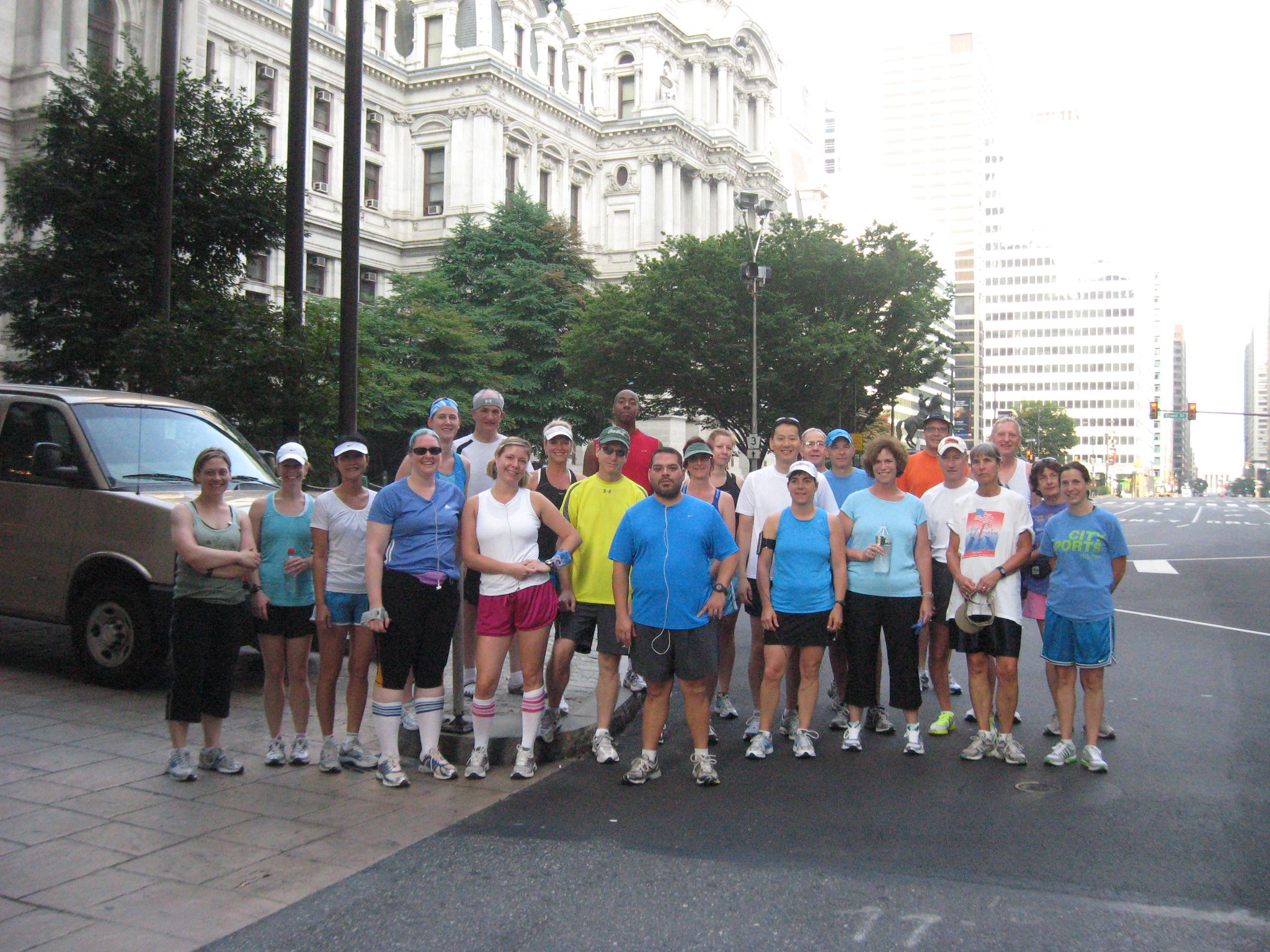
This year’s AALL Un-Run (unsponsored fun run) was organized by fellow LLAM member John Cannan. Both runners and walkers enjoyed the route from the convention center to Philadelphia Museum of Art. The run culminated with a run up the Art Museum steps…just like Rocky!  Several LLAM members participated including Janet Camillo (and Larry), Jean Hessenauer and Joanne Colvin.

______________________________________________________________

Congratulation Sara Thomas

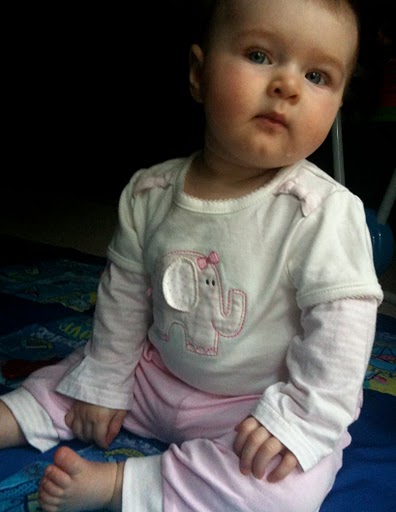
Sara Thomas welcomed Ashlynn Brooke Thomas on February 8, 2011. She weighed 7lbs 11oz and measured 21 inches. 

______________________________________________________________

AALL Committee Appointment

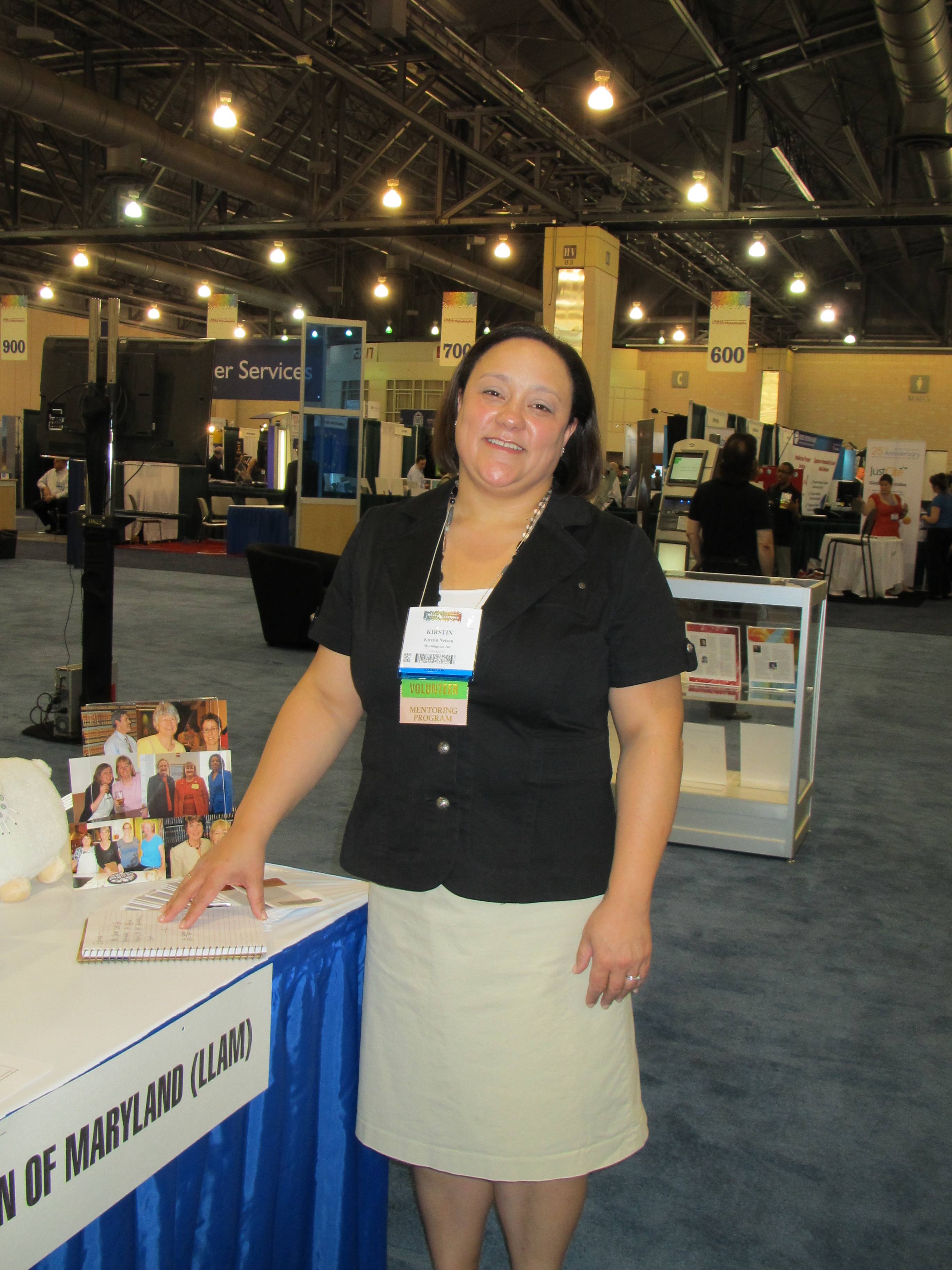
Kirstin Nelson has been appointed to the AALL Recruitment to Law Librarianship Committee for a 2 year term. The Recruitment Committee works to encourage qualified candidates to enter the profession of law librarianship. Efforts include outreach to library and law school career centers, publishing pamphlets, speaking at open houses and more.

______________________________________________________________

MSLL Welcomes New Staff

Maryland State Law Library recently welcomed two new staff members. Pam Luby is the library’s new part-time Research Librarian. Sara Marks is the Fiscal Services Coordinator and is taking over many of the duties handled by Bernice Bernstein.

______________________________________________________________

Lazun Earns Paralegal Certification

Mary Jo Lazun completed her paralegal certification at Anne Arundel Community College. She will be teaching two continuing educational classes for attorneys and paralegals this fall.

______________________________________________________________

Hawkins Joins TMLL as Research Librarian

Jason Hawkins started August 15  as Research Librarian at University of Maryland, Thurgood Marshall Law Library.  Jason was formerly at George Washington University Law School’s Jacob Burns Law Library.  We welcome Jason as a new LLAM member.

______________________________________________________________

New Co-webmasters of LLAM Website

Jenny Rensler has joined Mary Jo Lazun as co-webmaster of the LLAM website this year, and she has added navigation links from the LLAM website to the LLAM newsletter pages for improved access to “LLAM-formation.” Since earning her J.D. in the spring, this fall she is enjoying teaching 30 students in her first course of Advanced Legal Research at the University of Maryland Francis King Carey School of Law. She survived Irene: a 30-foot tree in front of her Riva townhome fell, but fortunately did not damage any property during the hurricane. She and her husband Matt are preparing to move from downtown Baltimore to the Annapolis area this fall in order to be near their families and to ease his commute to work. Now that she will have a commute to work, she is looking forward to catching up on her “reading” with “books on CD” from the library!

Research Tip

Having trouble keeping on top of the proliferation of legal content available for iPad, Android, Blackberry and other mobile devices?  Check out Mobile Apps for Law (http://www.informedlibrarian.com/MobileAppsforLaw), a subscription-based, online database maintained by the helpful staff of Informed Librarian.

Mobile Apps for Law, updated frequently, currently contains annotated listings of over 700 mobile-friendly publications, including price information and links to the relevant publisher website.  Subscribers can filter searches by device and subject, and the website offers a handy tool for locating recent releases.