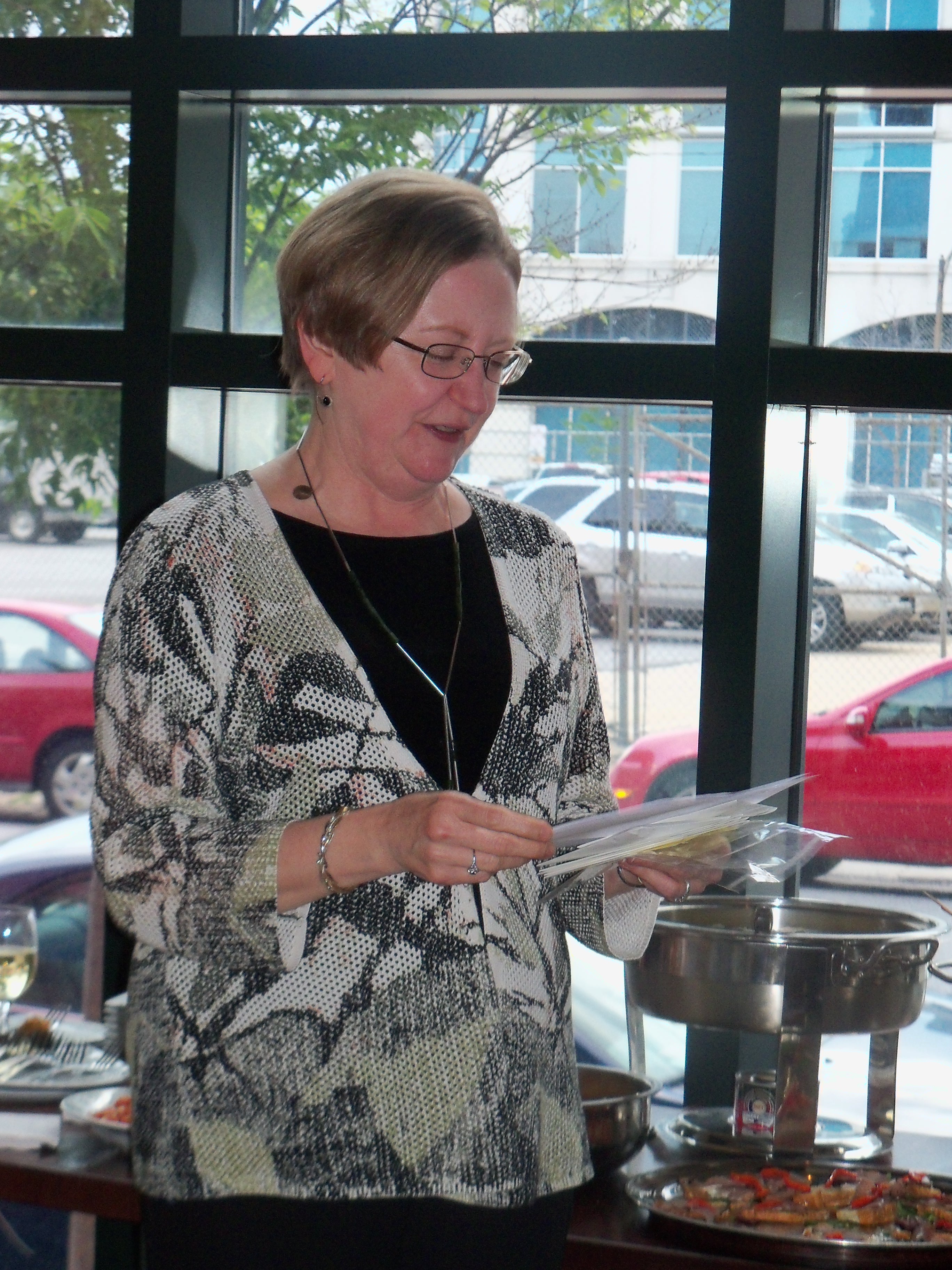
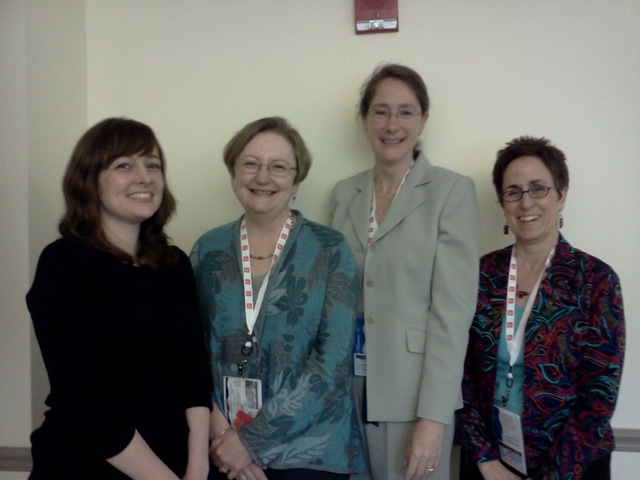
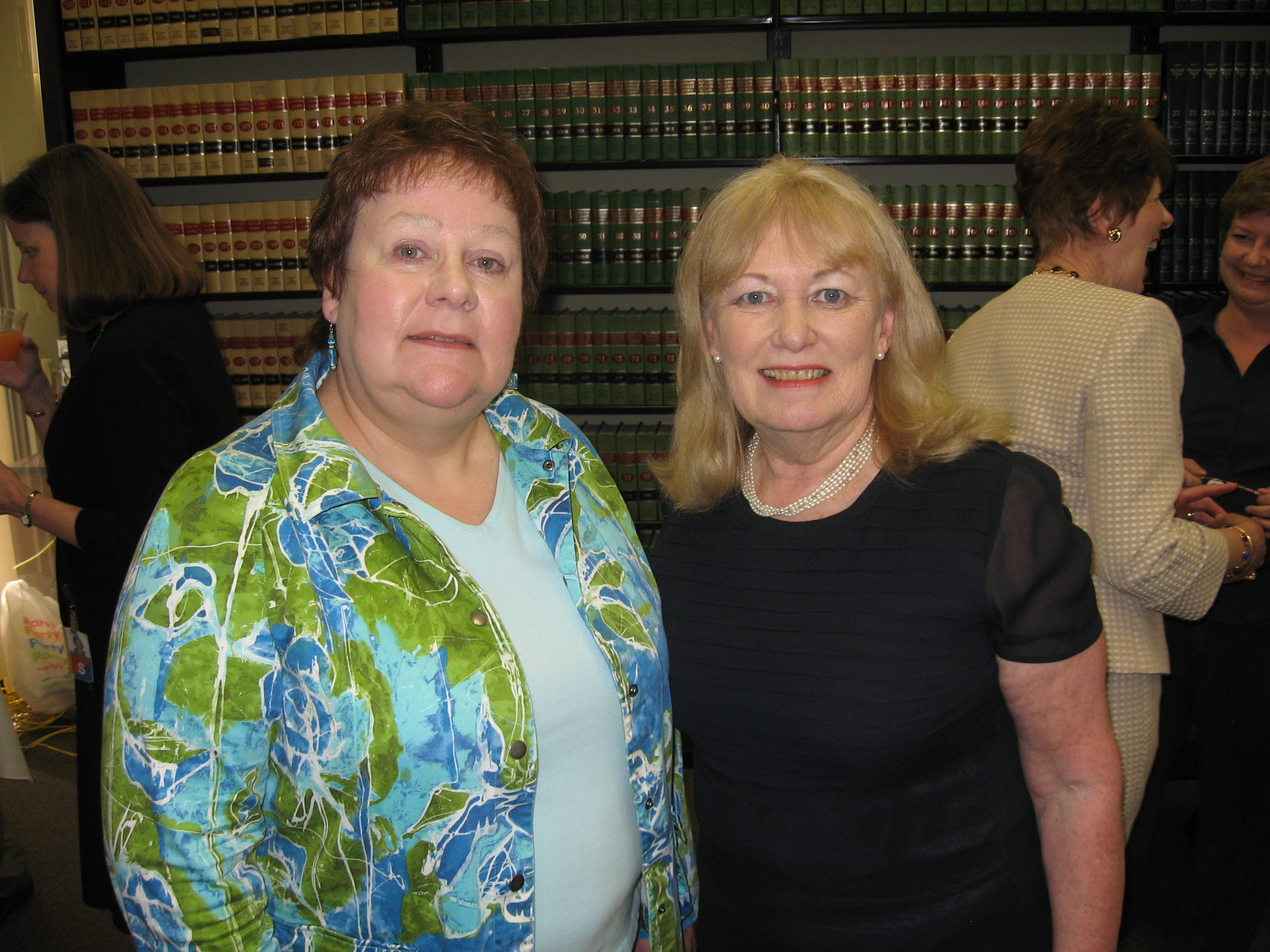
Featured Member – Elizabeth Lukes

Elizabeth Lukes began her library career at the Baltimore Sun, where she started as an intern and later moved into a position in the library. While she enjoyed news research, through her work at the Sun she developed an interest in legal issues and law librarianship. After seeing an advertisement (in the Sun of course!) for the librarian position at the Maryland Office of Administrative Hearings (OAH), she applied, and has been in that job since 2006. She studied for and obtained her MLS in Florida State University’s online program.

Currently a one-person operation, the library at OAH serves a number of functions. Much of Elizabeth’s time is spent conducting administrative and legislative history research for the Administrative Law Judges (ALJs).  There are about 65 ALJs, a number which has increased since the OAH began handling foreclosure mediations in 2010.   In cooperation with a paralegal for Quality Assurance, Elizabeth also monitors changes in various agency regulations and procedures and apprises the ALJs of them. The variety of agencies, and their differing policies and practices, make this a challenging but rewarding endeavor.

The OAH has a number of interns from law schools every summer, who shadow the ALJs and help them research and write their decisions, and who no doubt find Elizabeth a valuable source of information and support.

In another aspect of her job, Elizabeth oversees the library’s print collection, as well as filing and maintaining the collection of signed ALJ decisions that are kept for seven years according to internal policy. The number of signed decisions varies widely depending on agency policy and practice. Some agencies reserve the right to reverse ALJ decisions, and others do not.

Also, the OAH library is open to the public. To view ALJ decisions requires advance filing of a Public Information Act request in order to protect the confidentiality of many opinions. Dealing with these requests is another aspect of Elizabeth’s job.  She recalls one patron who brought in a scanner to assist with his research.

Drawing on her experience producing focus group videos in a previous position at an ad agency, Elizabeth has also taken on the task of assisting other OAH staff members with preparing presentations. Recently Elizabeth chaired a committee that developed a video to assist people who wish to represent themselves in administrative hearings. A production crew from another state agency filmed and edited the project. The two-part video is about 30 minutes long and covers one Motor Vehicle Administration (MVA) and one non-MVA hearing. This video is available from the OAH Web site.

When she isn’t wearing one of the many hats she wears for her OAH job, Elizabeth works as a wedding videographer on the weekends. She and her husband have been pursuing this for about five years. She describes this as a “high adrenaline” endeavor which draws upon both her physical stamina and entrepreneurial interests. Often obtaining clients by word of mouth, she has worked with a number of ethnically diverse weddings, which she describes as fascinating to film.  She sees this work as an enriching experience and one that effectively counterbalances her “day job” in library work.

Elizabeth enjoys knowing the policies of the various agencies and being a conduit of information for the staff of the OAH. Further, she looks forward to managing the transition of OAH library as it moves from print to digital information.

Two Members Receive AALL Awards

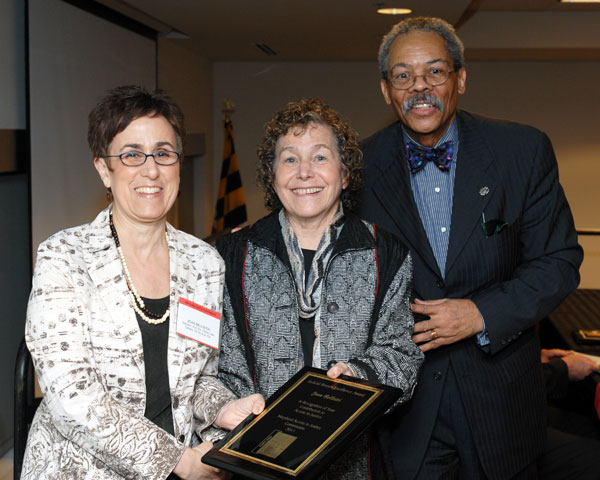
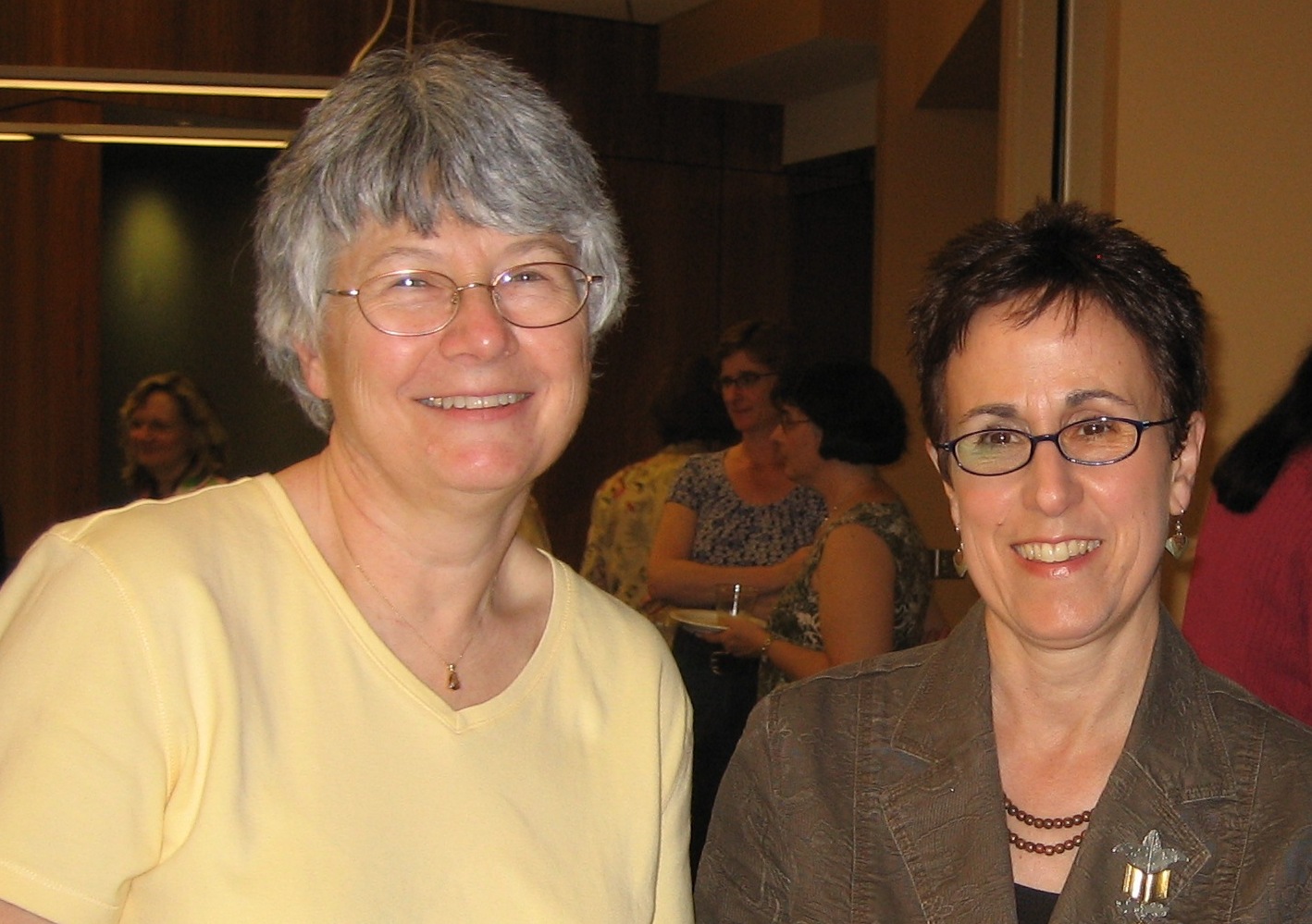
Janet Camillo, Joan Bellistri

Longtime LLAM members Janet Camillo and Joan Bellistri received national law library association awards this year, which will be presented during the 2011 AALL Annual Meeting and Conference in Philadelphia. Janet received the Bethany J. Ochal Award for Distinguished Service to the Profession from the SCCLL-SIS. “This award goes to a State, Court and County Law Libraries Special Interest Section member who has made a significant contribution to law librarianship and who is nearing the end of his or her library career or who has recently retired. Criteria for receiving this award include service to the profession of law librarianship, contributions to legal research, teaching and outreach efforts and recognition by members of the legal or government community.” Janet is the only recipient of the Ochal Award this year. She retired in January of this year from the Montgomery County Circuit Court Law Library, where she served as Director since 2006. The award will be presented at the SCCLL breakfast meeting on Sunday morning, July 24, at 7:00 a.m. in the Marriott-Liberty Ballroom Salon AB.

Joan Bellistri, director of the Anne Arundel County Public Law Library, was selected as the 2011 recipient of the American Association of Law Libraries Robert L. Oakley Advocacy Award, which recognizes “an AALL member or group who has contributed significantly to the AALL advocacy agenda at the federal, state, local, or international level.” The judges also consider “the extent to which the individual or group has been an active advocate for law libraries and legal information at the federal, state or local level.” Joanie will receive this award at the AALL Public Policy Update program (D-2) on Monday, July 25, at 8:45 a.m. in the Pennsylvania Convention Center Room 201 (A).

AALL Annoucements – June 2011

1. AALL2go Pick of the Month

2. Unleash Your Inner Leader October 28-29 (application deadline June 30)

3. New and Improved AALLNET Now Live

4. A New AALL Membership Year is Underway—Don’t Miss Out!

________________________________________________________

AALL’s Continuing Professional Education Committee presents the AALL2go pick of the month: Federal Regulatory Information and Where to Find It.

In this one-hour video, David Pritzker of the U.S. General Services Administration (GSA) Regulatory Information Service Center provides a handy tutorial on the federal rulemaking process, including where the public can find access to federal regulations. The GSA Regulatory Information Center publishes a semiannual unified agenda on regulatory actions under development. The fall publication of the agenda includes a regulatory plan identifying current regulatory priorities and highlighting significant regulatory actions expected in the coming year. The center also helped establish Reginfo.gov to provide a “regulatory dashboard” of current information on the regulatory process, which includes handy FAQs on the regulatory process and hyperlinks to government sources for the regulations.

Pritzker’s presentation explains the evolution of public access to regulatory information (including the genesis of the Code of Federal Regulations and Federal Register), how the Administrative Procedure Act creates a legal framework for the adoption of regulations in a manner allowing for public input, and where to find regulatory information, including new, free web-based government resources.

Find this and more than 80 other free continuing education programs and webinars for AALL members on AALL2go!

________________________________________________________

Unleash Your Inner Leader October 28-29

New law librarians in the early stages of your career—achieve your leadership potential by attending the 2011 AALL Leadership Academy, October 28-29 in the Chicago area. Designed as an intensive learning experience aimed at growing and developing leadership skills, the academy program will help you discover how to maximize your personal leadership style while connecting with other legal information professionals.

The program will feature speakers Gail Johnson and Pam Parr. Johnson is a widely regarded leadership and communications expert and holds a Master of Arts in Communication Studies. Parr has extensive business management and customer service expertise. They have conducted many leadership programs for library organizations and will speak at the 2011 American Library Association Annual Conference.

Applications are due by June 30.

________________________________________________________

New and Improved AALLNET Now Live

In May AALL launched the redesigned AALLNET where you’ll discover a new layout, easy-to-use navigation, more features and functionality, and a stronger brand.

The new AALLNET will allow you to:

  • Easily navigate the site to browse for information or complete a specific task, such as register for an event or apply for a grant.
  • At a glance from the homepage, view the latest news, events, job postings, and AALL’s Twitter feed.
  • Use the search box to find specific information; results can also be further refined or used to discover related resources.
  • Collaborate electronically with your special interest sections, caucuses, and committees and network with like-minded members by using our online network called My Communities.

Visit AALLNET today and explore the new resources available for you!

________________________________________________________

A New AALL Membership Year is Underway—Don’t Miss Out!

AALL’s new membership year just began on June 1. If you haven’t renewed already, be sure you do today so you don’t miss out on valuable member benefits.

The new and improved AALLNET debuted this spring. The new site is easy to navigate, features a fresh new look, and includes improved search functionality. New social media tools allow you to form your own member groups and create group discussion forums, websites, blogs, and more.

AALL2go, your online center for professional development, brings continuing education programming to your desktop, available 24/7. There are already more than 80 free programs for AALL members, with new content added monthly. Look for the 2011 Annual Meeting and Conference programming to be available on August 5.

AALL’s online Career Center provides advanced resume and job search features, whether you’re looking to find or fill a law library position.

AALL is offering a discounted membership rate for AALL members who are recently unemployed ($57 instead of $226). Unemployed AALL members should fill out the online form.

Find more information or renew your membership online. If you have any questions about your membership renewal, contact AALL Headquarters at membership@aall.org or 312/205-8022

Joan Bellistri Awarded the Access to Justice Commission’s Maryland Access to Justice Award

By Mary Rice
Charles County Public Law Library
 

Joanie Bellistri received an important Maryland state award this year. She was one of the inaugural recipients of the Maryland Access to Justice Commission’s Maryland Access to Justice Awards. “These awards recognize individuals, programs and entities in the State that improve the ability of all Marylanders to access the courts or to get legal help in civil legal matters so they can benefit from the rights, protections, services and opportunities that the law provides,” said retired Maryland Court of Appeals Judge Irma S. Raker, chair of the Commission. Joanie was awarded the Judicial Branch Excellence Award “for her ongoing efforts to make legal information more accessible through publications, training and programs such as the creation of a self-help corner in the court’s law library. [She] also created the ‘Ask a Lawyer in the Library’ program in Anne Arundel County, organizing attorney volunteers to staff regular clinics at local public libraries.” Joanie received her award at the 2011 Judicial Conference on May 13 in Annapolis. She was in good company. Other honorees included Gov. Martin O’Malley, winner of the Executive Branch Award, and Chief Judge Ben C. Clyburn of the District Court of Maryland, winner of the Judge of the Year Award.

People’s Law Library Web Site Wins AALL Award

Congratulations to the Maryland State Law Library for being the 2011 recipient of the AALL Innovations in Technology Award for The People’s Law Library (http://www.peoples-law.org).  The Innovations in Technology Award was established in 2009 “to recognize an AALL member, SIS, chapter, or library for their innovative use of technology in the development of an application or resource for law librarians or legal professionals.”  The award will be presented during the AALL Opening Reception on Saturday, July 23rd, from 5:30 to 6 p.m. Kudos to the State Law Library and all its staff who have been involved in this project!

What’s New with LLAM Members? Awards, Graduations and more…

1. Joan Bellistri Wins Access to Justice Award
2. Two Members Receive AALL Awards
3. Jenny Rensler Graduates from University of Maryland School of Law
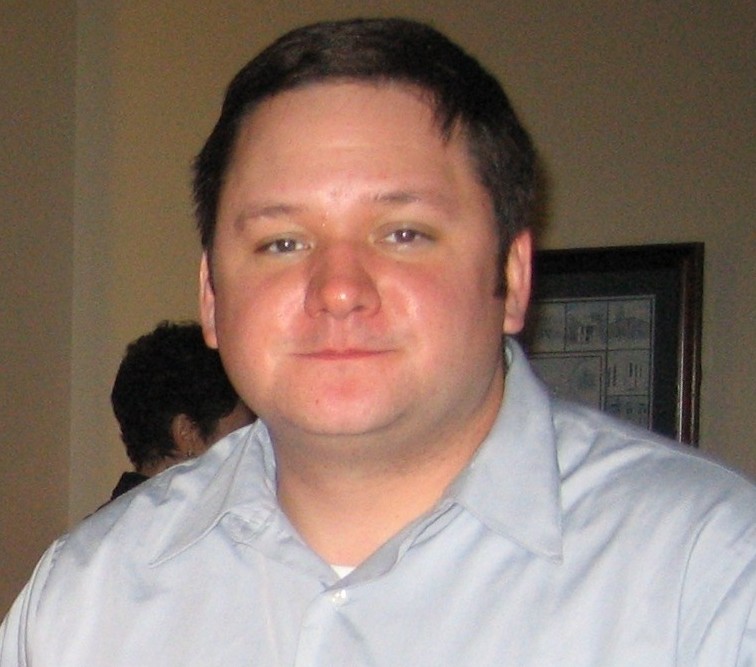
4. Kurt Meyer Accepts New Job
5. Evan Levasseur Graduates
6. People’s Law Library Web Site Wins AALL Award

_____________________________________________

1. Joan Bellistri Wins Access to Justice Award

Joan Bellistri, Judge Irma S. Raker, Judge Robert Bell

Joanie Bellistri received an important Maryland state award this year. She was one of the inaugural recipients of the Maryland Access to Justice Commission’s Maryland Access to Justice Awards. “These awards recognize individuals, programs and entities in the State that improve the ability of all Marylanders to access the courts or to get legal help in civil legal matters so they can benefit from the rights, protections, services and opportunities that the law provides,” said retired Maryland Court of Appeals Judge Irma S. Raker, chair of the Commission. Joanie was awarded the Judicial Branch Excellence Award “for her ongoing efforts to make legal information more accessible through publications, training and programs such as the creation of a self-help corner in the court’s law library. [She] also created the ‘Ask a Lawyer in the Library’ program in Anne Arundel County, organizing attorney volunteers to staff regular clinics at local public libraries.” Joanie received her award at the 2011 Judicial Conference on May 13 in Annapolis. She was in good company. Other honorees included Gov. Martin O’Malley, winner of the Executive Branch Award, and Chief Judge Ben C. Clyburn of the District Court of Maryland, winner of the Judge of the Year Award.

________________________________________________

2. Two Members Receive AALL Awards

Janet Camillo, Joan Bellistri

Longtime LLAM members Janet Camillo and Joan Bellistri received national law library association awards this year, which will be presented during the 2011 AALL Annual Meeting and Conference in Philadelphia. Janet received the Bethany J. Ochal Award for Distinguished Service to the Profession from the SCCLL-SIS. “This award goes to a State, Court and County Law Libraries Special Interest Section member who has made a significant contribution to law librarianship and who is nearing the end of his or her library career or who has recently retired. Criteria for receiving this award include service to the profession of law librarianship, contributions to legal research, teaching and outreach efforts and recognition by members of the legal or government community.” Janet is the only recipient of the Ochal Award this year. She retired in January of this year from the Montgomery County Circuit Court Law Library, where she served as Director since 2006. The award will be presented at the SCCLL breakfast meeting on Sunday morning, July 24, at 7:00 a.m. in the Marriott-Liberty Ballroom Salon AB.

Joan Bellistri, director of the Anne Arundel County Public Law Library, was selected as the 2011 recipient of the American Association of Law Libraries Robert L. Oakley Advocacy Award, which recognizes “an AALL member or group who has contributed significantly to the AALL advocacy agenda at the federal, state, local, or international level.” The judges also consider “the extent to which the individual or group has been an active advocate for law libraries and legal information at the federal, state or local level.” Joanie will receive this award at the AALL Public Policy Update program (D-2) on Monday, July 25, at 8:45 a.m. in the Pennsylvania Convention Center Room 201 (A).

________________________________________________

3. Jenny Rensler Graduates

Jenny Rensler

Jenny Rensler graduated from the University of Maryland School of Law with a Juris Doctor degree on May 20, 2011. While in law school since 2007, Jenny continued working at the Thurgood Marshall Law Library as Research Librarian. Jenny will join her esteemed colleagues on the library faculty who teach legal research at Maryland School of Law and teach her first legal research course in Fall 2011.

________________________________________________

4. Kurt Meyer Accepts New Job

Kurt Meyer

Kurt Meyer, Research Librarian at Thurgood Marshal Law Library, has accepted a new job at Gonzaga University School of Law in Spokane, Washington. Kurt’s new position will be Reference Librarian and Assistant Professor of Law.  Good luck, Kurt!

________________________________________________

5. Levasseur Graduates

Evan Levasseur

On May 26, 2011 Stephanie Levasseur’s son, Evan, graduated from kindergarten at the Immaculate Conception School. Congratulations, Evan!

________________________________________________

6. People’s Law Library Web Site Wins AALL Award

Congratulations to the Maryland State Law Library for being the 2011 recipient of the AALL Innovations in Technology Award for The People’s Law Library (http://www.peoples-law.org).  The Innovations in Technology Award was established in 2009 “to recognize an AALL member, SIS, chapter, or library for their innovative use of technology in the development of an application or resource for law librarians or legal professionals.”  The award will be presented during the AALL Opening Reception on Saturday, July 23rd, from 5:30 to 6 p.m. Kudos to the State Law Library and all its staff who have been involved in this project!

Committee Report – Archives

By Katherine Baer
Maryland Collections & Reference Librarian
Maryland State Law Library


I don’t know if all of you know, but LLAM has an Archive.  Well, it’s actually a collection of boxes filled with LLAM stuff and housed in a storeroom at the University of Maryland Law Library. The Archive was previously maintained by Beverly Rubenstein and housed at the Attorney General’s Office.  I recently went through the collection in order to migrate the materials into archival boxes.  I updated the inventory, put like items with like items, and I did do some tossing.

The collection has quite a variety of materials.  There are chronological files that were contributed by each LLAM president.  These make up the bulk of the collection and vary in terms of depth and breadth.  They start back when LLAM was still BLISS (Baltimore Law Information Specialists Society).  Going through these chronological files will be one of the next tasks for the Archives Committee.  The Archives also has materials on LLAM’s incorporation and its Constitution. Then there are all the newsletters and files on special events such as the anniversary celebrations, AALL in Baltimore, County check-lists, and the Legal Research Institutes.

There are some real archival challenges in the collection.  When going though I found floppy discs, VHS, cassette tapes, CD-Roms, photographs, and even a foam crab hat.  We still have some drives that play floppies at the State Law Library, so this will be one of the first things I work on migrating.  I have also set-up a test flickr account that can be used to house all of the digital photographs that have been taken in the recent past.  We will be asking for all of your help in trying to match faces and names in some of the photographs. There will be more information on that later.  I also have a request for all LLAM members: if you have any materials that you think would make a nice addition to the Archives, please contact me at Katherine.baer@mdcourts.gov

Featured Articles – June 2011

AALL Program Preview:  Chinese and American Forum on Legal Information and Law Libraries (CAFLL) Conference

AALL Program Preview:  Services for Self Represented Litigants In Pennsylvania

Ideas in Client Service: Lessons from the Union Square Café

Document Delivery at the Maryland State Law Library

Looking to Beef Up your Resume?

UB Law Collection Development Reflects Changing Trends in Librarianship

“Link Rot” and Legal Resources on the Web:  Have We Reached a Plateau?

Dee Van Nest Retires from the Maryland State Law Library

AALL Working Group Update

Legal Research “Demystified” at MLA pre-conference in Ocean City

2011 Spring Fling Gallery

2011 Spring Fling

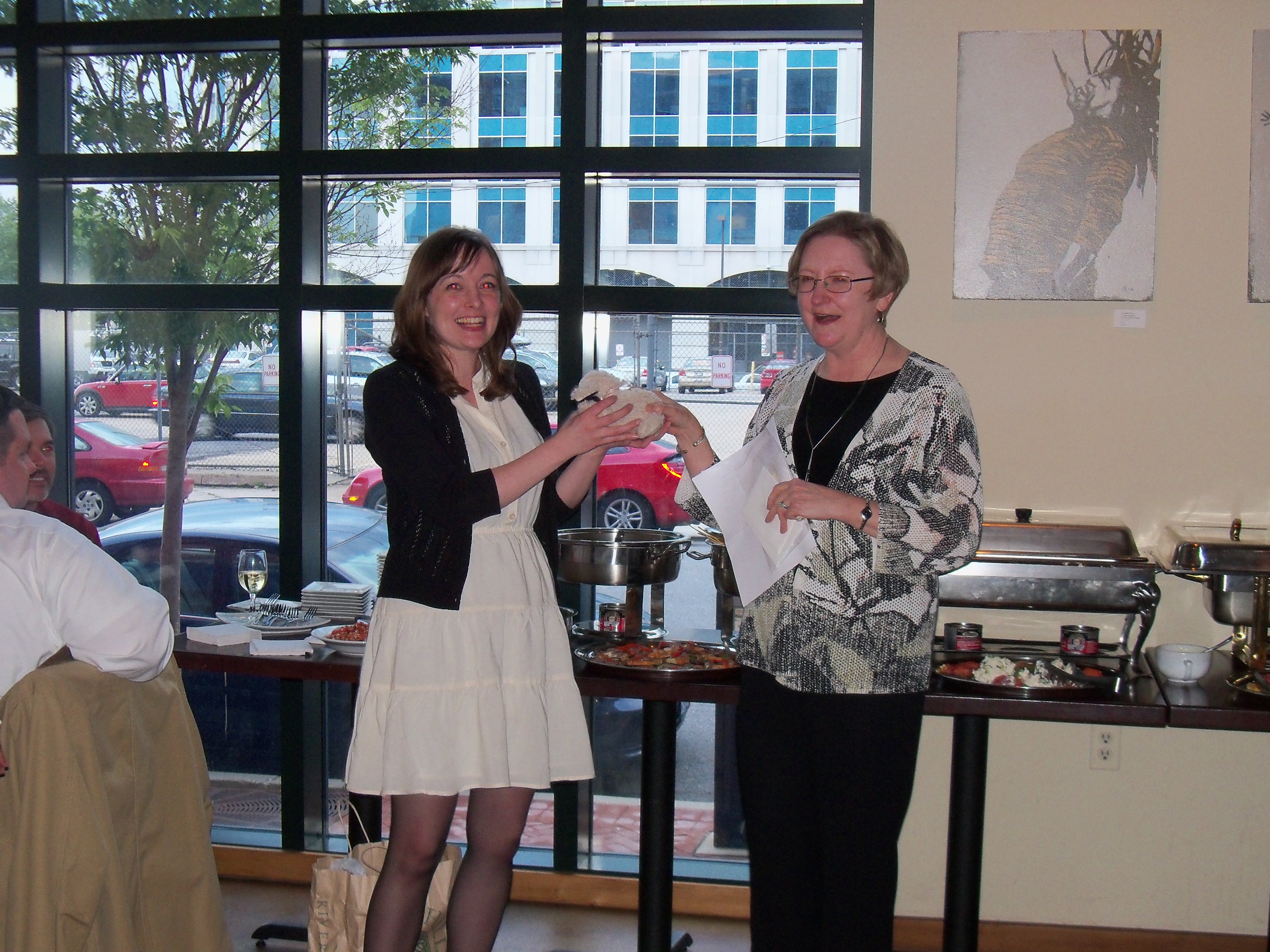
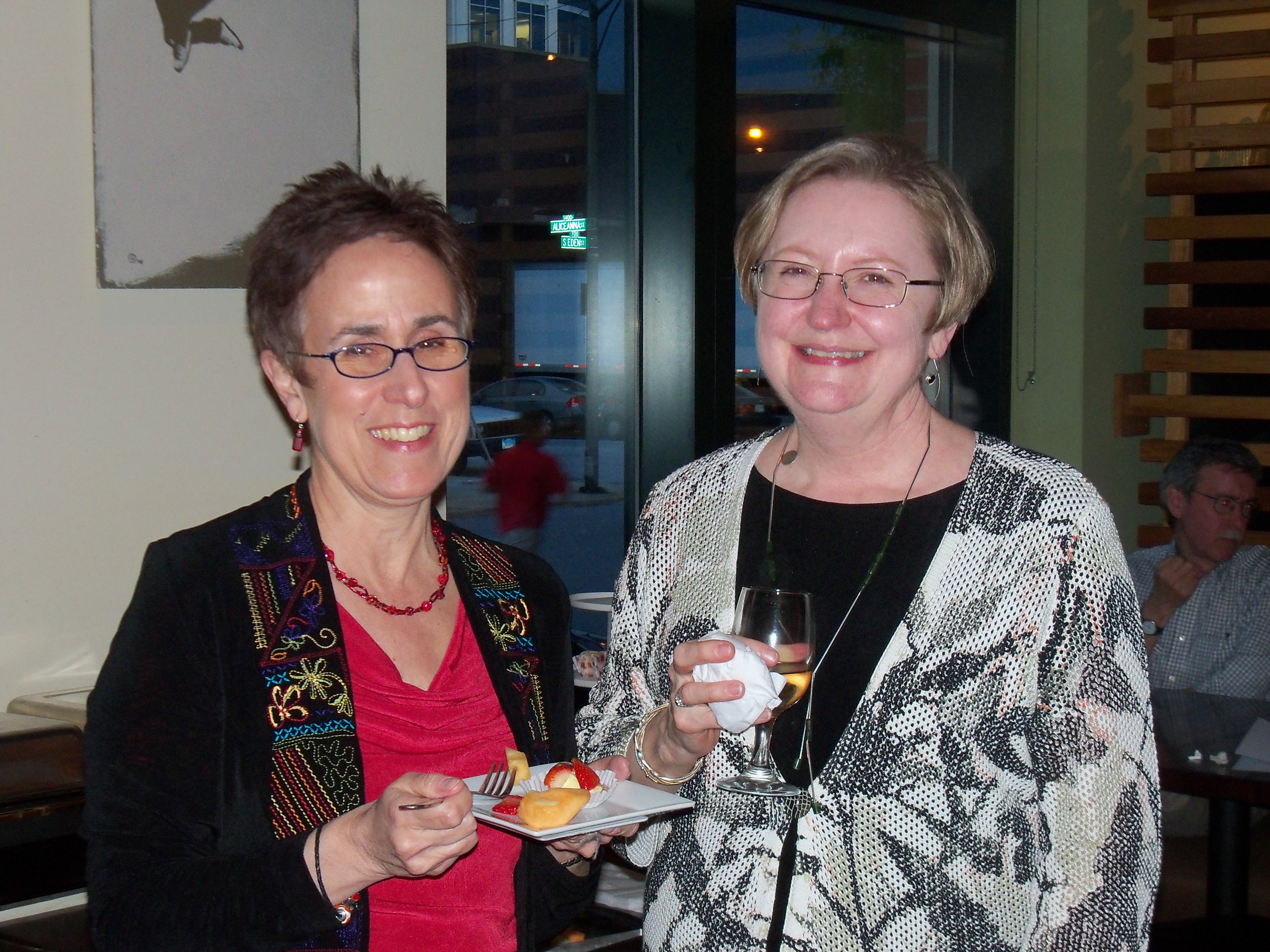
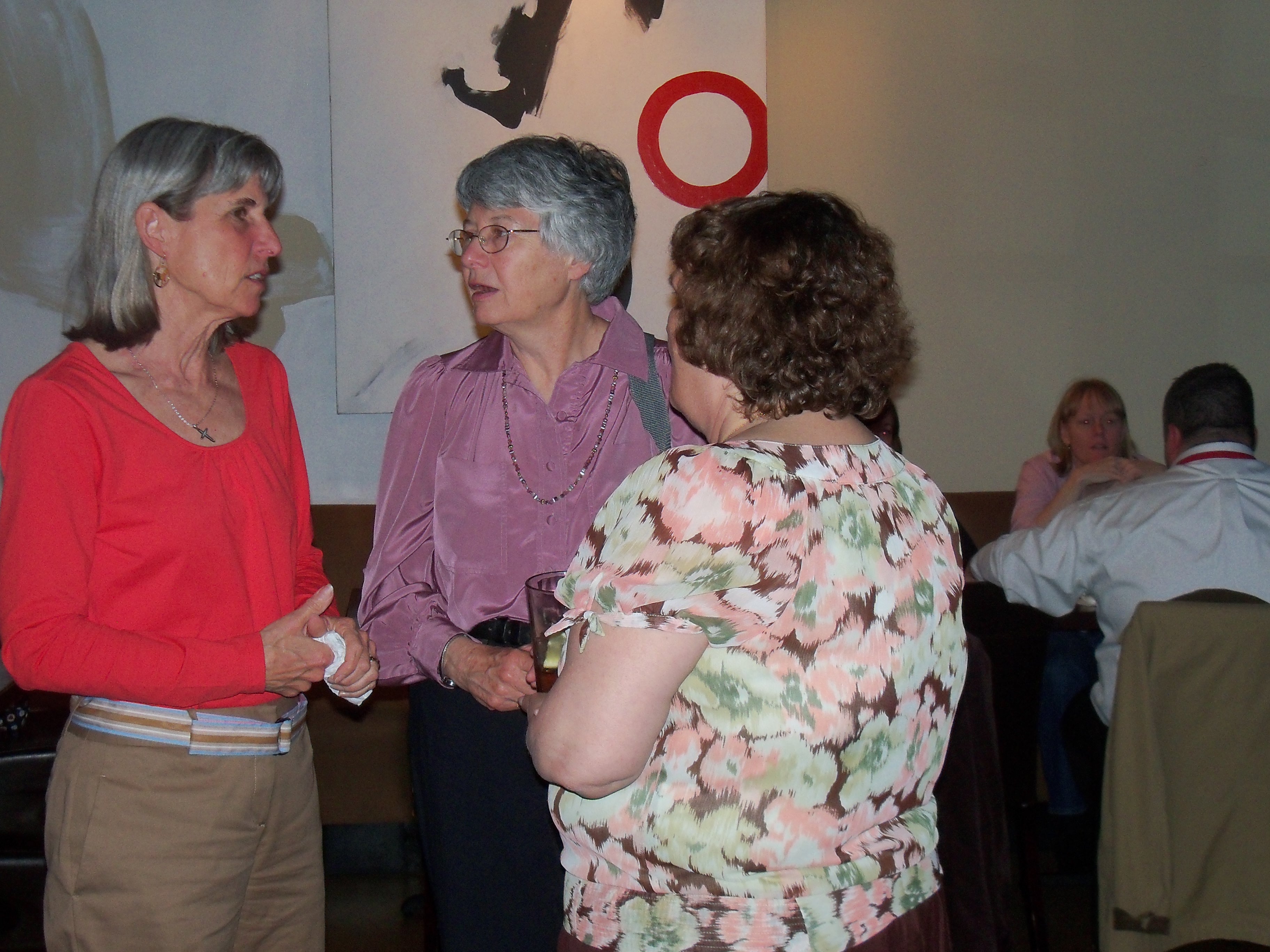
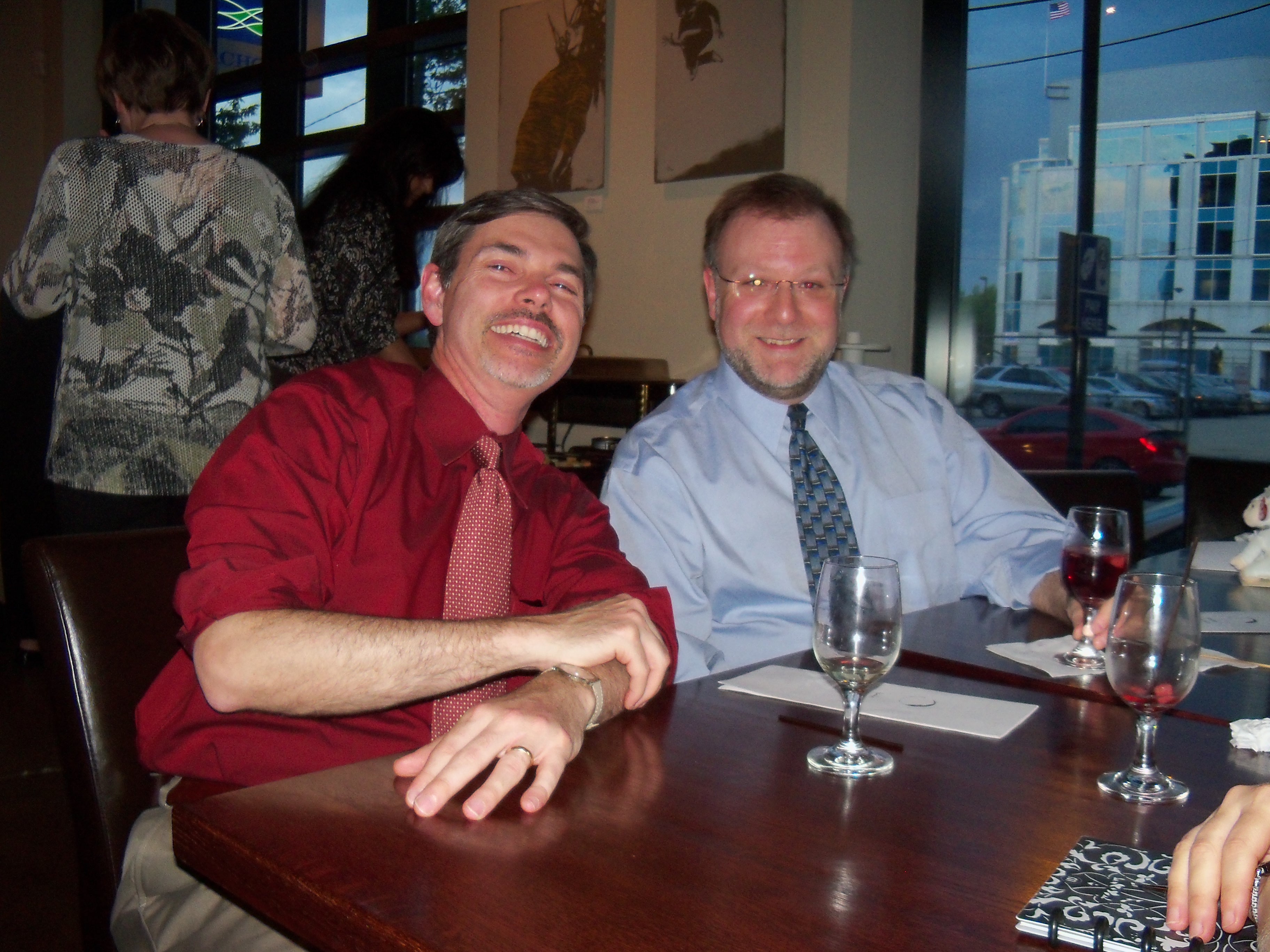
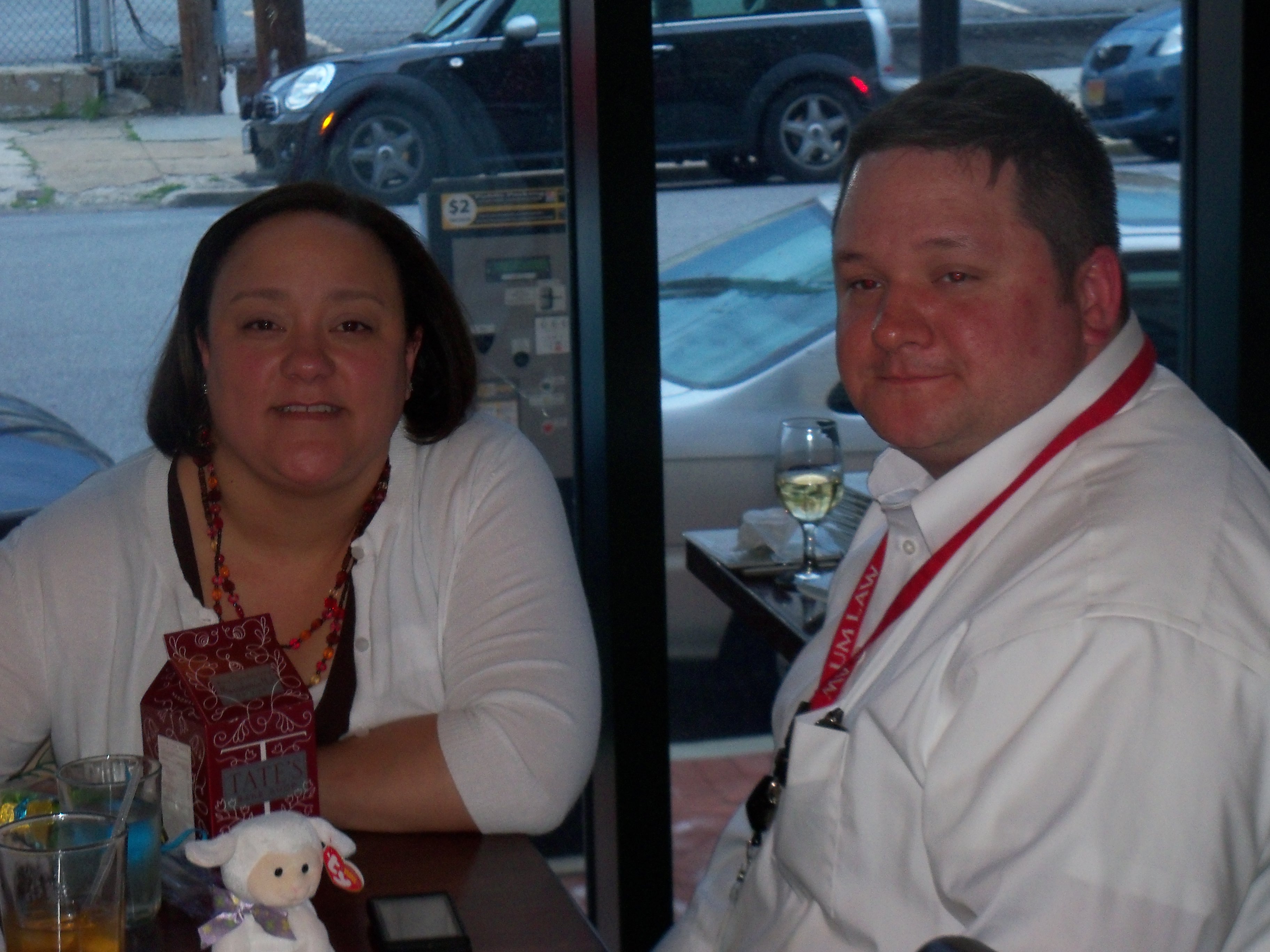
On May 2nd, over 20 members of LLAM enjoyed a dinner buffet and desserts at Teavolve at Harbor East in Baltimore. Susan Herrick thanked the 2010-2011 Board Members, committee chairs, and volunteers in her final speech as LLAM President. Sara Witman was greeted as the incoming chapter president for the 2011-2012. Thanks for a great year!

Legal Research “Demystified” at MLA Pre-conference in Ocean City

By Sara Witman
Research Librarian
Gordon, Feinblatt, Rothman, Hoffberger & Hollander

On May 4, four LLAM members presented the basics of “Researching Law Like Lawyers” to a group of around 20 in-person academic and public librarians – as well as additional virtual participants – at the pre-conference portion of “Library Heaven 2011,” the Maryland Library Association and Delaware Library Association’s joint annual meeting in Ocean City, Maryland.

The pouring rain did not appear to deter attendance in the full room of the public library across the street from the Clarion Hotel. Speaking at the program were Joanie Bellistri of the Anne Arundel County Public Law Library; Susan Herrick of the Thurgood Marshall Law Library at the University of Maryland School of Law; Catherine McGuire of the Maryland State Law Library; and myself, Sara Witman from the law firm, Gordon, Feinblatt, Rothman, Hoffberger & Hollander.

The full program title was “Demystifying Legal Research: Researching Law Like Lawyers,” and the four-part presentation covered the basics of most aspects of legal research in just under three hours.

By “demystifying,” the presenters hoped to make legal research clear and simple for librarians who may not do it every day. Since academic and public librarians often field legal research questions at a reference desk, the presentation was designed to provide these librarians with a background of relevant legal authorities and the legal research process.  The program was worth three contact hours of continuing education in Maryland.

Joanie first walked the attendees through the branches of government and court systems in both Maryland and Delaware.  She then described relevant secondary sources such as treatises and articles, and discussed how they are used in legal research and how to find them.

Catherine then moved on to statutory law.  She explained the Federal and Maryland legislative systems, how bills become laws, and how to conduct statutory research using both free and not-so-free sources.

The next part of the presentation was administrative law. Although this is often a daunting subject, Susan effortlessly provided a thorough overview of what regulations are, how they are promulgated, and where to find information about regulations online.

As the final portion of the program, I quickly explained the basics of case law.  I described what cases were and how to find them online, either from a free or paid source.

Interestingly, the presentation took place both on-site and online. Virtual participants watched the presentation on the internet and were given polls and questions to stay involved.  This was the first time the presenters had done a joint in-person/virtual presentation, and it was very successful.

AALL Working Group Update

By Joan Bellistri
Anne Arundel County Public Law Library
 

The Maryland Inventory of Primary Legal Information is Done!

The Maryland Working Group has completed the Maryland section of the National Inventory of Primary Legal Information. The Maryland Working Group is one of many AALL working groups working to collect information on the availability of all primary legal resources in the United States at every level of government. Each state has been working to enter this information into their own Google spreadsheet. According the Government Relations Office Issue Brief,  once information from all fifty states, D.C., and the federal government has been collected, the results will be analyzed and used as needed by experts who will be working with LAW.gov, the Law Library of Congress and AALL public policy committees.

The Maryland Working Group has been working since last August to collect information for all Maryland primary law. We had a “final push entry party” on May 12 at the Maryland State Law Library to work entering the information for the municipalities. I joined Susan Herrick, Mary Rice, Vickie Yiannoulou, Andy Zimmerman and Mary Jo Lazun for our “party.” Meeting at the State Law Library allowed us to all work together with laptops accessing the online information via the wifi there. We also had easy access to the library’s collection of municipal print codes. Working as a group we were able to discuss and resolve any questions as they arose.

The working group began work with the state level of primary materials. After the first “party” in August where the spreadsheet and entry form were demonstrated, each member of the group volunteered to collect information for the various branches of government. The next step involved collecting the information for all levels of county government. Members of the Conference of Maryland Court Law Library Directors volunteered to enter information for their respective counties. Since there are many more counties than conference members, it was great that Mary Rice was willing to work on most of the other counties.

There are more than 150 municipalities in Maryland. This next step presented a challenge for meeting the June 2011 deadline. Mary Rice and Janet Camillo began work on the municipalities as soon as the counties were done. In order to meet the deadline, I planned another group entry “party.”  After May 12, we all agreed to continue until all municipalities on the list had been entered. (We used another Google spreadsheet to keep track of who had done which municipality so that we would not duplicate efforts.)

I am happy to report that we were finished by June 1. I want to thank everyone who contributed to this major project: Steve Anderson,  Janet Camillo (who continued to work after her retirement), Pat Behles, Joanne Colvin, Tonya Baroudi, Katherine Baer, Susan Herrick, Mary Jo Lazun, Carol Mundorf, Andy Zimmerman, Flossie Barnes, Errin Roby, and Vickie Yiannoulou.  And a special thanks to Mary Rice, who did far more than her fair share, and also took on the task of  reviewing the inventory after all was entered.

Dee Van Nest Retires from the Maryland State Law Library

By Catherine I. McGuire
Outreach Services Law Librarian
Maryland State Law Library
 

Dee Van Nest

A library seems an odd place to find someone with a double degree in English and fine arts, but Dee Van Nest has infused her 39-year career at the State Law Library with the benefits of both. Dee has long been the point-person for fliers, signs, brochures, and exhibits, but when she retires at the end of April, she will take with her that fine arts expertise, as well as a deep institutional knowledge and thorough understanding of the sources of old English law that the Law Library staff has depended on for years.

Dee started her Judiciary career in Spring 1972, when the State Law Library was housed in the old Court of Appeals building in downtown Annapolis on the site of the current Department of Legislative Services building. She distinctly remembers the glass floors on the second and third floors as “scary — it took a while to get used to walking on them.” The building, she recalls, had lots of wrought iron and marble, and stayed cool in the summer. She didn’t get to enjoy the glass and wrought iron for long, though. A few months after starting the job, in August 1972, the Library, along with the Court, moved into its current location on Rowe Boulevard. Dee designed the organizational system to move all of the books, with the help of a phalanx of college students. “It was fun,” she says. “Everyone pitched in, and we really enjoyed ourselves.”

Dee Van Nest and Ruth Hodgson

Dee’s expertise in English law sources began when she was asked to assist in a search for a 1713 English statute under Queen Anne, dealing with breaking out as opposed to breaking and entering. Having studied Chaucer in college, Dee enjoyed the British writing, and decided to learn everything she could about the English legal system to be better prepared for similar questions in the future. “Over the years,” Dee says, “the knowledge has come in handy.”

Over Dee’s four decades here, there have been many changes in how the Library looks, functions, and serves its customers. Of all the technology changes, though, Van Nest says, “the neatest thing was Lexis.” In the late 1970s, shortly after Mike Miller joined the Library as director, the Library got its first Lexis connection, a single machine that was kept in one of the side offices. When a judge or law clerk needed a Lexis search run, either Mike or Dee would structure the search and run it on the stand-alone machine. “Searches weren’t cheap,” Dee says, “you paid by the minute. It was important to be careful and proficient, to keep the cost down.” Lexis was such a big deal that a local television network filmed Dee doing a search for the evening news.

Dee and Judge Peter B. Krauser

One of Dee’s biggest challenges, and one of her most rewarding projects, was the design of the Library’s Special Collections Room and the preservation and display of the Library’s collection of John James Audubon’s Birds of America elephant folio prints. Dee worked closely with the Baltimore-based company that designed the display case and the Philadelphia-based preservation group that restored the Birds to their now-glorious state. The Birds are displayed at the front of the Library, one or two at a time. For the last several years, it has been Dee’s pleasure and privilege to choose the next prints for display, carefully don the requisite white gloves, and rotate the birds.

Bernice Bernstein and Dee

Like her recently retired colleague Bernice Bernstein, Dee remembers the Library as a place people visited often. Today, she says, most of the Library’s patrons call or email for assistance rather than coming in person. She knew most of the appellate judges, law clerks, and local attorneys by sight as well as by name. She misses those face-to-face interactions, though she admits much of the technology is more convenient for users.

Dee doesn’t plan to just sit back and relax in retirement. She will continue to show her favorite Irish Wolfhounds (her current furry love is Rhett), and will spend more time working with therapeutic riding, assisting children with special needs, at a stable in Crownsville. She is also, as always, continuing her cooking and canning, with plans to perhaps do some teaching in that area. And most importantly, she looks forward to extra quality time with her grandson, Sam.

“The best part of the job has been the intellectual challenge. It’s never boring,” Dee says. “No matter how long you work in a law library, you will always encounter a question that you have never researched. What could be better than that?”

Susan Herrick and Mary Jo Lazun

Susan Herrick, Katherine Baer, and Joan Bellistri

Steve Anderson

Carol Carman and Dee

‘Link Rot’ and Legal Resources on the Web: Have We Reached a Plateau?

THE CHESAPEAKE GROUP’S FOURTH ANNUAL ANALYSIS FINDS THAT LINK ROT IS SLOWING, BUT STILL PRESENT IN MORE THAN 30% OF URLs

WASHINGTON (April 25, 2011) – Does the rate at which Web pages are lost to “link rot” slow down over time? The latest link rot study conducted by the Chesapeake Digital Preservation Group shows that this might be the case.

As National Preservation Week 2011 begins, the Chesapeake Digital Preservation Group is releasing the results of its fourth annual analysis of link rot among the original URLs for law- and policy-related materials published to the Web and archived by the Chesapeake Group. After three years of observing the rate of link rot nearly double on an annual basis, the Chesapeake Group found that link rot in its sample of URLs originally collected in 2007 and 2008 increased by only 2.5 percent in 2011. The sample includes URLs primarily from state government (.state.__.us), government (.gov), and organization (.org) top-level domains.

The Chesapeake Group is a shared digital archive for the preservation of Web-published legal materials, which often disappear as online content is reorganized or deleted over time. Participants include the Georgetown and Harvard Law Libraries and the State Law Libraries of Maryland and Virginia.

The 2011 analysis reveals that 30.4 percent of the online publications in the sample have now disappeared from their original Web pages but, due to the group’s Web preservation efforts, remain accessible via permanent archive URLs. This sample of online publications was first analyzed in 2008 and showed link rot to be present in 8.3 percent of the publications’ original URLs. In 2009, the same sample showed an increase in link rot to 14.3 percent, and in 2010, link rot in the sample jumped to 27.9 percent.

Although the 2011 link-rot rate of 30.4 percent represents a significant loss of content over the four-year period, the increase observed from 2010 to 2011 is less than three percent and deviates from the pattern of steadily increasing link rot observed in previous years.

The analysis also explores the prevalence of link rot among top-level domains. A detailed summary of the study is available at http://legalinfoarchive.org/.

The Chesapeake Group is a founding member of the Legal Information Preservation Alliance (LIPA) Legal Information Archive, a collaborative digital preservation program for the law library community. For more information, visit the LIPA Web site at www.aallnet.org/committee/lipa or the Chesapeake Group at www.legalinfoarchive.org.

UB Law Collection Development Reflects Changing Trends in Librarianship

By Joanne Dugan Colvin
Assistant Director for Public Services
University of Baltimore Law Library
 

Construction on the new John and Frances Angelos Law Center at the University of Baltimore is well underway. Travelers on Charles Street can see the girders climb out of the foundation that was poured this winter. (You can see it, too, through our live webcam! http://tinyurl.com/3plmpmo) The building has now reached the fourth floor of what will be a twelve story building.

The new library space has significantly affected our approach to collection development. We are taking the plunge and often relying solely on electronic resources for primary sources material. Only a few years ago it would have been inconceivable for an academic law library to jettison the National Reporter Series or the statutes of all of the states; now it’s an easy decision. Most states publish their cases and statutes online now, plus students and faculty have access to Lexis and Westlaw. We also provide public access Lexis for lawyers and members of the public who come to research. It doesn’t provide the full coverage that regular Lexis does, but it does make primary law readily available.

We are approaching secondary sources a little differently. We have just finished an “extreme makeover” of our classified collection, discarding about 25% of the collection. We have also canceled and will not be moving our law journal collection, instead relying on Hein Online. (As legal scholarship becomes more interdisciplinary we have also devoted more money to other journal databases such as JSTOR and Academic Search Premiere.)

Once the new building is occupied, the law library footprint will have both expanded and contracted. Our physical space (and in particular, our shelf space) will be much smaller. On the other hand, by emphasizing electronic resources, the library reaches beyond the physical confines of the building to serve our patrons wherever they travel.

Volunteer Needed: LLAM eNews

Are you experienced in using Cascading Style Sheets (CSS) in WordPress? If not, do you want to learn? LLAM eNews is looking for a volunteer to enhance the look and format of our WordPress newsletter page using CCS. This is a perfect opportunity to learn valuable new technology skills to add to your resume or take on a new challenge. And being a member of the Special Committee for Communication and Technology requires just a few hours of work each quarter.

There are many web tutorials and step-by-step guides available that teach CSS so even if you’ve never heard of it there are plenty of ways to learn. If you are interested in enhancing your web skills please contact the committee at llamnewsmd@gmail.com.

Document Delivery at the Maryland State Law Library

By Mary Jo Lazun
Head of Electronic Services
Maryland State Law Library
 

It is an unusual day when staff at the Maryland State Law Library (MSLL) does not fulfill a request for a brief, bill file, or unreported opinion. For fifty cents per page, or for free to Maryland state employees, the library staff will retrieve, scan, PDF, and email the document. To make the process even easier, the library accepts, and prefers, payment via Visa or MasterCard. The usual turnaround time is the same business day for requests received before 2:00pm. To request a document, just call the reference desk at 410-260-1430 or use the document delivery form on the library’s home page.

Available for Document Delivery from the Maryland State Law Library

  • Unreported opinions back to1988
  • Court of Appeals briefs
  • Court of Special Appeals briefs for “reported” cases
  • Maryland superseded codes
  • Maryland session laws
  • Maryland General Assembly bill files 1977-1997
    Please note that some bill files are too long for library staff to make a copy.

Now online!

Ideas in Client Service: Lessons from the Union Square Café

By Monique LaForce
Corporate Intelligence Analyst
Steptoe & Johnson LLP
 

Famed New York City restaurant owner Danny Meyer is widely considered to be an expert in creating memorable dining experiences for guests and providing “engaging hospitality”[1] in all his restaurants, which range in style and formality from white linen to BBQ, chichi Indian fare to half smokes.  Mr. Meyer’s first restaurant, Union Square Café, has been given Zagat Survey’s #1 ranking as New York’s Most Popular Restaurant eight times.  His restaurant Eleven Madison Park was this year honored with the James Beard award for outstanding restaurant.

In 2006, Mr. Meyers published a successful tome on bringing hospitality principles to business.  With the announcement that Mr. Meyer is invading neighboring DC (with the opening of one of his Shake Shack diners and the procurement of a Nats Park concession license), the time seemed ripe to examine the applicability of Mr. Meyer’s philosophy of hospitality to the law library.

Several of Mr. Meyer’s observations about life in the demanding and fast-paced world of New York cuisine are applicable to law librarians.

  1. “Service is a monolog . . . [h]ospitality is a dialog.”  As librarians, a significant focus of our interactions with our clients is providing excellent customer service.  Perhaps occasionally we should stop to consider whether we are providing excellent hospitality.   Are we performing an engaged reference interview, or simply responding in a rote way to whatever the patron asks?  Are we seeking feedback from our clients as to what research services they need or are lacking?  Lore has it that there was a transactional lawyer who, when he realized that one of his major clients was seeking counsel from another law firm on some deals, asked the client why it was hiring the other firm.  Turns out, the competing firm wasn’t any better at providing transactional advice, but had better office supplies in its conference rooms. Hospitality ruled the day.
  2. “Before you go to market, know what you are selling and to whom.  It’s a very rare business that can (or should) be all things to all people.”  As information archivists, retrievers, and analyzers, we as librarians may try to become all things to all people.  Sometimes, it might be beneficial to step back and examine a request, procedure or purchase in an effort to determine:  Is this the appropriate department to solve this problem?  Are the resources necessary to solve this problem appropriately spent in solving it?  If we add a particular service or database, is it beneficial to a large or important contingent of stakeholders?  Hard as it is for us to swallow, it is okay to say no sometimes.  Albeit in a hospitable way.
  3. “People who aren’t alerted in advance about a decision that will affect them may become angry and hurt.”  A solid principle of hospitality is good communication – making stakeholders feel they are part of a process, not hapless victims of a decision thrust upon them.  For example, many electronic database providers have recently changed their interfaces and lexicons – some drastically.  Have we made our clients aware of these changes in advance? Provided learning opportunities?  Educated ourselves as to all the intimate details of these changes so as to provide counsel to our patrons during the change-over and after?   Change is the ultimate constant, so there are opportunities for us to welcome stakeholders into the decision-making process on an almost daily basis.
  4. “The road to success is paved with mistakes well handled.”  Mr. Meyer provides multiple examples of mistakes that have happened in his restaurants – dinners spilled on designer ensembles, floral arrangements catching fire, guests passing out in dining rooms.  What sets a great restaurant apart from a good one, Mr. Meyer argues, is its ability to “write a great last chapter.”  Mishaps will forever go hand-in-hand with running any service organization – how we handle them determines whether one can “earn a comeback victory with the guest.”  How do we handle a missed deadline?  A response to a research request that lacked critical information when delivered?  A mistaken quote to a client on the cost of performing a search in a database?  How we follow-up with our patrons will determine whether our customers give us “a chance to earn back their favor.”

Mr. Meyer has built his entire restaurant empire on a philosophy of hospitality, generosity to the customer, and dedication to a great dining experience.  As law librarians, we can adapt these lessons to flavor our interactions with our clients to provide a superlative research experience.


[1] Quotations are drawn from Danny Meyer’s 2006 New York Times best-seller, “Setting the Table: The Transforming Power of Hospitality in Business” as are the basic ideas of hospitality that appear throughout the article.

AALL Program Preview: Services for Self Represented Litigants In Pennsylvania

By Joan Bellistri
Anne Arundel County Public Law Library
 

As a member of the Self Represented Litigation Network (SRLN) Law Librarians Working Group, I volunteered to propose a program for AALL 2011 that would provide information on how court libraries in Pennsylvania provide service to the self represented. After agreeing to come up with a program, I realized that I didn’t really know any court librarians in Pennsylvania. I just started calling court librarians in the AALL directory to find out what they do. I was able to persuade three county law librarians to talk about their experiences with self represented litigants.  Eleanor Gerlott of Lancaster County, Melanie Solon of Berks County and Tracy McCall of Dauphin County all work in court law libraries with a small staff. Still, all of them have been involved in the development of programs for the self represented in their courts. Eleanor was instrumental in the creation of the Lancaster County self help center. She manages the center, which is not on the same floor as the law library, with a staff of two. Melanie works with  her court’s Pro Se Task Force, which creates forms packets for use by self represented litigants. Tracey established the self help center in her law library and was a member of the forms committee.

The program was not accepted by the AMPC, but will be sponsored by the State, Court, and County Law Libraries Special Interest Section. The program is scheduled for Sunday, July 24, at 3:00. Only two of my original contacts, Eleanor and Melanie, will be presenting, but the program will be of interest to those of us in county law libraries that are seeing an increasing number of self represented litigants. The Value of the Public Law Library: How County Law Libraries in Pennsylvania Collaborate with the Courts to Provide Service to the Self Represented Litigant will provide information on the creation of a self help center and SRL forms development. More importantly, I hope that it will enable county law librarians to demonstrate the value of the court law library as an indispensable element in the court’s ability to provide service to the self represented litigant.  By taking the lead in the development of services to meet the needs of self represented litigants, law librarians can enhance their visibility while demonstrating their value.

AALL Program Preview: Chinese and American Forum on Legal Information and Law Libraries (CAFLL) Conference

By Bijal Shah
Electronic Services Librarian
University of Baltimore Law Library
 

Two days prior to the upcoming AALL annual meeting in Philadelphia, the second biannual Chinese and American Conference on Legal Information and Libraries will take place in the same city.  The first such conference was held in Beijing, China in May, 2009.  This conference is being sponsored by the Chinese and American Legal Forum on Legal Information and Law Libraries (CAFLL), a non-profit organization whose membership includes legal information professionals in China and the United States.  The Forum’s mission statement indicates that the organization “promotes the accessibility of legal information and fosters the education of legal information professionals in the United States and China.” (http://cafllnet.org)

The two-day conference on Friday, July 22 and Saturday, July 23 will serve as an opportunity for Chinese and American legal professionals to come together and share views on topics relevant to law libraries in both countries.  Since conference attendees will include law school deans and librarians from China and the United States, all sessions will be presented in both Chinese and English.  On the first day of the conference, workshops for Chinese library administrators and librarians on American law libraries are scheduled.  These pertain to such topics as leadership training and the internationalization of legal research.  The second day will feature keynote speakers, as well as panel discussions on evolving trends in law librarianship and future collaborative efforts between legal information professionals in the two countries.

One of my colleagues and I will be co-presenters during the panel discussion on technical services topics.  Clement Lau, Associate Director for Technical Services and Administration at University of Baltimore Law Library, and I are planning to briefly talk about resource sharing systems used in Maryland libraries.  Resource sharing is considered a “hot topic” in Chinese library circles, and Chinese library administrators are curious about how such systems operate in U.S. libraries.  We hope the discussion of our policies, practices, and challenges may foster additional dialog among both our American and Chinese colleagues.  In addition, I look forward to this unique opportunity to learn about a different library world.

Featured Articles

Featured Articles

AALL Maryland Working Group Update

By Joan M. Bellistri
Anne Arundel County Public Law Library

If you visit the AALL Government Relations Office page on AALL’s website you will see that “AALL is organizing working groups in every state to respond to challenges that threaten the authentication and preservation of online legal resources, and to contribute to the development of a ground-breaking national inventory of primary legal information at all levels of government.”

The following objectives in the AALL 2010-2013 Strategic Directions for Advocacy demonstrate the importance of the availability of authentic, permanent and publicly accessible legal information to law librarians:

Continue advocacy efforts to ensure the authentication and preservation of official digital legal resources.

Continue to advocate that government information must be in the public domain, and that information on government websites must be permanently available to the public at no charge.

The AALL Access to Electronic Legal Information Committee (AELIC) adopted “Core Values Concerning Public Information on Government Web Sites.”   These core values stress that information on government web sites be accessible, reliable, that official status of electronic versions be designated, comprehensive and preserved.  The core values act as a guide for the formation of the AALL working groups.

The goals of the AALL Working Groups are outlined in the GRO Advocacy Toolkit issue brief, “AALL State Working Groups to Ensure Access to Electronic Legal Information.” The first goal of the working groups is to challenge and stop attempts to discontinue print of legal sources unless “there is an official, authenticated online version that will be preserved for permanent public access.”  Working groups will also work to ensure that legal information included in the state’s data portal have a disclaimer stating the information is not official if the information is not authenticated or preserved.  The third task of the working groups is to contribute to the national inventory of all U.S. primary legal resources.  The data collected will be analyzed and used by LAW.gov, the Law Library of Congress and AALL policy committees.

The Maryland AALL working group was the first to form.  However, we formed our Working Group under pressure in November of 2009 when we had to respond to the prospect of the Maryland Register ceasing to publish in print without any provision for authentication or permanent public access to the proposed digital only publication.  We still have a print Register through the efforts of our working group and the advocacy efforts of the Maryland Judiciary. The whole story is included in the AALL GRO Advocacy Toolkit case study, “Maryland Working Group Stops Elimination of Print Register.”   No sooner than we began work on the Register issue did we became aware of bills introduced during the 2010 session that would have allowed that counties publishing their county codes electronically to discontinue providing print copies to certain institutions as the law currently provided.  The Working Group provided testimony and the bills were part of bills mentioned to legislators during MLA Library Day at the legislature.  As a result, only the print copies required to be sent to the county delegations were discontinued.

So from the start, the Maryland Working Group has worked to respond to challenges that threaten the authentication and preservation of online legal resources.   With our group already formed, it was easy to answer the call to contribute to the National Inventory of Primary Legal Information.  By collecting information on all of Maryland’s primary legal information we will contribute to this large national project and at the same time will have created a great resource for use in Maryland.

A spreadsheet on Google Docs is being used to collect the information for all levels of Maryland government: state, county and municipal and for all branches of government: executive, judicial and legislative, for each of the levels.  The spreadsheet is populated via a fill-in-the blank form that has a section for each level of government.  So far, we have completed the state level for all branches.  We have created a Google group for group discussion of Maryland issues and we also belong to the AALL Google group for communication with other working groups.

We met at the Maryland State Law Library in August for a demonstration of the spreadsheet and form.  We were able to add the first entries as a group. Members of the group then volunteered to collect information for the judicial and legislative branches.  The executive branch was divided alphabetically using the Maryland Manual online, Maryland.gov, and a search of the Maryland State Law Library catalog.  We gave ourselves a deadline of November 1, which we did a pretty good job of meeting.  The deadline for the national inventory is June of 2011.

Our next step is the counties.  Court librarians have already volunteered to gather the information for most of the counties but there are still some counties that are not yet spoken for.   The State Law Library has made this step easy with links to all codes and/or catalog records.  The Maryland Manual county page is another source for links to the county information.  After the county information is complete, we will then go on to the municipalities.  Luckily the Maryland State Law Library and the Maryland Manual have provided links to all of Maryland’s municipalities, as well.  (I am working on a list that will combine the two.)  Still this will be quite a job as there are about 250 municipalities in Maryland.

Emily Feldman in the AALL GRO office has just issued a challenge to all of the working groups.  Working groups are being challenged to add 75 new titles to their inventories before the end of the year. There will be a contest to see who can add 75 titles in the least amount of time and then who can add 100 or more titles before the end of the month.

If you would like to volunteer for this project we will be happy to have you.  You can contact me for more information (library@circuitcourt.org or 410-222-1387).  If you would like more information see section 4.4 of the Advocacy Toolkit on working groups and take advantage of the slides from the AALL webinar on the National Inventory.

The Maryland State Law Library Adds Live Chat to Its Reference Services

By Catherine I. McGuire
Outreach Services Law Librarian
Maryland State Law Library

Last June (2010), the Maryland State Law Library began monitoring the Maryland AskUsNow! 24/7 chat reference service for live questions, four hours per week.

The Library has been a partner with Maryland AskUsNow! since the program’s start in early 2003. Maryland AskUsNow! (http://www.askusnow.info/) is a statewide interactive chat reference service, and is a partnering member of an international consortium called the QuestionPoint 24/7 Reference Cooperative. Librarians from the AskUsNow! and partner libraries globally respond to reference questions from customers via chat.

The Maryland State Law Library has been participating, as a back-up subject specialist, in the chat service since the service began in March 2003. When a customer asks a law-related question during a live chat session and the resources or knowledge required to respond are too specialized for chat or the providing librarian, the session transcript is referred to the participating law librarians. The Charles County Public Law Library joined the State Law Library in responding to follow-up questions in 2005.

In June 2010, the State Law Library began making a law librarian available through live chat as well, four hours per week, on Tuesdays and Thursdays from 2:00 p.m. to 4 p.m. (except holidays.) During those hours, a law question in the system is answered live when the customer needs help, not later via email.

During the hours that a law librarian is “live”, someone with a question can enter the AskUsNow! chat service in a number of ways: through participating libraries’ websites including the State Law Library’s site; through www.askusnow.info; or via a link on the Maryland People’s Law Library (www.peoples-law.info). On the People’s site, during non-live-chat hours, a link is provided so that the public can choose to email a question to the State Law Library’s reference desk. That question will be picked up and responded to through the Library’s regular email reference services.

Questions through the service have come from a broad range of Marylanders. A large portion of the AskUsNow! customers are students; however, while law-related questions have come in from the student population, there have also been a good number of non-student customers: self-represented litigants, teachers, a few attorneys, and even a few non-law fellow librarians.

The Library is tracking usage; however, from June 2010 until early January 2011, there was no wide advertisement of the availability of law librarians. This was a deliberate choice, made to allow the law librarians staffing the service to adjust to the different functionality of a virtual reference service, and to allow testing time to sort out optimal service hours and scheduling conflicts. In January 2011, the link from the Maryland People’s Law Library went live, and with it, a general announcement that the service is available. Since January, usage of the law connection on AskUsNow! has trebled. Though it’s still early to measure the consistency of the response, it is clear that the service is both utilized and appreciated.

Questions received through the service vary on topics as widely as they do at the regular reference desk. There have been consistently higher numbers of questions on family law (particularly custody issues) and foreclosure, but there also have been questions on tax issues, zoning, landlord/tenant, privacy laws, neighbor law, criminal law, and more. When responding to chat questions, chat librarians try to point the customer to web resources as much as possible. When a question clearly requires non-online materials, librarians have the option to route the question to the follow-up system, to respond in a more lengthy and comprehensive manner after researching in alternate resources.

Patron response has been very positive. After a session, patrons have the option of completing a brief online survey relating to the service. The surveys received relating to law sessions have almost uniformly come back with “excellent service.”

MLA Maryland Library Legislative Day

By Joan M. Bellistri
Anne Arundel County Public Law Library

Susan Herrick, Pat Behles, and Tonya Baroudi

On February 23, 2011, librarians from across the state came to Annapolis for the Maryland Library Association’s Maryland Library Day at the legislature.  LLAM was represented by members Joan Bellistri, Jackie Curro, Pat Behles, Susan Herrick, Tonya Baroudi, and Janet Camillo.

For the past few years, the Anne Arundel County Public Law Library has been the gathering spot for librarians to prepare for their day in Annapolis. The first task of the day was to prepare the packets for distribution to the legislators. The folders were already filled with statewide information including the LLAM brochure.  Each county brought local information specific to their county to add to the folders. Circuit court law libraries were able to add information to the county side of the folders as well.  Bags of candy, chocolate turtles, and Maryland library buttons were also distributed to be handed out with the information packets.

As packets were prepared, a continental breakfast, provided by LLAM, was available.  Hannah Powers of Alexander and Cleaver, a firm that provides lobbying assistance to MAPLA, began the breakfast briefing by reviewing the issues facing libraries in the 2011 session.  Funding for public libraries in the budget will remain at current levels rather than increase as provided by MD. CODE ANN. EDUC. §23-503.  Although this will in effect be a decrease in funding, libraries are willing to do their part in helping the state of Maryland to recover from current budget woes. With public library funding remaining flat over the last four years, public libraries will have in fact lost more than 11 million.   Mary Baykan, legislative officer of the MLA Legislative Panel, provided those who would be visiting their delegations with talking points.  Librarians would not be asking for reinstatement of funding amounts but would instead promote public and school libraries.  Included in the message was that “over three million Marylanders have library cards; a recent Maryland poll found that Marylanders use and value libraries as an essential service; and that public libraries have proven to be a life line in helping Marylanders improve their job skills, search online for employment, get an email account, fill out job applications online, and improve resume writing skills.”

The group then headed to the statehouse to hear Maryland Library Day proclaimed in the Senate.  The gallery was packed, as it was also the day that the Senate debate on the gay marriage bill was to begin. Those who were able to get a seat did find it a bit more interesting to remain in the gallery after the proclamation than in past years.

Librarians then formed into county groups and began visiting their delegations.  Some librarians were able to break for lunch at the Reynolds Tavern across the street from the courthouse – a fitting location, as it once housed the Anne Arundel Public Library in Annapolis.  The AACPLL’s “reading room” became the break spot for librarians throughout the day until it was time for the reception held in the Senate Office Building, where there was a good turnout of legislators and librarians.  This reception traditionally is another means for librarians to promote libraries to legislators,and also for librarians to talk with each another. The day on the whole is also a great opportunity for law librarians to make connections with and support our colleagues in other Maryland libraries.

Susan Herrick and Margaret Carty, MLA Executive Director

The Importance of Being “Gently Stewed”: Marion Elizabeth Rodgers on Mencken, Governor Ritchie, and Prohibition

By Sara Witman
Research Librarian
Gordon, Feinblatt, Rothman, Hoffberger & Hollander

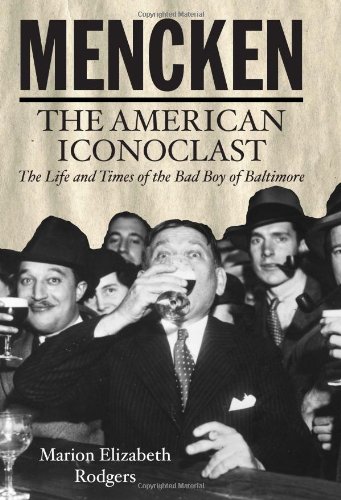
At the start of her lecture to a packed room at the Baltimore Bar Library on February 8, Marion Elizabeth Rodgers, author of Mencken: The American Iconoclast, mentioned the wine reception immediately following the talk.

“On such occasions,” she said, “I am reminded of one of Mencken’s favorite doctrines, that ‘the whole world would be better if the human race was kept gently stewed’ … which brings me to the topic of this evening.”

Rodgers kept the audience laughing throughout her lecture on “Mencken, Ritchie and Prohibition.” Her focus: how a driving force behind the repeal of Prohibition was a combination of the independent character of the state of Maryland, the 42 newspaper columns Mencken wrote against Prohibition, and Governor Albert Ritchie’s stand against enforcing the anti-liquor law.

In 1920, H.L. Mencken began writing against Prohibition in his weekly column for the Evening Sun. Governor Ritchie was a regular visitor of Sun offices and began to agree with the anti-Prohibition ideas.  When Ritchie attended a Governor’s Conference in DC, he was the only governor to protest the requirement that states enforce Prohibition, a policy that Ritchie called a federal infringement on Maryland’s rights. Interestingly, Maryland never had a state enforcement act for Prohibition.
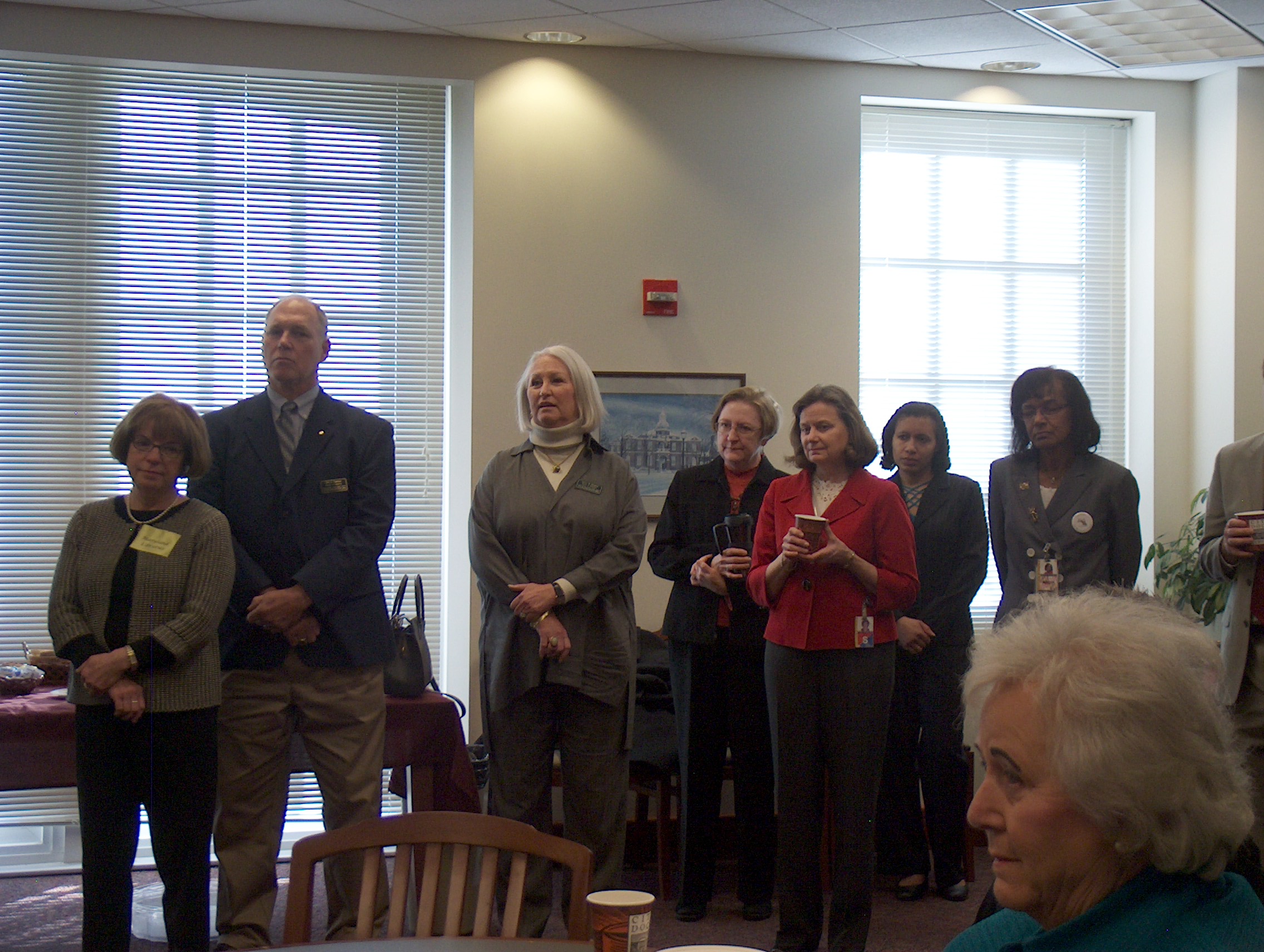
Rodgers provided fascinating details about life in Maryland during Prohibition. According to Rodgers, by the end of Prohibition, Maryland was “one of the wettest states in the Union.” Ritchie announced that state troopers would not bother places selling alcohol in Maryland. Speakeasies were declared to be “cigar stores” with a door in the back with a window; when you knocked on the door and said, “Joe sent me,” you’d be let right in.

Another interesting fact was that many people brewed their own beer in Baltimore during the time because alcohol was very expensive. In some neighborhoods, the air on Sundays would smell deeply of hops and malt. Mencken brewed his own beer each Sunday; the guinea pigs for his brew experiments were often the musicians of the Saturday Night Club.

Rodgers mentioned that Ken Burns is currently producing a documentary about Prohibition, which should focus in part on Mencken and Baltimore, as well. That documentary is scheduled to be aired in December.

The growing friendship between Mencken and Ritchie, particularly through a failed bid for the Democratic presidential nomination, was described beautifully by Rodgers.  Her meticulous book, Mencken: The American Iconoclast, is widely known as H.L. Mencken’s definitive biography. Additionally, when speaking about Mencken, Rodgers’ enthusiasm for the subject is contagious.

Many thanks to the Bar Library for another successful program!