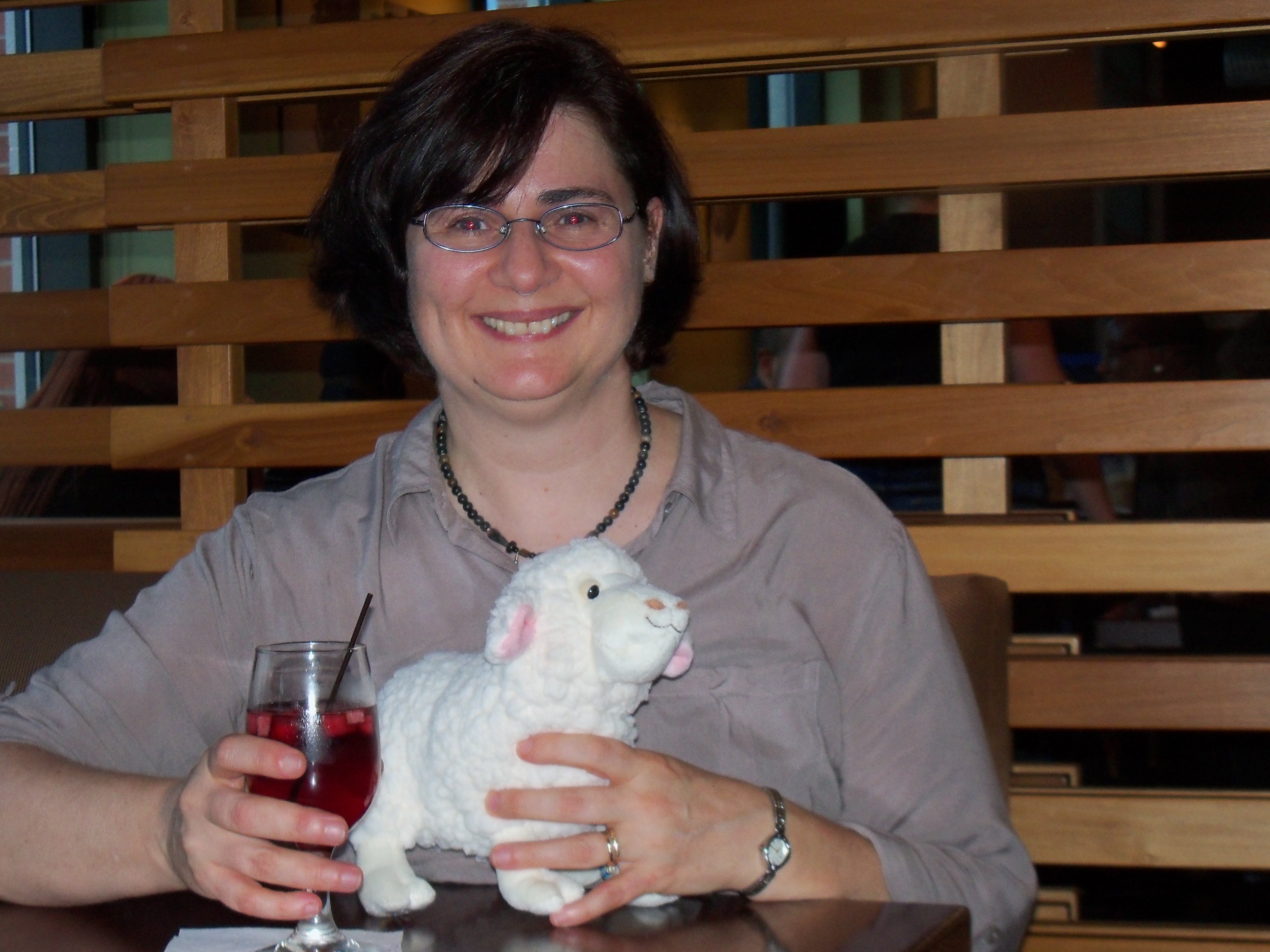
Featured Member: Kate Martin

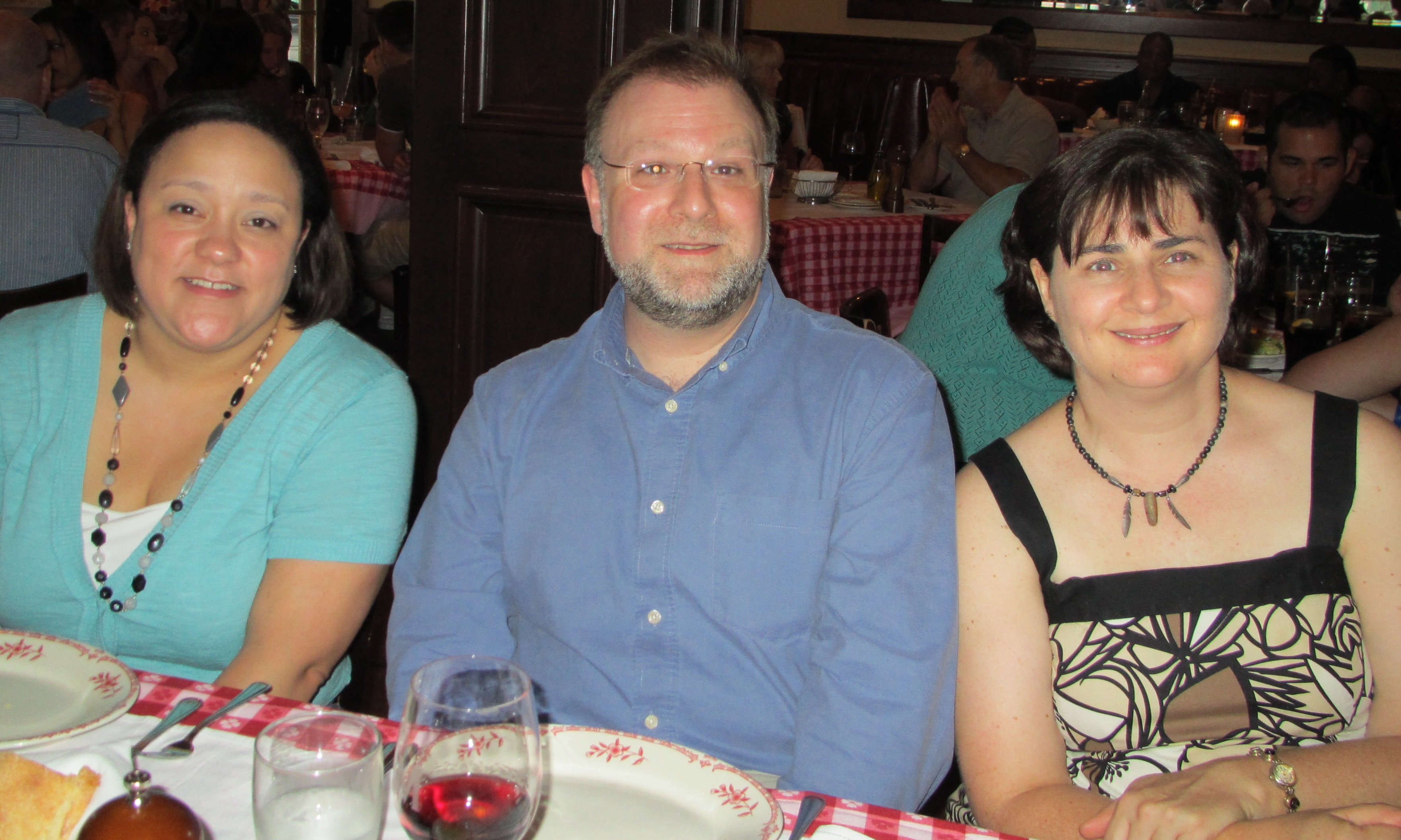
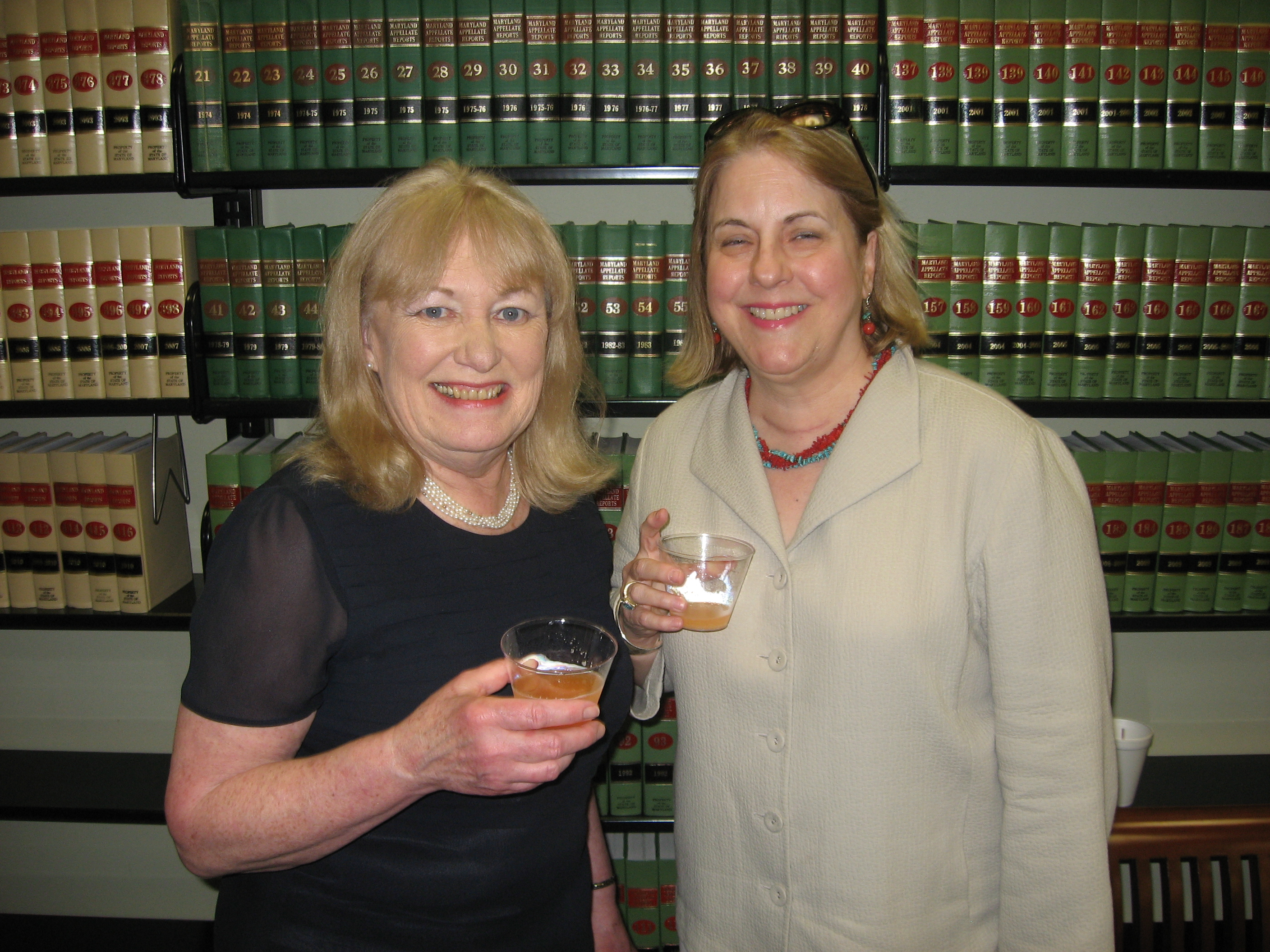
San Diego native Kate Martin had a variety of jobs before finding her path in law librarianship, from rare book dealer, to – somewhat more unexpectedly – customs inspector at the Tijuana border and at LAX. When she started in customs, she was only the second female in a group of 180 officers, which presented some unique challenges. She recounts a number of colorful stories including the discovery of several brown paper shopping bags filled with human bones.  It’s easy to understand why Kate came to regard library work as “somewhat tamer than law enforcement.”

Not that library jobs were that easy to come by. Kate attended library school at UCLA, and her graduation roughly coincided with California’s passage of its Proposition 13. This cap on property taxes had an impact on many professions; Kate recalls that Los Angeles County fired thirty percent of its librarians during that era.  Although the job market was “even worse than it is now,” Kate eventually landed an internship at the Smithsonian. She found the East Coast much friendlier to an aspiring librarian; she remembers seeing more librarian positions advertised in the Washington Post in one weekend than she had seen in three months in California.

Kate subsequently worked in a number of law firm library positions, including doing interlibrary loan at Morgan Lewis and loose-leaf filing at Hughes Hubbard & Reed. She also worked at the LC’s Congressional Research Service. She eventually rose to the position of National Director for Libraries for McKenna Long & Aldridge, a position she held for 10 years. After the demanding atmosphere of law firm librarianship, Kate was ready for a change of pace, and in early 2011 accepted the position of Director of the Montgomery County Circuit Court Law Library.

Kate has found the change “invigorating.” She loves the increased freedom and personal interactions that characterize her new position.  She has enjoyed working with a more diverse group of library patrons, and expresses great admiration for the collection and for the stewardship of her predecessor librarians at Montgomery County. Among the initiatives Kate has instituted are a branding initiative for the Library, a recurring column in the Montgomery County Bar Bulletin, and Coffee Break events at the Library on Fridays for all courthouse staff and attorneys. She looks forward to continuing the outreach activities that the Library has already been pursuing. Active in both AALL and LLSDC, Kate developed the idea for the very well received Private Law Libraries Summit this past July in Philadelphia, and envisions developing a similar summit for court librarians.

 Kate enjoys playing Scrabble, reading, and adding to the “embarrassingly large” collection of teapots that she has built over the past 20 years and that is displayed around her Montgomery County home. Acquired during her various travels, Kate’s 450 teapots include a 19th century Limoges teapot, several Chinese Yi Xi teapots, and many animal shaped teapots including four Noah’s Ark themed pots. No doubt her experience as a customs inspector has made her an expert at bringing teapots back from everywhere that she has visited! She has offered to host a “teapot tour” as a LLAM program.                 

Kate describes herself as “still passionate” about law libraries after 32 years in the field. We’re very pleased to welcome Kate to LLAM!

Featured Articles – September 2011

AALL Annual Meeting Picture Gallery

LLAM Dine Around in Philadelphia

 LLAM’s 2011 Annual Meeting Grant Recipient Reports  on AALL in Philadelphia

AALL Program Review: The New Generation of Legal Research Databases: Eighteen Months Later

AALL Program Review:  Copyright Hell: Sites to Get You Out of the Inferno

AALL Program Review: “Can the FCC Regulate the Internet?”

AALL Program Review: Advocacy at AALL 2011

AALL Program Review: PLL Change as Action Summit

AALL Program Review: Value of a Public Law Library

AALL Program Review: Peeping Thomas: A Little Look at a Big System

AALL Program Review: Advocacy at AALL 2011

By Joan Bellistri
Anne Arundel County Public Law Library
 

There were a number of opportunities for learning about AALL’s Advocacy efforts at the meeting and conference held in Philadelphia this summer.  There was a half day training on Saturday, “Legislative Advocacy Training 2011: Turning Challenges into Opportunities,” two programs, “AALL Public Policy Update: Shining the Spotlight on Advocacy” and “Authentication: The Evolution Continues,” and the Chapter Leadership Roundtable on Government Relations.  I was able to attend all but the Authentication program that was scheduled during the same time slot as the program I was moderating.  (I do plan to take advantage of AALL2go for this program later.)

The advocacy and public policy programs concerned issues of significance to AALL and law librarians and provided strategies for advocating for these issues.  We were able to meet Julie Strandlie, the new Director of Government Relations, who with Emily Feldman, Advocacy Communications Assistant, began the Saturday morning advocacy training with advocacy strategies.  Emily and Julie are AALL’s lobbyists who advocate for us in Washington, D.C.  However, members are needed to aid in their advocacy efforts as the opinions of constituents are of more significance to our representatives at the state and federal levels of government.  When we personally contact our representatives, we can make more of an impression than a lobbyist.  Ways of contacting our representatives should include in-person visits, the number one way to get your message heard, individual phone calls, letters and e-mail. It is always helpful to know the staff of the representative and it was suggested that we poll our chapter members to see who might have such contacts.  It is important that it be determined who knows whom before a crisis.  It would be good to know which members reside in which legislative districts so that they can be easily called upon when needed.

The rest of the training dealt with the issues for which we are encouraged to advocate and updates on legal information policy and programs.  Legal information issues were further detailed at the Monday morning program.  Federal level issues mentioned include GPO, FDLP and the Library and Law Library of Congress funding, section 215 of the Patriot Act, Net Neutrality, copyright, and PACER.  Other issues such as the Uniform Electronic Legal Information Act  must be dealt with on the local or state level while some issues such as  citation format  and the work of the AALL Working Groups on the national inventory could be considered national issues to be tackled at both the federal and local level.  I will report on just some of the issues and topics covered at the programs I attended.  I encourage members to become acquainted with AALL’s Advocacy pages for more detailed information on these and other issues of importance to law librarians.

As a part of the advocacy training, Larry Meyer, Director of the Law Library for San Bernardino County in California, reported on the PACER pilot project in which his library is participating.  This program is designed to educate the public on the use of and access to PACER.  San Bernardino has created training guides describing PACER and providing instructions on creating a PACER account.  Leslie Street, of the University of North Carolina at Chapel Hill Law Library, talked about the creation of PACER training and resource guides  that provide information on setting up PACER accounts, performing simple searches and a description of PACER and its scope.

After our AALL Working Group worked so hard on our Inventory of Maryland Legal Materials it was good to hear what the results of this project might be.  Tim Coggins, 2010 Chair of DALIC, reported on some of the findings so far.  There has been no change in the number of authenticated legal materials since the 2009-2010 report found on the Digital Authentication page of AALL’s Advocacy pages. (I should  mention that  DALIC or the Digital Access to Legal Information Committee is the new name for ELIAC or the Electronic Legal Information Access & Citation Committee.)  More online publications have been designated as official since that 2009 report.  It was found that 25 states now have a copyright on their digital material.  There are some states that have made provisions for preservation and permanent pubic access. The inventory shows a trend to charging for access to online versions. Other trends found more states making the digital version the official version and restrictions on commercial use and use affecting privacy.  Emily Carr, the Federal Inventory Coordinator, reported on the Federal Inventory that is modeled after the state inventory.  The data collected from the inventories will be used to update AALL reports on authentication and permanent public access.  The data will be shared with the Law Library of Congress as they build law.gov.  It must be noted that the inventory is an ongoing project and volunteers will be needed to check links and update the spreadsheets periodically.

The national inventory will provide important background information as members seek to have their states pass the new Uniform Electronic Legal Information Act.  Keith Ann Stiverson, AALL Observer to the NCCUSL Drafting Committee on the UELMA, briefed the group on the status of the Act.  UELMA had been approved by the Commission as of July, 12, 2011.  This approved version will be subject to style changes and the addition of new, revised comments. The Act provides a framework for authentication, preservation and permanent public access for online legal material.  The final version is expected soon and then the NCCUSL Enactment Committee will begin to act in all states.  I will be sure to notify LLAM members when the Act is introduced in Maryland.  Links to the Act and supporting information can be found on the Digital Authentication page of AALL’s Advocacy pages.

Although it was late in the day, LLAM was well represented by President, Sara Witman, and Vice President/President Elect, Mary Jo Lazun and me at the Chapter Leadership Roundtable: Government Relations.  The Roundtable provided a venue for new chapter leadership to become acquainted with AALL policy and strategies for local advocacy and to share advocacy ideas.  Participation in the roundtable, the training and the programs should provide me with a good base on which to begin a new year as Government Relations Chair.  I look forward to LLAM’s continued support in advocating for legal information issues.

President’s Message — September 2011

Sara Jane WitmanBy Sara Witman
Research Librarian
Gordon, Feinblatt, Rothman, Hoffberger & Hollander


I think it’s a safe bet that I’m not exaggerating when I say that LLAM has the greatest membership of any association ever.

I know I don’t have to prove it to you, but let me explain anyway.

First, our Board members, including the newly-appointed Tonya Baroudi who is just off a long stint as the fantastic chair of the Placement Committee, recently passed new policies for our website — specifically, a Web Copyright Statement and Release as well as Rules and Conditions for our listserv users. These policies are available on the LLAM website. Both are fairly basic and uncontroversial, but I encourage you to read them over — particularly the listserv rules — and give me any opinions or issues you may have about them.

Many thanks to Harvey Morrell for his help with the listserv and to our new webmaster Jenny Rensler. Jenny has cleaned up the site recently, changing some colors and redesigning the navigation bar. It looks fantastic, and we are lucky to have her!

I am particularly lucky to have a fantastic Vice President on board. Mary Jo Lazun has a lot of great programs already planned for us. She will be putting together informal morning “LLAM & Lattes” coffee talks, as well as more substantial educational programs, such as a program on the Appellate Process and one on Administrative Law.

Additionally, this is a Legal Research Institute (LRI) year and Mary Jo has some exciting and novel ideas for the March event. (Spoiler alert:  Think “legal research best practices” + fun.)  If you are interested in getting involved with the LRI planning committee (and you are), contact either me or Mary Jo and we’ll hook you up.

Who could have missed our new Placement Committee chair Mary Rice? The year is just gearing up, and her regular emails have already kept us up-to-date with the law librarian market place this summer. Thank you, Mary!

I can’t possibly mention everyone in one message and I’ll definitely miss some of the super members, but while I’m on a roll, let me thank the tireless work of Membership Committee chair Pat Behles, the detail-oriented assistance of Treasurer Bijal Shah, and the delightful help of our Secretary Thea Warner. I can’t wait for another year of the awesome LLAM eNews. (Kirstin Nelson, you rock!) And, of course, the Past President Susan Herrick continues to be a wonderful source of guidance and mentoring for me.

LLAM is made up of interesting and active members who care about the profession and each other. That is why I got involved and I why I’m genuinely excited about the coming year.

If you want to get more involved, but aren’t sure how, send me an email at switman@gfrlaw.com.

AALL Program Review: Copyright Hell: Sites to Get You Out of the Inferno

By Katherine Baer
Maryland Collections & Reference Librarian
Maryland State Law Library


There was one session at AALL that gave some real nuts & bolts information on copyright called “Copyright Hell: Sites to Get You Out of the Inferno.”  This talk was delivered by George Pike, Director of the Barco Law Library at the University of Pittsburgh School of Law and Steven Melmut, Informational Technology Services Librarian at the University of North Carolina School of Law.  They gave a nice introduction to copyright and then went into the finer points of fair use, researching copyright, and licensing.

Here are a few of the sites they recommended:

The Basics

US Copyright Office: www.copyright.gov

Copyright Laws: www.copyrightlaws.com

Fair Use

Stanford Copyright & Fair Use Center: fairuse.stanford.edu

Electronic Frontier Foundation: www.eff.org

Columbia University Copyright Advisory Office: copyright.columbia.edu/copyright

Research

Stanford Copyright Renewal Database: collections.stanford.edu/copyrightrenewals

US Copyright Office Online Records Search: www.copyright.gov/records

Licensing

Creative Commons: www.creativecommons.org

Copyright Clearance Center: www.copyright.com

Copyright Tutorials

Copyright Information Center: www.copyright.cornell.edu

LLAM Dine Around in Philadelphia

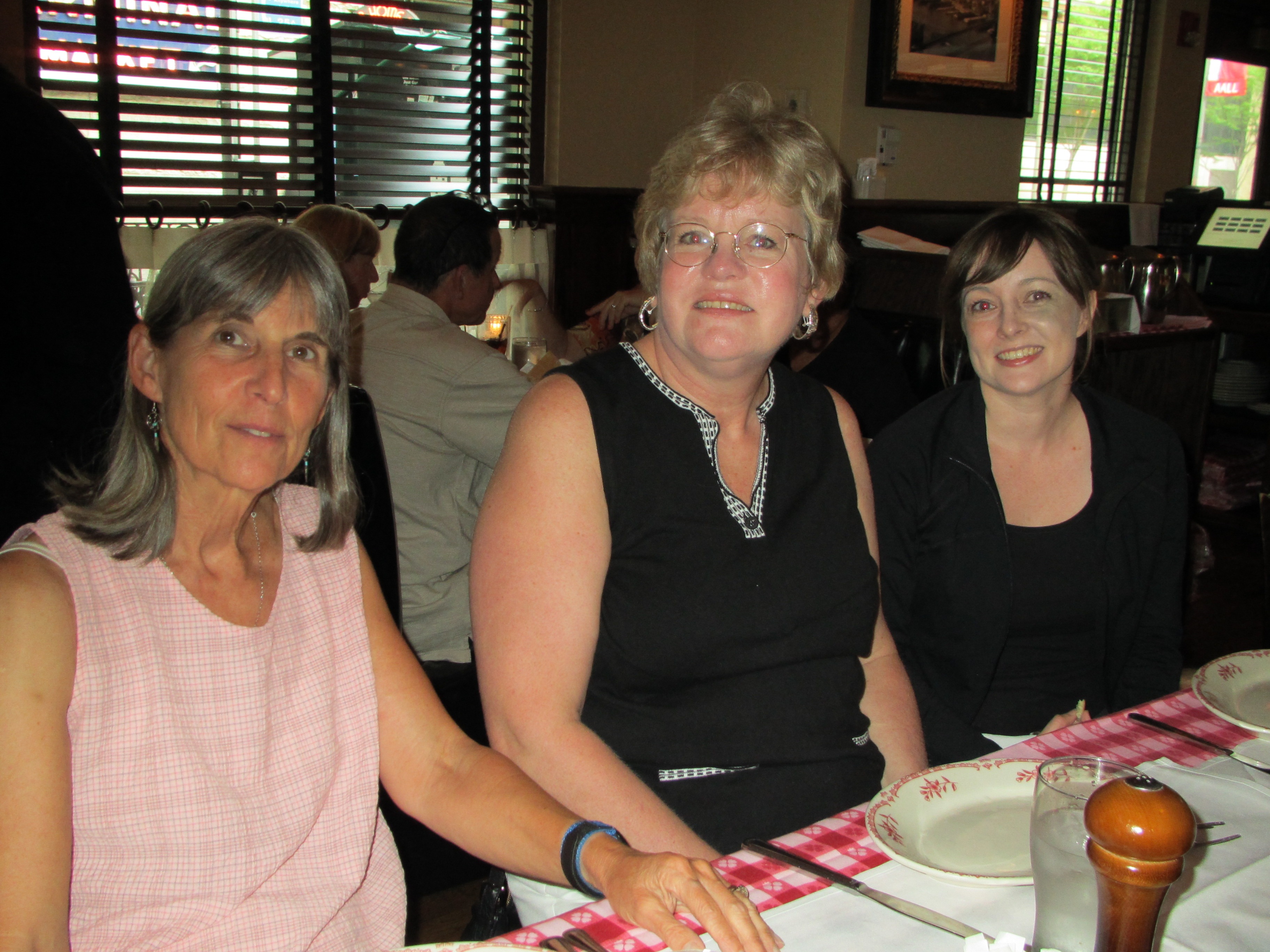
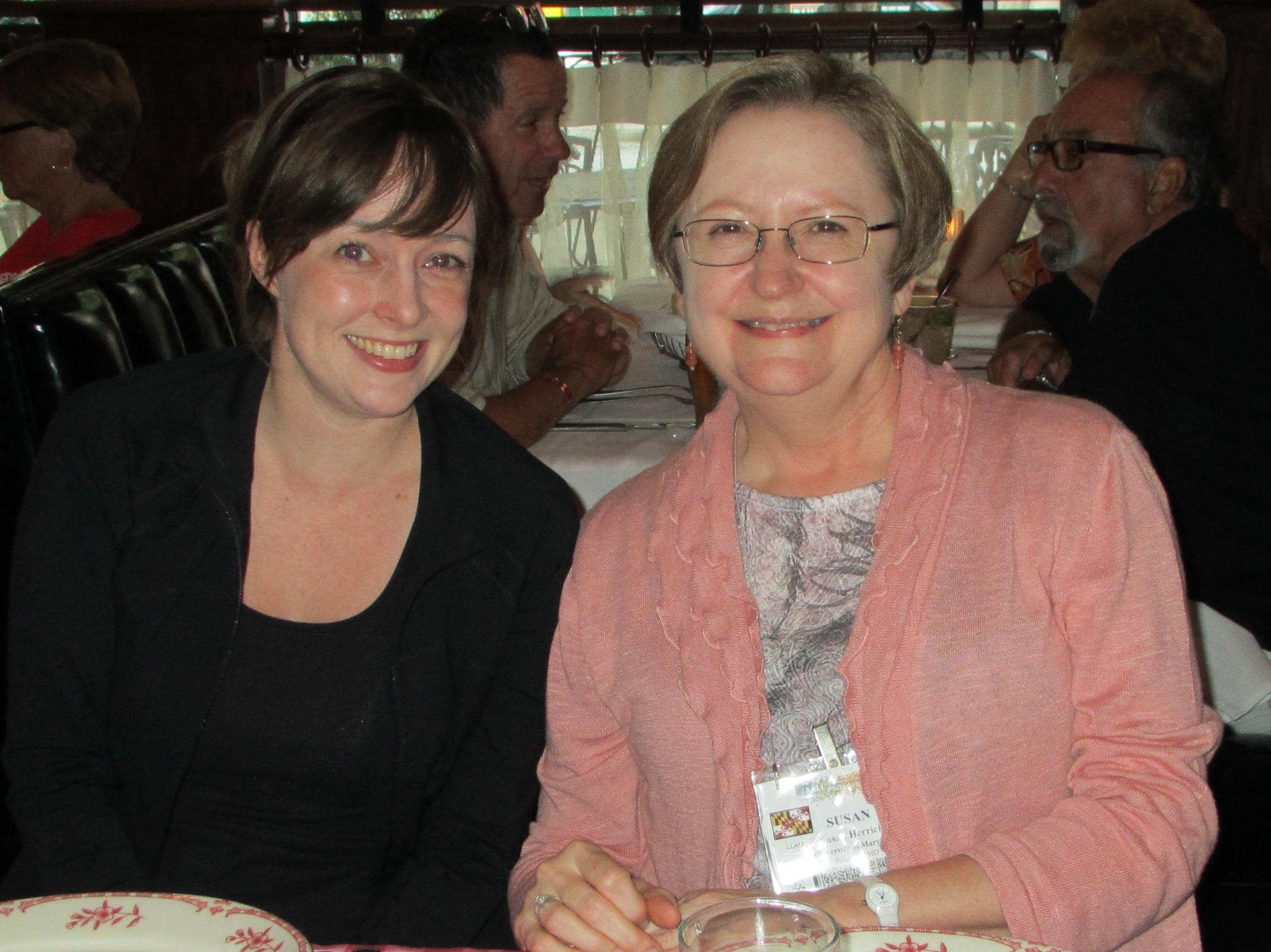
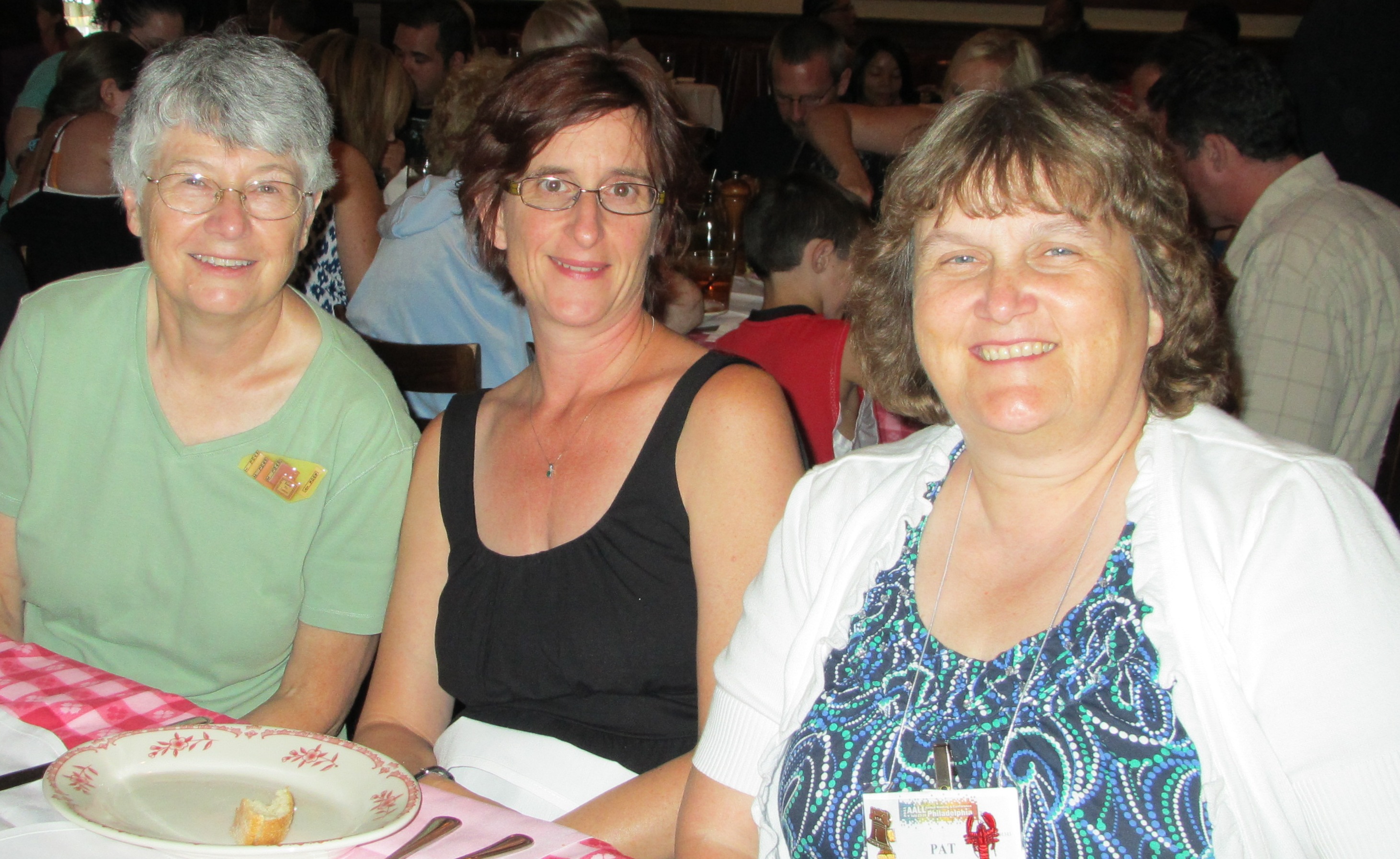
Nineteen LLAM members and guests gathered at Maggianos Little Italy in Philadelphia for our annual Dine Around.The fact that many LLAM members were able to attend AALL this year, and the proximity of the restaurant to the convention center, may have contributed to our excellent turnout. Maggiano’s is a jumping joint.Served family style, the food was abundant, and the company was naturally the best! A good time was had by all.

AALL Program Review: “Can the FCC Regulate the Internet?”

By Sara Witman
Research Librarian
Gordon, Feinblatt, Rothman, Hoffberger & Hollander

Just about every AALL conference veteran will give you the same advice: wear comfortable shoes and go to at least one session that has nothing to do with your job.

This year, I finally followed the latter half of that recommendation, and I wish I had listened to it earlier; the program I took a gamble on was the most interesting and informative one I attended this year.

The Monday morning session, “Can the FCC Regulate the Internet?,” featured two panelists: Dan Brenner, a partner at Hogan Lovells US LLP and adjunct professor at Georgetown Law School, and Markham Erickson, a founding partner at Holch & Erickson LLP and lead counsel to the Open Internet Coalition. Brenner and Erickson described the current legal situation of “network neutrality” in the United States. In essence, “network neutrality” would prevent Internet service providers or the government from restricting content or access to consumers. The speakers offered different viewpoints on how the issue may be (and possibly should be) resolved. Ryan Harrington, a reference librarian at Yale Law School, introduced the speakers, provided a background on the issues, and asked some first-class questions.

Basically, if I understand this correctly, the FCC got involved with the management of Comcast a few years ago. Comcast was discriminating against customers who were using BitTorrent, a service that uses a great deal of bandwidth. In April 2010, the D.C. Circuit Court of Appeals found in favor of Comcast, and specifically that there was no statutory authority for the FCC to deal with “network management” on the Internet (see Comcast Corp. v. F.C.C., 600 F.3d 642).

Then, in December of last year, the FCC issued network neutrality rules. These rules cover three areas: the first states that a company must be transparent; the second prohibits blocking websites and applications such as Skype; the third prohibits discrimination.

The problem? The FCC rules are based on the same statutory authority that the D.C. Circuit said was insufficient. The rules have still not been published in the Federal Register; once they are, the lawsuits are coming right behind them, given the D.C. Circuit ruling.

Both speakers noted that, interestingly, Comcast had resolved its violation before the FCC decided to “take out the sledgehammer and iron maiden,” as Brenner eloquently put it, and pursue its case.

The speakers took very different stances on the FCC/network neutrality situation. Erickson works for Internet companies that provide content and want as little restriction as possible from consumers to that content. Brenner, on the other hand, thought that, in general, the FCC rules were a “solution in need of a problem,” since only two complaints have been filed on network neutrality and recent studies have shown that customers have been getting advertised Internet speeds. That said, Brenner stated that he does think that the general idea of network neutrality is important and that a company such as Comcast should not be blocking content based on what that content is or says.

The rules do not prohibit usage-based pricing. Erickson, who has represented Netflix, said that Netflix has worried publicly about this since they believe that usage-based pricing can be used against them in an anti-competitive way. For example, Comcast might charge more for heavy Internet users to ensure that customers won’t substitute Netflix for Comcast content.

Legislation could solve some problems surrounding network neutrality. However, Brenner points out that he doesn’t think “this Congress could pass an intelligent Internet law.” “It’s just not happening,” he said. “When you do get something, it’s about ordering the Commission to lower the sound of TV commercials. That’s what they’re able to pass.” Erickson agreed, “It’s really become so dysfunctional.” The House has already voted to use the Congressional Review Act to overturn the net neutrality rules.

So where will this issue go next? Apparently, no one really knows. Since the rules haven’t been published, they can’t be challenged in court yet. Will the D.C. Circuit’s opinion be overturned, or will the case be tried in a different jurisdiction creating a split that would be decided by the Supreme Court? Is this a completely unregulated field? How much authority does the FCC have over Internet service providers?

Thanks to this fascinating program, I will be paying much closer attention to these questions and how they are answered in the coming months and years.

AALL Program Review: The New Generation of Legal Research Databases: Eighteen Months Later

By Mary Jo Lazun
Head of Electronic Services
Maryland State Law Library
 

When this program was accepted for the Annual Meeting, the panel was hoping to present a comparison of WestlawNext and Lexis Advance.  Since Lexis Advance has not been released, the panel presented the results of a survey of law librarians about WestlawNext with commentary from the panelists.

  •  More law firms than law school libraries are using WestlawNext. Very few corporate, government, or courts libraries are using WestlawNext.
  •  Most firms did see increased costs in using WestlawNext, but some saw a price decrease. Overall the pricing model seems simpler to understand.
  •  WestlawNext searchers liked:

Ease of use
Federated search
Folder and folder sharing
Faceted and aggregated results that show new material
Librarians liked that searchers saw not only primary sources but valuable secondary sources.

  • WestlawNext searchers disliked:

Oversimplification of research
Lack of precision
Unclear, inconsistent search algorithm
Exclusion of some Westlaw materials
Difficulty knowing what content is (and is not) included
Difficulty constructing Boolean searches
Difficulty constructing narrow issue searches
Unavailability of field searching
Tendency to get too many search results

A podcast of the presentation and handouts are available to AALL members at: www.softconference.com/aall/sessionDetail.asp?SID=250810

Program Coordinator:
Caren Biberman, Cahill Gordon & Reindel LLP

Moderator:
Victoria J. Szymczak, Brooklyn Law School Library

Participants:
Lisa A. Spar, Hofstra University Law School Library
Jean P. O’Grady, DLA Piper
Denise A. Pagh, Kronick, Moskovitz, Tiedemann & Girard

LLAM’s 2011 Annual Meeting Grant Recipient Reports on AALL in Philadelphia

By Thea C. Warner
Librarian
Niles, Barton & Wilmer
 

As the recipient of the AALL/LLAM Grant, I was able to attend the entire AALL Annual Conference and Meeting in  Philadelphia this summer. I found this to be a wonderful opportunity. My adventure began with the train ride from Baltimore to Philadelphia on Friday, July 22nd; Amtrak trains were delayed throughout the northeast corridor due to the extreme heat. Luckily, I arrived in time to attend part of the PLL-SIS welcome reception that evening at the Union League Club of Philadelphia. I attended the PLL Change as Action Summit on Saturday and have written a separate article about the experience. The Summit was followed by the Exhibit Hall Ribbon Cutting/Opening Reception. Attendees had the opportunity to sample some local fare (including soft pretzels, philly cheesesteak and Tastycake products) and there was ample time to visit exhibitors and to network with colleagues.

Conference programming began Sunday morning with the Opening General Session/Keynote Speaker. Dahlia Lithwick, a senior editor at Slate, gave a very engaging and informative talk on the Supreme Court and current free speech issues. Following the opening session, I made a last minute decision to attend the Animal Law Caucus Presentation at noon (I had somehow forgotten to sign up for the PLL-SIS luncheon when I registered for AALL and it was full by the time I realized this). Dr. James A. Serpell gave a very interesting talk entitled “The Development of Human Attitudes Toward Animals and Animal-Assisted Therapeutic Interventions.”

Sunday afternoon was filled with interesting programs. I selected “Delaware: The First State for Corporation Law” for the first session and followed this with “Electronic Resources Management (ERM) Systems Showcase.” Both proved to be good choices as much of the information the speakers presented was new to me. I closed out the day at the BNA reception which included a very nice dinner, a great view of the downtown, and many opportunities to meet new people and to network.

Monday was another full day that included programs, meetings, and time at the exhibit hall. I began the day with a PLL-SIS Program, “Through the Looking Glass: Harnessing Technology in Today’s Law Firm Library.” This session provided a very helpful overview of current technology. I attended several additional programs on Monday, including “Can the FCC Regulate the Internet?” and “To Recover or Not to Recover: Trends, Solutions and Alternatives for Taming Online Research Costs.”  At the conclusion of the programming portion of the day, I attended, for the first time, the PLL-SIS One-Person Law Libraries Group Meeting. I was pleased to have the opportunity to become involved with this group. The evening festivities were hosted by Westlaw at the Reading Terminal Market, which is closed to the public in the evenings. Many of the merchants kept their stands open so attendees were able to sample a variety of cuisines.  

Tuesday, July 26th was the final day of the conference and included programs, more opportunities to meet with vendors, and the Exhibit Hall Reception. I wrote an article for PLL Perspectives on one of the programs I attended Tuesday morning – “Getting to Yes for Your Library: Negotiating Vendor Contracts in Your Favor.” This session was sponsored by the Private Law Libraries SIS and the Committee on Relations with Information Vendors. My trip home was less eventful than the one to Philadelphia, although the MARC train did break down in the tunnel shortly after leaving Penn Station. Luckily, it was not too long before the train was repaired and we were on our way! All in all, attending the entire AALL Annual Conference was an excellent experience for me, and the AALL/LLAM grant made this possible.

AALL Program Review: SCCLL Program: Value of a Public Law Library

By Janet Camillo
 

VALUE OF A PUBLIC LAW LIBRARY:  How County Law Librarians in Pennsylvania Collaborated with Courts to Provide Services to Self-Represented Litigants

Two Pennsylvania law librarians, Eleanor Gerlott from Lancaster County Law Library, and Melanie Solon from Berks County Law Library, described how they and other county law librarians collaborated with the courts to provide services for pro se litigants in their counties.  Eleanor established a separate self-help center in her courthouse, while Melanie handled pro se questions by handing out informational packets and forms.  They described the process they went though and gave hints on what worked well for them.  They also pointed out some sticking points and problems that they encountered.

Both Eleanor and Melanie found public use in their libraries increasing and were asked the same questions repeatedly.  In response, both worked with their chief judges to establish a task force of interested parties to deal with the problem of pro ses in the courts.  Collaborating with all interested parties and having court backing was absolutely essential. Fortunately both librarians had the support of their chief judges, as well as court administrators and clerks, which brought other judges on board and made for smooth referrals and practical help in the form of space and furniture.  They involved the local bar members to help develop appropriate and accurate forms and answer concerns about loss of business. Other important partners included the public defender, district attorneys, domestic relations offices, legal services, and public librarians.

Both librarians faced similar objections and issues.   Skeptical judges had to be won over with the help of the chief judge.  Attorneys who thought they would lose business found that once unrepresented litigants were educated, the court process was smoother and took less time.  In fact, educated patrons sometimes hired attorneys once they saw how complicated their cases actually were.  Melanie found she had to deal with some noise and child care issues in her library.  Both librarians had to develop clear notices about unauthorized practice after finding that patrons occasionally asked attorneys or librarians for help filling out forms.

The speakers emphasized the importance of marketing, including developing a good web site to insure a successful project, and the necessity of keeping good statistics.  They both continue to review the information that they provide to patrons and to add more forms as issues and questions come up.   In the future, forms for non-English speakers still need to be developed.

Joan Bellistri moderated this SCCLL sponsored program, which was well attended.  The speakers were informative, and their emphasis on collaboration, careful statistics, and marketing was valuable for all types of librarians.

AALL Program Review: PLL Change as Action Summit

By Thea C. Warner
Librarian
Niles, Barton & Wilmer
 

Since I found the Private Law Library Change as Opportunity Summit, held last year in Denver, to be such a great learning experience, I decided to attend the PLL Change as Action Summit on July 23rd in Philadelphia. The Change as Action Summit was the culmination of a two-year initiative by the Private Law Libraries SIS. I found the programs at this year’s Summit to be replete with valuable information and ideas.

The Change as Action Summit began with a reception at the Union League Club of Philadelphia.  Although Amtrak trains to Philadelphia and other points along the Eastern Corridor were delayed due to the extreme heat, I arrived in time to attend part of the reception.  There was still to time to network with colleagues and to sample some local fare, including soft pretzels, Philly cheesesteak, and a variety of pizzas.

The Summit continued on Saturday with two morning speakers.  The first speaker was James Jones, Senior Vice President at Hildebrandt Baker Robbins, the world’s largest provider of management consulting services to law firms and corporate law departments, who gave a very informative talk on understanding law firm trends. Esther Dyson, the founder and chairman of Edventure and considered one of the most influential voices in the Internet industry, provided her insight on technology changes in business and libraries.

The morning speakers were followed by break-out sessions that provided attendees with the opportunity to discuss the series of Law Firm Management webinar programs held throughout the past year.  There was time to attend two of the five sessions and I selected “Technology and the Law Firm Library” (Greg Lambert and Scott Preston, moderators) and “Moving Beyond the Library Walls to Support Strategic Knowledge Management” (Steve Lastres and Julie Bozzell, moderators). All the moderators were very knowledgeable about these constantly changing aspects of law firm library management.

Greg Castanias, Partner, Jones Day, spoke at the PLL Summit luncheon. His talk, entitled “How Librarians Add Value to Their Law Firms”, probably elicited the most intense reaction of any program at the Summit.   The full text of his talk can be found on the On Firmer Ground blog: http://firmerground.wordpress.com/2011/08/03/how-librarians-add-value-to-their-law-firms-advice-from-greg-castanias-jones-day-library-partner/.  At least two out of the three individuals behind Three Geeks and a Law Blog followed with a lively and interesting talk on “Trends, Tempests and Teapots.”  Although some of the posts admittedly sort of go over my head, their blog is sure to help law librarians keep up with legal technology: http://www.geeklawblog.com/.

The afternoon programming consisted of three concurrent tracks focused on administration, reference/research and technology/tech services. I found it difficult to select only three of the total of nine sessions offered. I ended up attending two of the technology/tech services programs – David Curle on transformations in the legal publishing industry and Joelle Coachman on integrating new technology into your library. I also attended one of the reference/research programs  – Gary Price on finding and evaluating web-based resources. I found these programs all to be very interesting and informative.

Once again, I found the PLL Summit to be well worth the investment and I would highly recommend any future PLL-SIS programs of a similar nature.

President’s Message – June 2011

By Susan Herrick
Research Librarian
University of Maryland School of Law

By the time you read this, my year as LLAM President will have drawn to a close, and I will have passed the ceremonial lamb to Sara Witman, our President for 2011-2012. It’s been a great experience serving as President of our small but mighty chapter.

Thanks to Sara, LLAM has enjoyed a year of excellent programs and social events. LLAM has also supported several public service efforts, with our members serving dinner at the Ronald McDonald House on two occasions (coordinated by Jean Hessenauer); our donation of half of our Holiday Party Silent Auction proceeds to the Maryland Food Bank; and our sponsorship of LLAMbert the Jacob sheep at the Maryland Zoo. I’d like to thank everyone who planned and participated in these activities, and especially to Sara for all her hard work.  The position of Vice President/Program Chair requires energy and dedication, and we are very fortunate to have Mary Jo Lazun taking on this role for the upcoming year. We also welcome Tonya Baroudi as a new Board member.

Also related to the LLAM Board, I’d like to recognize Stacey Digan, whose two-year term as a board member has ended. Also, kudos to Joanne Dugan Colvin, who has “graduated” from the board position of immediate past president– thanks, Joanne, for your help and advice. And thank you to all the other recent past presidents of LLAM as well for serving as a valuable resource to our chapter.

Thea Warner and Dave Matchen will be returning to the LLAM board next year, as Secretary and Board member respectively. Also, thanks for both past and future service go out to Bijal Shah, who will again serve a term as LLAM Treasurer.

I’m also very pleased that LLAM has been able, again this year, to award a grant to one of our members to help with the costs of attending the AALL Annual Meeting. This year the grant has been paired with a Chapter Grant from AALL, and the recipient is Thea Warner. Many thanks to our Grants and Awards Committee, consisting of Jim Gernert (chair), Jean Hessenauer, and Mark Desierto.

Although I can’t enumerate every accomplishment of our organization and its members this year, a notable development has been our re-vamping of the LLAM Newsletter into the LLAM eNews, which is now being produced using the WordPress platform. The Special Committee for Communication and Technology, chaired by Kirstin Nelson, has worked hard to streamline the production process and to modernize the appearance of our news publication, and the results have been just great! This “experiment” will continue next year as the committee continues to refine the format and process of producing the newsletter in this way. Thanks to Kirstin particularly, and to all the committee members, and to those who wrote for the eNews. New members for this committee are being sought, and are warmly welcomed. Please contact Kirstin at  Kirstin.Nelson@morningstar.com if you would like to volunteer.

It’s also been a great year for individual LLAM members and institutions, whose accomplishments we are so pleased to recognize. Joanie Bellistri has been the recipient of two awards this year: the 2011 American Association of Law Libraries Robert L. Oakley Advocacy Award, and the Judicial Branch Excellence award from the Maryland Access to Justice Commission. I’m also happy to report that Janet Camillo received the Bethany J. Ochal Award for Distinguished Service to the Profession, as well as the Service to LLAM Award. And last but certainly not least, congratulations to the Maryland State Law Library for receiving the 2011 AALL Innovations in Technology Award for The People’s Law Library. We are so very proud of our members for receiving these awards! See the article by Mary Rice in this issue for further information.

As we look back on the accomplishments of this past year, it is gratifying to realize that LLAM and its members have (again) had an impact disproportionate to the comparatively modest size of our chapter. That is a perfect opportunity for me to remind you that as a small chapter, we need the involvement of all our members – especially our newer and/or younger members. Because of our choices and careful stewardship over recent years, LLAM has a pretty healthy bank account; but it takes more than funds to ensure an organization’s vitality and to make it a valuable resource for its members. I strongly urge you to volunteer and to get more involved in LLAM. Volunteer for a committee…. run for a board position next year….write a piece for the LLAM eNews…or suggest a program or a public service activity. There are plenty of opportunities to get involved!

In closing, I’ve had a wonderful year serving as LLAM President, and I would like to thank everyone who helped me and who contributed to LLAM this year: that includes all the board members, and all the committee chairs and members. Again, I’d especially like to thank the past presidents who were unfailingly generous with their time and sage advice.  I hope I can continue to serve LLAM and our profession as energetically and steadfastly as they have!

Enjoy your summer! I hope you all have some time to explore new projects at work, take time off to relax, and simply recharge for another year. Also, I hope to see many of our members at AALL in Philadelphia (see the notice in this issue about the LLAM Dine Around!) Thanks again for the opportunity to serve as President of LLAM.

LLAM Dine around at AALL in Philadelphia

LLAM Dine around at AALL in Philadelphia

The LLAM Dine Around in Philadelphia will take place at 7 p.m. on Saturday night, July 23, at Maggianos Little Italy. The restaurant is within walking distance of the convention center- the address is 12th & Filbert which is a half-block from the convention center.

http://www.maggianos.com/EN/Pages/Menu.aspx

Maggianos requires family style dining for groups of more than ten people. We must choose in advance one of the available menus (go to the Web site at the link above and click on Family Style menu on the left sidebar.)

If you want to join us, please contact Susan Herrick at sherrick@law.umaryland.edu.

Let her know the number of people in your party, and which menu you would prefer.  The majority will rule as to choice of which family style menu we will request!

Looking forward to seeing you at AALL!

Featured Member – Elizabeth Lukes

Elizabeth Lukes began her library career at the Baltimore Sun, where she started as an intern and later moved into a position in the library. While she enjoyed news research, through her work at the Sun she developed an interest in legal issues and law librarianship. After seeing an advertisement (in the Sun of course!) for the librarian position at the Maryland Office of Administrative Hearings (OAH), she applied, and has been in that job since 2006. She studied for and obtained her MLS in Florida State University’s online program.

Currently a one-person operation, the library at OAH serves a number of functions. Much of Elizabeth’s time is spent conducting administrative and legislative history research for the Administrative Law Judges (ALJs).  There are about 65 ALJs, a number which has increased since the OAH began handling foreclosure mediations in 2010.   In cooperation with a paralegal for Quality Assurance, Elizabeth also monitors changes in various agency regulations and procedures and apprises the ALJs of them. The variety of agencies, and their differing policies and practices, make this a challenging but rewarding endeavor.

The OAH has a number of interns from law schools every summer, who shadow the ALJs and help them research and write their decisions, and who no doubt find Elizabeth a valuable source of information and support.

In another aspect of her job, Elizabeth oversees the library’s print collection, as well as filing and maintaining the collection of signed ALJ decisions that are kept for seven years according to internal policy. The number of signed decisions varies widely depending on agency policy and practice. Some agencies reserve the right to reverse ALJ decisions, and others do not.

Also, the OAH library is open to the public. To view ALJ decisions requires advance filing of a Public Information Act request in order to protect the confidentiality of many opinions. Dealing with these requests is another aspect of Elizabeth’s job.  She recalls one patron who brought in a scanner to assist with his research.

Drawing on her experience producing focus group videos in a previous position at an ad agency, Elizabeth has also taken on the task of assisting other OAH staff members with preparing presentations. Recently Elizabeth chaired a committee that developed a video to assist people who wish to represent themselves in administrative hearings. A production crew from another state agency filmed and edited the project. The two-part video is about 30 minutes long and covers one Motor Vehicle Administration (MVA) and one non-MVA hearing. This video is available from the OAH Web site.

When she isn’t wearing one of the many hats she wears for her OAH job, Elizabeth works as a wedding videographer on the weekends. She and her husband have been pursuing this for about five years. She describes this as a “high adrenaline” endeavor which draws upon both her physical stamina and entrepreneurial interests. Often obtaining clients by word of mouth, she has worked with a number of ethnically diverse weddings, which she describes as fascinating to film.  She sees this work as an enriching experience and one that effectively counterbalances her “day job” in library work.

Elizabeth enjoys knowing the policies of the various agencies and being a conduit of information for the staff of the OAH. Further, she looks forward to managing the transition of OAH library as it moves from print to digital information.

Two Members Receive AALL Awards

Janet Camillo, Joan Bellistri

Longtime LLAM members Janet Camillo and Joan Bellistri received national law library association awards this year, which will be presented during the 2011 AALL Annual Meeting and Conference in Philadelphia. Janet received the Bethany J. Ochal Award for Distinguished Service to the Profession from the SCCLL-SIS. “This award goes to a State, Court and County Law Libraries Special Interest Section member who has made a significant contribution to law librarianship and who is nearing the end of his or her library career or who has recently retired. Criteria for receiving this award include service to the profession of law librarianship, contributions to legal research, teaching and outreach efforts and recognition by members of the legal or government community.” Janet is the only recipient of the Ochal Award this year. She retired in January of this year from the Montgomery County Circuit Court Law Library, where she served as Director since 2006. The award will be presented at the SCCLL breakfast meeting on Sunday morning, July 24, at 7:00 a.m. in the Marriott-Liberty Ballroom Salon AB.

Joan Bellistri, director of the Anne Arundel County Public Law Library, was selected as the 2011 recipient of the American Association of Law Libraries Robert L. Oakley Advocacy Award, which recognizes “an AALL member or group who has contributed significantly to the AALL advocacy agenda at the federal, state, local, or international level.” The judges also consider “the extent to which the individual or group has been an active advocate for law libraries and legal information at the federal, state or local level.” Joanie will receive this award at the AALL Public Policy Update program (D-2) on Monday, July 25, at 8:45 a.m. in the Pennsylvania Convention Center Room 201 (A).

AALL Annoucements – June 2011

1. AALL2go Pick of the Month

2. Unleash Your Inner Leader October 28-29 (application deadline June 30)

3. New and Improved AALLNET Now Live

4. A New AALL Membership Year is Underway—Don’t Miss Out!

________________________________________________________

AALL’s Continuing Professional Education Committee presents the AALL2go pick of the month: Federal Regulatory Information and Where to Find It.

In this one-hour video, David Pritzker of the U.S. General Services Administration (GSA) Regulatory Information Service Center provides a handy tutorial on the federal rulemaking process, including where the public can find access to federal regulations. The GSA Regulatory Information Center publishes a semiannual unified agenda on regulatory actions under development. The fall publication of the agenda includes a regulatory plan identifying current regulatory priorities and highlighting significant regulatory actions expected in the coming year. The center also helped establish Reginfo.gov to provide a “regulatory dashboard” of current information on the regulatory process, which includes handy FAQs on the regulatory process and hyperlinks to government sources for the regulations.

Pritzker’s presentation explains the evolution of public access to regulatory information (including the genesis of the Code of Federal Regulations and Federal Register), how the Administrative Procedure Act creates a legal framework for the adoption of regulations in a manner allowing for public input, and where to find regulatory information, including new, free web-based government resources.

Find this and more than 80 other free continuing education programs and webinars for AALL members on AALL2go!

________________________________________________________

Unleash Your Inner Leader October 28-29

New law librarians in the early stages of your career—achieve your leadership potential by attending the 2011 AALL Leadership Academy, October 28-29 in the Chicago area. Designed as an intensive learning experience aimed at growing and developing leadership skills, the academy program will help you discover how to maximize your personal leadership style while connecting with other legal information professionals.

The program will feature speakers Gail Johnson and Pam Parr. Johnson is a widely regarded leadership and communications expert and holds a Master of Arts in Communication Studies. Parr has extensive business management and customer service expertise. They have conducted many leadership programs for library organizations and will speak at the 2011 American Library Association Annual Conference.

Applications are due by June 30.

________________________________________________________

New and Improved AALLNET Now Live

In May AALL launched the redesigned AALLNET where you’ll discover a new layout, easy-to-use navigation, more features and functionality, and a stronger brand.

The new AALLNET will allow you to:

  • Easily navigate the site to browse for information or complete a specific task, such as register for an event or apply for a grant.
  • At a glance from the homepage, view the latest news, events, job postings, and AALL’s Twitter feed.
  • Use the search box to find specific information; results can also be further refined or used to discover related resources.
  • Collaborate electronically with your special interest sections, caucuses, and committees and network with like-minded members by using our online network called My Communities.

Visit AALLNET today and explore the new resources available for you!

________________________________________________________

A New AALL Membership Year is Underway—Don’t Miss Out!

AALL’s new membership year just began on June 1. If you haven’t renewed already, be sure you do today so you don’t miss out on valuable member benefits.

The new and improved AALLNET debuted this spring. The new site is easy to navigate, features a fresh new look, and includes improved search functionality. New social media tools allow you to form your own member groups and create group discussion forums, websites, blogs, and more.

AALL2go, your online center for professional development, brings continuing education programming to your desktop, available 24/7. There are already more than 80 free programs for AALL members, with new content added monthly. Look for the 2011 Annual Meeting and Conference programming to be available on August 5.

AALL’s online Career Center provides advanced resume and job search features, whether you’re looking to find or fill a law library position.

AALL is offering a discounted membership rate for AALL members who are recently unemployed ($57 instead of $226). Unemployed AALL members should fill out the online form.

Find more information or renew your membership online. If you have any questions about your membership renewal, contact AALL Headquarters at membership@aall.org or 312/205-8022

Joan Bellistri Awarded the Access to Justice Commission’s Maryland Access to Justice Award

By Mary Rice
Charles County Public Law Library
 

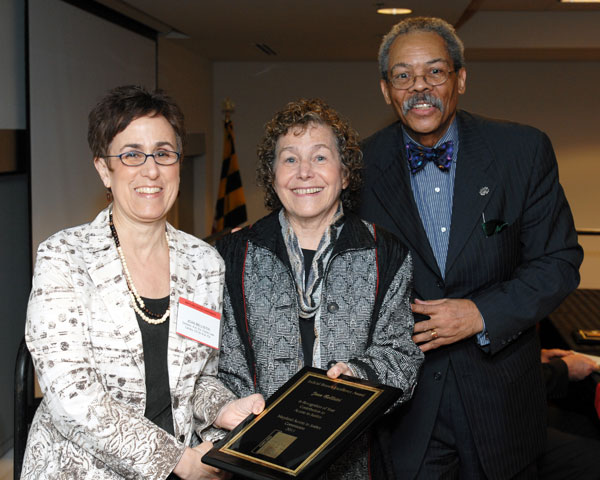
Joanie Bellistri received an important Maryland state award this year. She was one of the inaugural recipients of the Maryland Access to Justice Commission’s Maryland Access to Justice Awards. “These awards recognize individuals, programs and entities in the State that improve the ability of all Marylanders to access the courts or to get legal help in civil legal matters so they can benefit from the rights, protections, services and opportunities that the law provides,” said retired Maryland Court of Appeals Judge Irma S. Raker, chair of the Commission. Joanie was awarded the Judicial Branch Excellence Award “for her ongoing efforts to make legal information more accessible through publications, training and programs such as the creation of a self-help corner in the court’s law library. [She] also created the ‘Ask a Lawyer in the Library’ program in Anne Arundel County, organizing attorney volunteers to staff regular clinics at local public libraries.” Joanie received her award at the 2011 Judicial Conference on May 13 in Annapolis. She was in good company. Other honorees included Gov. Martin O’Malley, winner of the Executive Branch Award, and Chief Judge Ben C. Clyburn of the District Court of Maryland, winner of the Judge of the Year Award.

People’s Law Library Web Site Wins AALL Award

Congratulations to the Maryland State Law Library for being the 2011 recipient of the AALL Innovations in Technology Award for The People’s Law Library (http://www.peoples-law.org).  The Innovations in Technology Award was established in 2009 “to recognize an AALL member, SIS, chapter, or library for their innovative use of technology in the development of an application or resource for law librarians or legal professionals.”  The award will be presented during the AALL Opening Reception on Saturday, July 23rd, from 5:30 to 6 p.m. Kudos to the State Law Library and all its staff who have been involved in this project!

What’s New with LLAM Members? Awards, Graduations and more…

1. Joan Bellistri Wins Access to Justice Award
2. Two Members Receive AALL Awards
3. Jenny Rensler Graduates from University of Maryland School of Law
4. Kurt Meyer Accepts New Job
5. Evan Levasseur Graduates
6. People’s Law Library Web Site Wins AALL Award

_____________________________________________

1. Joan Bellistri Wins Access to Justice Award

Joan Bellistri, Judge Irma S. Raker, Judge Robert Bell

Joanie Bellistri received an important Maryland state award this year. She was one of the inaugural recipients of the Maryland Access to Justice Commission’s Maryland Access to Justice Awards. “These awards recognize individuals, programs and entities in the State that improve the ability of all Marylanders to access the courts or to get legal help in civil legal matters so they can benefit from the rights, protections, services and opportunities that the law provides,” said retired Maryland Court of Appeals Judge Irma S. Raker, chair of the Commission. Joanie was awarded the Judicial Branch Excellence Award “for her ongoing efforts to make legal information more accessible through publications, training and programs such as the creation of a self-help corner in the court’s law library. [She] also created the ‘Ask a Lawyer in the Library’ program in Anne Arundel County, organizing attorney volunteers to staff regular clinics at local public libraries.” Joanie received her award at the 2011 Judicial Conference on May 13 in Annapolis. She was in good company. Other honorees included Gov. Martin O’Malley, winner of the Executive Branch Award, and Chief Judge Ben C. Clyburn of the District Court of Maryland, winner of the Judge of the Year Award.

________________________________________________

2. Two Members Receive AALL Awards

Janet Camillo, Joan Bellistri

Longtime LLAM members Janet Camillo and Joan Bellistri received national law library association awards this year, which will be presented during the 2011 AALL Annual Meeting and Conference in Philadelphia. Janet received the Bethany J. Ochal Award for Distinguished Service to the Profession from the SCCLL-SIS. “This award goes to a State, Court and County Law Libraries Special Interest Section member who has made a significant contribution to law librarianship and who is nearing the end of his or her library career or who has recently retired. Criteria for receiving this award include service to the profession of law librarianship, contributions to legal research, teaching and outreach efforts and recognition by members of the legal or government community.” Janet is the only recipient of the Ochal Award this year. She retired in January of this year from the Montgomery County Circuit Court Law Library, where she served as Director since 2006. The award will be presented at the SCCLL breakfast meeting on Sunday morning, July 24, at 7:00 a.m. in the Marriott-Liberty Ballroom Salon AB.

Joan Bellistri, director of the Anne Arundel County Public Law Library, was selected as the 2011 recipient of the American Association of Law Libraries Robert L. Oakley Advocacy Award, which recognizes “an AALL member or group who has contributed significantly to the AALL advocacy agenda at the federal, state, local, or international level.” The judges also consider “the extent to which the individual or group has been an active advocate for law libraries and legal information at the federal, state or local level.” Joanie will receive this award at the AALL Public Policy Update program (D-2) on Monday, July 25, at 8:45 a.m. in the Pennsylvania Convention Center Room 201 (A).

________________________________________________

3. Jenny Rensler Graduates

Jenny Rensler

Jenny Rensler graduated from the University of Maryland School of Law with a Juris Doctor degree on May 20, 2011. While in law school since 2007, Jenny continued working at the Thurgood Marshall Law Library as Research Librarian. Jenny will join her esteemed colleagues on the library faculty who teach legal research at Maryland School of Law and teach her first legal research course in Fall 2011.

________________________________________________

4. Kurt Meyer Accepts New Job

Kurt Meyer

Kurt Meyer, Research Librarian at Thurgood Marshal Law Library, has accepted a new job at Gonzaga University School of Law in Spokane, Washington. Kurt’s new position will be Reference Librarian and Assistant Professor of Law.  Good luck, Kurt!

________________________________________________

5. Levasseur Graduates

Evan Levasseur

On May 26, 2011 Stephanie Levasseur’s son, Evan, graduated from kindergarten at the Immaculate Conception School. Congratulations, Evan!

________________________________________________

6. People’s Law Library Web Site Wins AALL Award

Congratulations to the Maryland State Law Library for being the 2011 recipient of the AALL Innovations in Technology Award for The People’s Law Library (http://www.peoples-law.org).  The Innovations in Technology Award was established in 2009 “to recognize an AALL member, SIS, chapter, or library for their innovative use of technology in the development of an application or resource for law librarians or legal professionals.”  The award will be presented during the AALL Opening Reception on Saturday, July 23rd, from 5:30 to 6 p.m. Kudos to the State Law Library and all its staff who have been involved in this project!

Committee Report – Archives

By Katherine Baer
Maryland Collections & Reference Librarian
Maryland State Law Library


I don’t know if all of you know, but LLAM has an Archive.  Well, it’s actually a collection of boxes filled with LLAM stuff and housed in a storeroom at the University of Maryland Law Library. The Archive was previously maintained by Beverly Rubenstein and housed at the Attorney General’s Office.  I recently went through the collection in order to migrate the materials into archival boxes.  I updated the inventory, put like items with like items, and I did do some tossing.

The collection has quite a variety of materials.  There are chronological files that were contributed by each LLAM president.  These make up the bulk of the collection and vary in terms of depth and breadth.  They start back when LLAM was still BLISS (Baltimore Law Information Specialists Society).  Going through these chronological files will be one of the next tasks for the Archives Committee.  The Archives also has materials on LLAM’s incorporation and its Constitution. Then there are all the newsletters and files on special events such as the anniversary celebrations, AALL in Baltimore, County check-lists, and the Legal Research Institutes.

There are some real archival challenges in the collection.  When going though I found floppy discs, VHS, cassette tapes, CD-Roms, photographs, and even a foam crab hat.  We still have some drives that play floppies at the State Law Library, so this will be one of the first things I work on migrating.  I have also set-up a test flickr account that can be used to house all of the digital photographs that have been taken in the recent past.  We will be asking for all of your help in trying to match faces and names in some of the photographs. There will be more information on that later.  I also have a request for all LLAM members: if you have any materials that you think would make a nice addition to the Archives, please contact me at Katherine.baer@mdcourts.gov

Featured Articles – June 2011

AALL Program Preview:  Chinese and American Forum on Legal Information and Law Libraries (CAFLL) Conference

AALL Program Preview:  Services for Self Represented Litigants In Pennsylvania

Ideas in Client Service: Lessons from the Union Square Café

Document Delivery at the Maryland State Law Library

Looking to Beef Up your Resume?

UB Law Collection Development Reflects Changing Trends in Librarianship

“Link Rot” and Legal Resources on the Web:  Have We Reached a Plateau?

Dee Van Nest Retires from the Maryland State Law Library

AALL Working Group Update

Legal Research “Demystified” at MLA pre-conference in Ocean City

2011 Spring Fling Gallery

2011 Spring Fling

On May 2nd, over 20 members of LLAM enjoyed a dinner buffet and desserts at Teavolve at Harbor East in Baltimore. Susan Herrick thanked the 2010-2011 Board Members, committee chairs, and volunteers in her final speech as LLAM President. Sara Witman was greeted as the incoming chapter president for the 2011-2012. Thanks for a great year!

AALL Working Group Update

By Joan Bellistri
Anne Arundel County Public Law Library
 

The Maryland Inventory of Primary Legal Information is Done!

The Maryland Working Group has completed the Maryland section of the National Inventory of Primary Legal Information. The Maryland Working Group is one of many AALL working groups working to collect information on the availability of all primary legal resources in the United States at every level of government. Each state has been working to enter this information into their own Google spreadsheet. According the Government Relations Office Issue Brief,  once information from all fifty states, D.C., and the federal government has been collected, the results will be analyzed and used as needed by experts who will be working with LAW.gov, the Law Library of Congress and AALL public policy committees.

The Maryland Working Group has been working since last August to collect information for all Maryland primary law. We had a “final push entry party” on May 12 at the Maryland State Law Library to work entering the information for the municipalities. I joined Susan Herrick, Mary Rice, Vickie Yiannoulou, Andy Zimmerman and Mary Jo Lazun for our “party.” Meeting at the State Law Library allowed us to all work together with laptops accessing the online information via the wifi there. We also had easy access to the library’s collection of municipal print codes. Working as a group we were able to discuss and resolve any questions as they arose.

The working group began work with the state level of primary materials. After the first “party” in August where the spreadsheet and entry form were demonstrated, each member of the group volunteered to collect information for the various branches of government. The next step involved collecting the information for all levels of county government. Members of the Conference of Maryland Court Law Library Directors volunteered to enter information for their respective counties. Since there are many more counties than conference members, it was great that Mary Rice was willing to work on most of the other counties.

There are more than 150 municipalities in Maryland. This next step presented a challenge for meeting the June 2011 deadline. Mary Rice and Janet Camillo began work on the municipalities as soon as the counties were done. In order to meet the deadline, I planned another group entry “party.”  After May 12, we all agreed to continue until all municipalities on the list had been entered. (We used another Google spreadsheet to keep track of who had done which municipality so that we would not duplicate efforts.)

I am happy to report that we were finished by June 1. I want to thank everyone who contributed to this major project: Steve Anderson,  Janet Camillo (who continued to work after her retirement), Pat Behles, Joanne Colvin, Tonya Baroudi, Katherine Baer, Susan Herrick, Mary Jo Lazun, Carol Mundorf, Andy Zimmerman, Flossie Barnes, Errin Roby, and Vickie Yiannoulou.  And a special thanks to Mary Rice, who did far more than her fair share, and also took on the task of  reviewing the inventory after all was entered.

Dee Van Nest Retires from the Maryland State Law Library

By Catherine I. McGuire
Outreach Services Law Librarian
Maryland State Law Library
 

Dee Van Nest

A library seems an odd place to find someone with a double degree in English and fine arts, but Dee Van Nest has infused her 39-year career at the State Law Library with the benefits of both. Dee has long been the point-person for fliers, signs, brochures, and exhibits, but when she retires at the end of April, she will take with her that fine arts expertise, as well as a deep institutional knowledge and thorough understanding of the sources of old English law that the Law Library staff has depended on for years.

Dee started her Judiciary career in Spring 1972, when the State Law Library was housed in the old Court of Appeals building in downtown Annapolis on the site of the current Department of Legislative Services building. She distinctly remembers the glass floors on the second and third floors as “scary — it took a while to get used to walking on them.” The building, she recalls, had lots of wrought iron and marble, and stayed cool in the summer. She didn’t get to enjoy the glass and wrought iron for long, though. A few months after starting the job, in August 1972, the Library, along with the Court, moved into its current location on Rowe Boulevard. Dee designed the organizational system to move all of the books, with the help of a phalanx of college students. “It was fun,” she says. “Everyone pitched in, and we really enjoyed ourselves.”

Dee Van Nest and Ruth Hodgson

Dee’s expertise in English law sources began when she was asked to assist in a search for a 1713 English statute under Queen Anne, dealing with breaking out as opposed to breaking and entering. Having studied Chaucer in college, Dee enjoyed the British writing, and decided to learn everything she could about the English legal system to be better prepared for similar questions in the future. “Over the years,” Dee says, “the knowledge has come in handy.”

Over Dee’s four decades here, there have been many changes in how the Library looks, functions, and serves its customers. Of all the technology changes, though, Van Nest says, “the neatest thing was Lexis.” In the late 1970s, shortly after Mike Miller joined the Library as director, the Library got its first Lexis connection, a single machine that was kept in one of the side offices. When a judge or law clerk needed a Lexis search run, either Mike or Dee would structure the search and run it on the stand-alone machine. “Searches weren’t cheap,” Dee says, “you paid by the minute. It was important to be careful and proficient, to keep the cost down.” Lexis was such a big deal that a local television network filmed Dee doing a search for the evening news.

Dee and Judge Peter B. Krauser

One of Dee’s biggest challenges, and one of her most rewarding projects, was the design of the Library’s Special Collections Room and the preservation and display of the Library’s collection of John James Audubon’s Birds of America elephant folio prints. Dee worked closely with the Baltimore-based company that designed the display case and the Philadelphia-based preservation group that restored the Birds to their now-glorious state. The Birds are displayed at the front of the Library, one or two at a time. For the last several years, it has been Dee’s pleasure and privilege to choose the next prints for display, carefully don the requisite white gloves, and rotate the birds.

Bernice Bernstein and Dee

Like her recently retired colleague Bernice Bernstein, Dee remembers the Library as a place people visited often. Today, she says, most of the Library’s patrons call or email for assistance rather than coming in person. She knew most of the appellate judges, law clerks, and local attorneys by sight as well as by name. She misses those face-to-face interactions, though she admits much of the technology is more convenient for users.

Dee doesn’t plan to just sit back and relax in retirement. She will continue to show her favorite Irish Wolfhounds (her current furry love is Rhett), and will spend more time working with therapeutic riding, assisting children with special needs, at a stable in Crownsville. She is also, as always, continuing her cooking and canning, with plans to perhaps do some teaching in that area. And most importantly, she looks forward to extra quality time with her grandson, Sam.

“The best part of the job has been the intellectual challenge. It’s never boring,” Dee says. “No matter how long you work in a law library, you will always encounter a question that you have never researched. What could be better than that?”

Susan Herrick and Mary Jo Lazun

Susan Herrick, Katherine Baer, and Joan Bellistri

Steve Anderson

Carol Carman and Dee